Special Focus Facility Graduation

By Paul Emerson L. Baloy OTD, OTR/L, DOR, The Hills Post Acute, Santa Ana, CA
The Hills Post Acute was officially removed from the Special Focus Facility List as of January 14, 2022, as a result of improved compliance with federal regulations as documented in the findings from the recent recertification surveys and complaint investigations.

Special Focus Facilities are nursing facilities that have a not-so-good history of past surveys that were identified by the Centers for Medicare & Medicaid Services and were given an opportunity to improve their systems to better the care of the vulnerable elderly entrusted to them.

The Hills Post Acute had to successfully complete two intensive and comprehensive successive surveys. The building under the previous owner and management has been riddled with multiple complaints and poor past survey outcomes, placing the facility on that special focus list last year.

Our new management team was entrusted with this enormous and critical undertaking and, with the help of our cluster partners and resources, devised strategic plans to address problem areas and came up with multiple dynamic systems to cope with the complex and evolving needs of the building.

With the unwavering support and continued dedication of the facility staff to patient care, we finally graduated from that list, completing two successive surveys in record time with a remarkably low number of deficiencies.

This is a true testament to all our collaborative work toward a common vision of bettering the care of our residents:
This is such a huge win! A win that reflects the staff’s everyday effort and trust in our systems.
This is our story. This is our success.
A chapter in our lives that will be etched in the history of our building and of our residents.
Share this win. Share this story. Congratulations, Team Hills!
Thank you very much for all that you do.
Onward and upward… Dignifying post-acute care in the eyes of the world.

Tag Busters: Skin Integrity

By Tamala Sammons, M.A. CCC-SLP, Senior Therapy Resource

F-Tag 686: Skin Integrity; Pressure Ulcers/Injuries

Surveyors will assess how a facility is doing based on the comprehensive assessment of a resident, and ensure that:

  1. A resident receives care, consistent with professional standards of practice, to prevent pressure ulcers and does not develop pressure ulcers unless the individual’s clinical condition demonstrates that they were unavoidable; and
  2. A resident with pressure ulcers receives necessary treatment and services, consistent with professional standards of practice, to promote healing, prevent infection and prevent new ulcers from developing.

How can Therapy help be a partner to ensure the facility has a strong skin system? Start by asking a few questions:

● Is skin integrity and risk for pressure ulcers assessed on every Therapy evaluation? Should it be?
● Do therapy assessments include other risk assessments, i.e., tissue tolerance testing? Pain? Nutrition/Hydration? Incontinence?
● When OT is working on showers with patients, in addition to focusing on ADLs, do they assess the patients’ skin?
● How often does PT remove a patient’s shoes/socks to assess a patient’s feet?

There are a wide variety of clinical areas that Therapy can assess and treat to ensure residents have good skin integrity, reduce risk for pressure ulcers/injury, and actively treat wounds.

Pressure Points and Tissue Tolerance
An at-risk resident who sits too long in one position or is known to slouch in a chair has an increased risk for pressure ulcers/injuries. Elbow pressure injury is often related to arm rests or lap boards. Friction and shearing are also important factors in tissue ischemia, necrosis and PU/PI formation. PU/PIs on the sacrum and heels are most common.

● How often does Therapy assess for pressure points and tissue tolerance?
● Does Therapy assist with the completion of the Braden Scale? Your clinical partners would love the assist!

Positioning and Support Surfaces
Once the IDT identifies who is at risk, how do they determine the needed support surfaces, proper positioning and/or repositioning frequency? Do they take into consideration the individual’s level of activity and mobility, general medical condition, overall treatment objectives, skin condition, and comfort? Appropriate support surfaces or devices should be chosen by matching a device’s potential therapeutic benefit with the resident’s specific situation.

● How does Therapy engage in assessing the appropriate positioning and support surfaces?
● How often does therapy assess residents to ensure the recommended positioning and support surfaces are in place, still meet the needs for each resident, and provide reviews/updates of the resident care plan?

Active Wound Care
PT intervention for active wound care is appropriate when any of these exist: Necrotic material is present in the wound bed; the wound is a stage 3 or 4 pressure injury; the rehab potential is good to meet stated goals; and/or the wound has an impaired healing process.

● Do we have a physical therapist on staff who treats wounds?
● Are we up to date on all the various wound care interventions, such as: scalpel debridement; closed pulse irrigation; ultrasound MIST; and/or other modalities?

Incontinence
Both urine and feces contain substances that may irritate the epidermis and may make the skin more susceptible to breakdown and moisture-related skin amage.

● What is Therapy’s involvement with incontinence intervention?

Nutrition and Hydration
Adequate nutrition and hydration are essential for overall functioning. It is critical that each resident at risk for hydration deficit or imbalance, including the resident who has or is at risk of developing a PU/PI, be identified and assessed to determine appropriate interventions.

● Is SLP involved as part of Skin IDT?
● Is the Think Thin program in place?

Contractures
A resident with severe flexion contractures also may require special attention to effectively reduce pressure on bony prominences or prevent breakdown from
skin-to-skin contact. Some products serve mainly to provide comfort and reduce friction and shearing forces, e.g., sheepskin, heel and elbow protectors.

● What is Therapy’s role with contractures? How often is skin/skin hygiene assessed?
● Does Therapy have an active hand/skin hygiene program?
● How often does Therapy assess splints’ effectiveness for not only the contracture but also skin integrity?

Pain
The assessment and treatment of a resident’s pain are integral components of PU/PI prevention and management. Pain that interferes with movement and/or affects mood may contribute to immobility and contribute to the potential for developing or for delayed healing or non-healing of an already existing PU/PI.

● What therapy assessments are completed to determine any pain levels?
● Are modalities used for pain management?
● Is level of pain discussed during skin IDT meetings?

Training, Education and IDT Collaboration Resources

● Refer to chapter VIII page 82 of the RNA manual for information that can be used for training CNAs and/or RNAs on skin and positioning. https://portal.ensignservices.net/Departments/Clinical-Resource-Tools/Manuals/manuals Scroll down or type in the search Restorative Nursing Program Manual.
● Refer to the EPIC section of the portal https://portal.ensignservices.net/EPIC/skin for education, information, and other resources for an IDT approach for skin.
● Refer to the Pressure Ulcer/Injury Critical Element Pathway. This can also be found on the portal. https://portal.ensignservices.net/Departments/Clinical-Resource-Tools/CMS-Requirements-of-Participation/CMS-TOOLS/NEW-SURVEY-PROCESS/critical-element-pathways
● Refer to a variety of supportive POSTettes for additional information: Wound Care, Contractures, UI, UTI, Pain, Nutrition/Hydration.
Nursing, Wound Care & Physical Therapy

By Dustin Rex, PT, DPT, MS, CEEAA, DOR, Cedar Pointe Health and Wellness Center, Cedar Park, TX
Our wound care systems at Cedar Pointe, led by Tiffany Delafosse, RN, DON; Nikki Alvarez, LVN/LPN, ADON; and Elise Mixson, LVN/LPN, are consistently managing our wound care systems successfully and effectively. When he started, Ricardo Cacho, one of our physical therapists, expressed a specific passion for learning about wound care. The combination of clinically talented and motivated team members facilitated our discussion of Nursing and Therapy collaboration within this system.

During the third week of October, we identified a resident with a persistent, complicated wound and began supplementing our standard wound care approach with Closed-Pulse Irrigation (CPI) treatments performed by Ricardo. Through clinical leadership from our Nursing partners, our wound care team, and Dr. Pat Marasco, developer of the CPI system, our resident experienced abrupt differences in wound size and discomfort. By the middle of December, seven-and-a-half weeks, our team had healed their first wound: complete closure from an initial size of over 7 cubic centimeters (7 cm3). We expanded our use of CPI with other residents and have had similarly significant results. The course of healing is always an ongoing, multifactorial process; but, to date, our team has facilitated healing of a combined area of 7.5 cm length x 6.6 cm width x 5.3 cm depth in stage IV wounds in our resident population. All of the success starts with our Nursing partners, who have used their expertise to support and streamline the addition of therapy as a part of the wound care system.

Presently, in addition to CPI, we are participating in a pilot trial with an ultrasound mist wound care program. We have found benefits with both approaches, which allows us to expand our ability to help our residents; expanding our skills means more opportunities to make a difference. It has been a great experience collaborating to maximize the talents of our interdisciplinary team to directly influence our residents’ quality of life.

Robust Student Program at Camarillo

By Aimee Bhatia, NCI Therapy Resource, California
Camarillo Healthcare Center, led by Vonn Malabanan, has the most robust student experience I’ve been able to witness. When I visit this facility, there are a minimum of four students, with the average being six in the building at a time. Vonn has continued the student coordinator relationships that Julia Schmutz had initiated and also developed even more in order to provide an inpatient setting for students. Currently, they have a DPT student from Touro University, a DPT student from UNE, two PTA students from Concorde Career College, and two PTA students from Casa Loma College. They also have OT students lined up throughout the year, and Vonn is always the first to respond when someone needs a last-minute placement.

Initially, it was hard to get staff on board with being clinical instructors for the student program, but as they watched their peers interact with the students, sharpen their treatment skills, and experience the benefits of having a student, many changed their minds. Even the most tenured therapists who were the most hesitant now have students, and they feel like they are lost when they don’t have students with them.

We have all been students, and we know how important and impactful it can be to have a great student experience. We also know how challenging it can be to find a facility gracious enough to take on the responsibility of molding our upcoming therapists. Vonn and his team have taken it to the next level and have been a great example for our market. We have taken students in all of the other buildings I support, and most of them very rarely if ever hosted students in the past. We are working to slowly develop a similar model in our other facilities in order to benefit the students, our staff, and the buildings as a whole. Two of the most recent hires for PT in Vonn’s building were actually his students when he was a staff therapist. It goes to show how powerful a good experience for a student can be, how it can positively affect our recruitment efforts, and how when we truly provide a meaningful student clinical experience, it can lead to happy new hires.

I hope we can all strive to have a student program like Vonn and team Camarillo. Seeing buildings with clinical student experiences like this across the organization makes my heart happy, knowing that we have the opportunity to mold our future and hopefully bring young, eager talent to skilled nursing.

The Impact of a Student Clinical Internship

By Dustin Rex, PT, DPT, MS, CEEAA, DOR, Cedar Pointe Health and Wellness Center, Cedar Park, TX
We love hosting students across all disciplines for so many reasons — most significantly, students are able to shake up our routine, expose us to the cutting edge of our profession, and bring us back outside the box, where we are able to make the most difference for our residents.

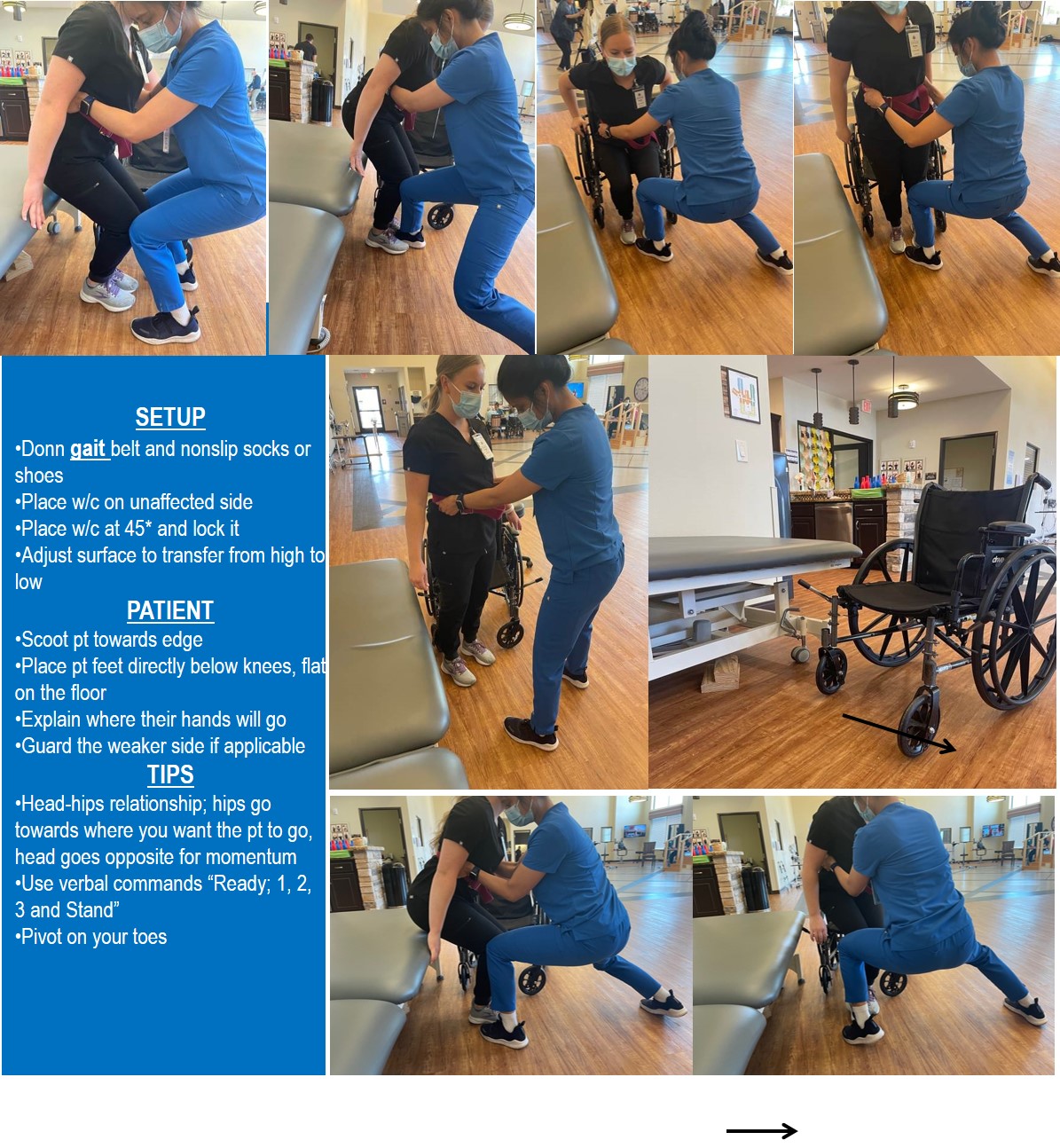
We have recently hosted Chelsea Basilio, SPT, through the University of St. Augustine, Texas. Chelsea will be completing her internship in early April. As a part of the process, most students complete an in-service or project. Chelsea met with Brooke Brown, PT, DPT, and me about her project and what she specifically wanted to accomplish. She identified the need, created from scratch a tool that is comprehensive yet succinct, and composed it in a manner that is visually appealing for patients, families, and staff. It is a great training guide that reflects the essentials of transfer training (safety and function) and reveals the innate talents Chelsea possesses for problem solving and initiative.

Chelsea initially presented to our Rehab team and then also presented to our entire staff during our weekly IDT huddles. She helped create laminated copies for education and training along with hard copies for distribution to patients, families and caregivers.

Chelsea’s work was well-received by everyone and rightfully so. We are grateful for her time and contributions at Cedar Pointe and are similarly grateful for our university partners that continue to excel in training the next generation of clinicians.

Where Am I? – Making Our Building More Dementia Friendly

A Capstone Project by Stephanie Marshall, MOTR/L, PAM, CDP, Glenwood Care Center, Oxnard, CA
When you first enter a skilled nursing facility, it’s likely to look the same as almost any other: neutral flooring and paint colors, limited signage, and identical rooms throughout. This poses significant issues, not just for visitors trying to find their way to family members, but for residents with any type of cognitive disorder looking for their room. It is important to remember that individuals with dementia may experience impaired reasoning and struggle with daily items that we often consider “easy to use” or familiar. Thus, adaptations must be made in order to promote ease of navigation and use throughout the building’s hallways and resident rooms. Our development plan consists of three phases of signage improvement.

What’s The Big Deal About Oral Care?

A Capstone Project by Melissa Alexander, M.A. CCC-SLP, Opus and Millenium Post Acute Care, West Columbia, SC
At Millennium Post-Acute care we wanted to make sure the importance of oral infection control was integrated effectively at our facility. Did you know that tooth brushing prevents more than just cavities and bad breath? Poor oral hygiene has been related to a number of medical conditions including:
• Diabetes mellitus
• Cardiovascular disease
• Strokes
• Atherosclerosis
• Myocardial infarction
• Cancers, including:
• Kidney (risk increased by 49% in men)
• Pancreatic (risk increased by 54% in men)
• Blood (risk increased by 30% in men)
• Pregnancy complications such as low birth weight and prematurity9
• Pneumonia

Oral Health Status can be determined by examining the teeth, tongue, and mouth. The Oral Health Assessment Tool (OHAT) is a recognized, proven screening tool for just that purpose. By implementing a strong oral infection control program we have also been able to have more patients on Free Water Protocols and are helping ensuring adequate hydration. By working together, we are putting attention on quality oral care to prevent infections that lead to adverse medical conditions. Education was key including information on the effects of poor oral hygiene, the pros and cons of toothettes and the basics of good oral care.

Source: American Academy of Periodontology. (n.d.). Gum Disease Information. Retrieved July 1, 2018, from https://www.perio.org/consumer/gum[1]disease.htm

Additional Resources: POSTettes Reducing Risk of Dehydration / Free Water Protocol and Oral Health Assessment Tool for Non-Dental Professionals

Passionate About ACA

By Camrin Nettey, MS, CCC-SLP, DOR, The Healthcare Resort of Leawood, KS
The Occupational Therapy team at The Healthcare Resort of Leawood is passionate about implementing the Abilities Care Approach to improve the quality of life for our residents with dementia. In doing so, they recognize the importance of collaborating with and providing education to other staffing departments within our facility to maximize the ongoing success of this program.

The team recently created a Powerpoint presentation, along with pocket-size strategy reminders to provide at an all-staff in-service. Through collaborating with other staff, we have seen countless success stories for the residents that we serve here at The Healthcare Resort of Leawood.

A recent celebration included a resident, Lee, who was having difficulty participating in bathing/showering tasks. Nursing staff voiced these concerns to the Therapy team, and our OTs identified strategies based on her Allen Cognitive Level that created opportunities to improve Lee’s active participation with showering/bathing. By integrating what they knew about the Allen Cognitive Levels, along with individualized information, the OTs successfully identified strategies to reduce Lee’s level of anxiety, provide dignity, and improve her quality of life.

Using the Abilities Care Approach with Lee has not only helped her ability to participate more in her ADLs, but her overall demeanor has changed. Throughout the day after her therapy sessions, you can see a change in how she holds herself and interacts with others.” — Erin Mallory, COTA

Outpatient Opportunities: Bringing the Abilities Care Approach to Your Community

By Gina Tucker-Roghi, Alexis Renfro, and Ali Vandeloo, Rock Creek of Ottawa, KS
Looking for opportunities to increase your community outreach and develop your outpatient program? Rock Creek of Ottawa is putting a new spin on the Abilities Care Approach. Ali Vandeloo, DOR, worked with Alexis Renfro, an OT and TEACHA (Therapy Expert on the Abilities Care Holistic Approach), to bring an abilities-based approach to dementia care to their community through outpatient programming. Ali and Alexis have broadened the scope of services at Rock Creek by promoting aging-in-place for individuals with early-stage dementia.

Our outpatient Abilities Care Approach programming incorporates the familiar aspects of the Abilities Care Approach with training, support and education for family caregivers to target the following clinical outcomes:

1) Increase caregiver self-efficacy through education on approaches and techniques to manage challenging behaviors
2) Prevent falls and injuries
3) Maintain meaningful relationships and engagement with family, friends, and the community
4) Maintain function, prevent functional decline and mitigate risk factors related to dementia

Since launching the pilot of this program, Rock Creek has provided outpatient services to eight individuals living with dementia in the community. One of our first clients was an individual with middle-stage dementia living with her husband in the community. We provided education and support for the caregiver to enhance the care he provided for his wife. Our interventions focused on maintaining a healthy routine, prevention and management of neuropsychiatric behaviors, prevention of falls and injuries, participation in meaningful activities, utilization of sensory strategies to improve engagement, and utilizing their authentic and meaningful context to personalize her care and experience. As a result of our services, he learned new approaches and was more confident in his ability to care for his wife.

Another client was an individual with early-stage dementia and depression. She was living home alone and had been a rehab patient at Rock Creek prior to discharging home. She received outpatient services post-discharge to help her integrate health-promoting behaviors and habits into her daily routines and was able to stay in her home and remain engaged in her community through activities with her church and volunteering.

An outpatient ACA program can help you achieve the following facility and community outcomes:
1) Create rapport and relationships with families in the community that may result in opportunities for future admissions for respite or long-term care services in your SNFs or Als

2) Increase community awareness of the scope of facility services throughout the continuum of care

3) Attract new therapists and grow your therapy department

4) Minimize the stigma of dementia and increase knowledge and understanding of members of your community who interact with individuals living with dementia

Here are a few tips if you are ready to get started:

1) Start with patients already under your care (patients discharged from post-acute to home or residents at your on-campus or affiliated ALFs).
2) Become familiar with the existing community resources for individuals living with dementia.
3) Network to get to know service providers for individuals with dementia who live in the community. Here are some examples:
a) Area Agency on Aging
b) Meals on Wheels
c) Geriatrician or dementia clinic
d) Alzheimer’s Association
e) Dementia caregiver support groups
f) Adult day health programs

If you are interested in giving Outpatient ACA a try, join our bi-weekly call of early adopters. We gather every two weeks on Wednesday at 9 a.m. PST. Our next meeting is April 20. Please email Gina Tucker-Roghi groghi@ensignservices.net to be added to the call invite.

Milestone Retention: Retention Boards and Therapy Involvement

By Gary McGiven, Milestone Therapy Resource, Utah
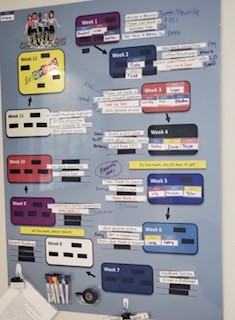
Milestone’s HR Resource Brandon Lane has rolled out a retention plan with most of our facilities to better live our culture and show our new-hires our Love One Another culture. As a visual for the whole department head team to see and be a part of, this plan includes a retention board. This board has weekly tasks for the department head team to complete, following the employee from new-hire through their first 12 weeks. Some of the weekly tasks include:
● Assign a mentor
● Phone check in
● Non-work connection (i.e., off-site activity with mentor and/or other facility employee)
● Thank-you treats
● Empower them to recognize and reward a peer
● Send a text

With the retention boards being a department head focus, the Therapy leaders and their teams decided they wanted to partner with the department heads to take part in the retention process. To coincide with the facility’s retention plan, the Therapy departments each came up with a plan. Some of those ideas include:
● Therapy involvement in orientation process (transfer, gait belt, and body mechanics training)
● “Therapy Moment” in each all-staff meeting
● Therapy leader identifies new facility hires and relays to the team; each team member is encouraged to introduce themselves and get acquainted with the new-hires
● Discuss facility hires in weekly Therapy meeting and find out what was learned about new-hires
● Therapy “Open Door Friday” new-hires are encouraged to stop by Therapy for a treat and some therapy education

These are just a few of the ideas for the retention boards and the Therapy team retention plans. Our Therapy teams take loss of employees very seriously and want to be part of the solution to making a work environment where we are the facility’s workplace of choice.