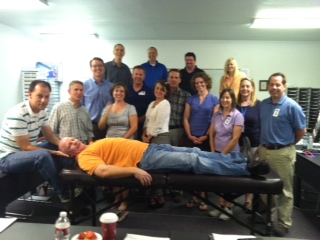
Kinesio Taping Course - Dallas Area

Date: Nov 17 and 18, 2012

Time: 8 AM – 5:30 PM each day

LOCATION:
University of North Texas
Allied Health Center
Fort Worth, TX

Ensign Facility Services hosts seminars in facilities that are ADA accessible. Please let Jon Anderson, jonanderson@ensigngroup.net know if you need any special accommodation.

Instructor:

‘Dee’ Virginia Ellis, PTA, CKTI

Dee is a Physical Therapist Assistant who has practiced in many different settings and states. Dee specializes in aquatic therapy, Pilates based spinal stabilization and orthopedic outpatient rehab. She has been a PTA for 15 years, graduating with her A.A.S. from Community Colleges of Southern Nevada in Las Vegas with a Gerontology Wellness Specialty. She also did undergraduate study at San Diego State University in California. Dee has a special interest in wellness and prevention.

Dee has been a Certified Kinesio® Taping Practitioner for 8 years and has been a Certified Kinesio® Taping Instructor since 2005. Dee has her American Physical Therapy Association (APTA) Advanced Proficiency in the musculoskeletal realm and was the recipient of the Texas Physical Therapy Association’s (TPTA) Joy Davenport award in 2008. She is an active volunteer in the APTA, the TPTA and the Aquatic Section of the APTA. Dee has presented continuing education on Electrical Modalities, Aquatic Physical Therapy and Kinesio® Taping: Fundamentals and Whole Body Techniques.

Dee currently works for as a PRN for local south Texas hospital systems and home health agencies.

Topic:

Kinesio Tape Course (KT1 and KT2)

KT1: Fundamental Concepts & Basic Muscle Applications (To be taken in conjunction with KTAI approved KT2 course)
The KT1 course is designed to introduce practitioners to the Kinesio Taping® Method. During this eight-hour class, the instructor will introduce Kinesio Taping® concepts, theory and history, and discuss the four major physiological effects; skin, muscle, circulatory/lymphatic, and joint. During lab sessions, attendees will have ample time to practice Assessment Tests approved for the enhancement of their Kinesio Taping® skills and muscle applications for both the upper and lower body. Upon completion of this course, attendees will be able to discuss and apply the Kinesio Taping® Method to relax overuse syndromes, stimulate weak muscles, and decrease pain and swelling.

KT2: Advanced Concepts & Corrective Techniques (To be taken in conjunction with KTAI approved KT1 course – prerequisite is completion of KT1 course)
The KT2 course builds on material learned in KT1. During this eight-hour class, the instructor will introduce the six Corrective Techniques (Mechanical, Functional, Space, Fascia, Ligament/Tendon, and Lymphatic) and discuss their application in a variety of clinical conditions. During lab sessions, attendees will have ample time to practice applying these techniques to a variety of upper and lower body conditions. Upon completion of this course, attendees will be able to discuss and apply the Kinesio Taping® Method to orthopedic and neurological conditions.

COURSE OBJECTIVES

Upon completion of this course, the participant will be able to:

  • Describe the concepts of Kinesio Taping.
  • Review muscular anatomy as it is related to Kinesio Taping.
  • Explain and apply the concepts of the Kinesio Taping Method.
  • Describe the unique qualities of the Kinesio Tex Tape.
  • Recognize the principles of Kinesio Tex Tape application.
  • Utilize and demonstrate application skills in guided laboratory sessions.
  • Demonstrate application skills during lab sessions.
  • Practice the various cutting techniques and their clinical application.
  • Apply Kinesio Taping method to relax and stimulate muscles.
  • Apply Kinesio Taping methods for pain, swelling, joint mobility and stability.
  • Apply various taping techniques for treatment of the spine, and upper/ lower extremity dysfunction
  • Apply various taping techniques for treatment of unique conditions using the concepts and principals of the Kinesio Taping Method.

Who Should Attend? PTs, OTs, ATs, DCs, LACs, MTs, PTAs, OTAs and other medical practitioners. THIS COURSE IS INTENDED FOR LICENSED HEALTH CARE PRACTITIONERS ONLY

CEUs:

You can submit 16 hours continuing education credits to TX Physical Therapy Association. The Kinesio Taping Association is an approved provider for AOTA (Provider # 4489). The assignment of AOTA CEU’s does not imply endorsement of specific course content, products, or clinical procedures by AOTA. The Kinesio Taping Association is recognized by the Board of Certification, Inc. (BOC) to offer continuing education for certified athletic trainers (provider # P2293). Kinesio Taping Association is approved by the National Certification Board for Therapeutic Massage and Bodywork (NCBTMB) as a Continuing Education Approved Provider (Provider #450030-06).

Class Schedule:

KINESIO TAPING® AGENDA

Day 1 – Fundamental Kinesio Taping

Introduction to Kinesio Taping Concepts, Theory and History, Qualities of Kinesio Tape, Differences, Benefits and Finger Demonstration, introduction of Five Major Physiological Effects and Skin Function, Circulatory Function, KT Skin & Fascia Function, Iliocostalis Lumborum Demo Lab, KT Muscle Function and Basic App Concepts
Joint Function; Biotensegrity; Application Basics, Directional Lab – Upper Trapezius, Challenges, Contraindications & Precautions, Intro to KT Assessment Tests
KT Cervical Flexion Assessmet, Longissimus Cervicis (Cervical Paraspinals) Application Lab, KT Cervical Extension Assessment, Scalenus Anterior Lab, KT Trunk Flexion Assessment, Rectus Abdominis App Lab, KT Pectoral Girdle Assessment, Pectoralis Major and Rhomboid Major Lab,
KT Hip Rotation Assessment with Lab, Gluteus Medius App Lab, KT Leg Raise Assessment with Lab, Quadriceps Femoris App Lab, Review Five Major Physiological Systems, App Concepts, Assessment Questions, Extensor Digitorum Lab, Hamstrings Lab
Assessment Q&A; KT1 Review & Q&A, Application Requests; Conclusion

Day 2- Advanced Kinesio Taping

Overnight Responses, Troubleshooting, Assessment Questions, & KT1 Review, Basic Concepts of Corrective Techniques, Tension guidelines, & Precautions., Mechanical Correction, Y Technique with tension in the Tails and base, Mechanical Correction, I Technique, Mechanical Correction Lab: Patellar Tracking, Mechanical Correction, Shoulder Instability, Mechanical Correction Lab: Shoulder Instability
Introduction to Fascia Correction, Fascial Oscillation and Gliding. “Y” Tension in Tails, Tension in Base, Rams Head., Fascia Correction, Y Technique with tension on the tails. Manual Fascial Glide Correction With Tension through the tails., Fascia Correction Lab, Fascia Correction, Y Technique with tension through the base. Manual Fascia Winding Correction Technique with tension in base., Fascia Correction Lab, “Y” Strip: Tension on Tails, Rams Head App, Fascia Correction Lab
Introduction To Space Correciton. Space Correction “I” Technique, Space Correction “Donut Hole” App. Space Correction Lab, Space Correction “Star” App. Space Correction “Button Hole & I Strip” App. Space Correction Lab, Space Correction “Web” App and Lab, Introduction To Ligament/Tendon Correction, Ligament Correction, Tendon Correction “I” & “Y” Techniques, Ligament & Tendon Correction Lab
Tendon Correction with Plantar Fasciitis App, Tendon Correction With Plantar Fasciitis Lab, Introduction to Functional Correction, Function Correction Technique, Functional Correction Lab, Introduction To Circulatory / Lymphatic Correction, Circulatory / Lymphatic Correction “Fan” Technique Lab, KT Clinical App Finger, Documentation, Billing, Precautions, Contraindications and Rules, Assessment Questions, Glossary Review, Application Requests and Q&A
Assessment Questions, Glossary Review, Application Requests; Q&A; Conclusion

Stepping Stones - Balance and Falls Prevention

Mike Johanson, Physical Therapist for Horizon Home Health and Hospice, presented our first Stepping Stones – Balance and Falls Prevention course to therapists at our Horizon Home Health office in Boise, Idaho on July 25 and 26. With the support of Craig Esplin, Director of Rehab at Horizon, Steve Burningham, Administrator Horizon Home Health and Hospice, and Danny Walker, CEO of Cornerstone, Mike was given the time and support to create a very special program to help reach patients and clients in need. Seventeen therapists attended the course, including Beth Orcutt who traveled all the way from our Connected Home Health Office in Oregon. Mike and Craig are taking this awesome, interactive 1.2 (12 contact hours) CEU Course on the road, with their next stop at our Symbii Home Health branch in UT later this month. Stay connected at www.EnsignTherapy.com for more information.

Reported Knowledge of Dementia and Competency in Treating Clients

by Ciara Cox, PhD, Therapy Resource –

Six Samuel Merritt University OT students and I just completed a study on rehab professionals’ self-reported knowledge of dementia and self-reported competency in treating clients with dementia. We wanted to see if there was a gap between knowledge of dementia and feelings of competency in treating clients with dementia. We collected data for our study via a web-based survey. Many of those who responded to our survey work at an Ensign-affiliated operation, and we thank you for your participation.

Although the response rate to our survey was low (27 OTs, five COTAs, 20 PTs, eight PTAs and five SLPs), we had some interesting findings:

  • As a group, OTs, COTAs, PTs, PTAs and SLPs feel both knowledgeable and competent.
  • There was no significant difference between self-reported knowledge of dementia and self-reported competency in treating clients who have dementia.
  • There was no significant difference in self-reported knowledge and competency between the three different rehab professions.
  • There were significant differences between groups of rehabilitation professionals who received different types of dementia care training and also differences related to years of experience working with clients with dementia.

Training

Therapists who received training in one or more of the following approaches reported a higher level of knowledge of dementia and competence in treating clients who have dementia than therapists who did not have the training:

  • Allen-Cognitive Levels
  • Behavioral Training
  • Cognitive Stimulation
  • Reality Orientation

Experience

  • Therapists and assistants with more than five years of experience with clients who have dementia reported significantly higher competency in training caregivers than those who had less than five years of experience.
  • Therapists and assistants with more than 10 years of experience with clients who have dementia reported significantly higher competency in treating clients with dementia than those with less than 10 years of experience.

The results show what you may already instinctively know: Experience and training lead to expertise.

With the baby boomers entering older adulthood and life expectancy continuing to increase, the number of people living with dementia is predicted to increase from 5.4 million currently to 16 million in 2050. As a profession, we will need more therapists who have expertise in working with this population. The majority of residents in our nursing homes have some cognitive deficit. If you have not received specific training for treating residents with decreased cognition, we recommend that you plan to do so.

The SMU OT students who worked on this study are Michelle Chan, Kristin Dunn, Laura Heinemann, Carly Keller, Cynthia Lyssikatos and Jennifer Warner. They are delighted to share our results with people who are interested. If you currently have OT, PT or SLP students in your department, ask them about their research. It is a great way to learn new information.

Dementia Capable Care Instructor Program

by Ryan Hough, Therapy Resource – What is the first thing that comes to mind when you think of a patient who has dementia? Many people tend to think of what dementia patients typically can’t do — such as remember names, get dressed, brush their teeth and so on. However, I had the opportunity recently to take the Dementia Capable Care Instructor Program with the desire to bring the training I received back to each of the homes in my region. This training is designed to help anyone who is involved in caring for our residents to develop a new mindset and ideas on how to work and interact with patients who have dementia. This awesome training helps you to understand where a patient is at cognitively so that you can then formulate a plan — whether you are a therapist, an activity director, a nurse, an executive director or a maintenance worker.

As a physical therapist, I think back to all the times when I was trying to walk a patient but not having success. Through this course, you will learn spatial, verbal and tactile cues to assist you. Most important, the training inspires you to learn all you can about your patient and his or her past. The more you know, the better equipped you are to help your patient be successful. As your patients experience success with activities such as walking, getting dressed, playing cards and even feeling overall happiness, you’ll discover that dementia patients have so much potential. We all strive every day to offer the best care to our residents, and this course offers tools that will help you to change these patients’ care experiences for the better.

UAB Training for Constrained-Induced Therapy

by Franco Yap, PT, Alta Vista Rehabilitation & Healthcare, Brownsville, TX –

The 1990s has been considered the decade of the brain. With advancements in neuro-imaging and the publication of more and more research in the realm of neurologic recovery, there has been a greater awareness and understanding into the mysteries of the brain. Recovery after a stroke is possible. The centuries-old notion that the adult brain is fixed and unchanging is now being reexamined and questioned. “Arguably, the most important breakthrough in neuroscience since scientists first sketched out the brain’s basic anatomy is the revolutionary discovery of Neuroplasticity. This concept that the brain is malleable and able to recover and change, even after an injury, continues to show a lot of hope for those dealing with neurologic injury.

Recently, the University of Alabama has been offering a week-long constrained-induced (CI) therapy training course for clinicians. CI therapy has been derived from basic behavioral neuroscience research with primates, pioneered by Dr. Edward Taub of the UAB CI Therapy Research Group. Typically, CI therapy involves constraining (usually with a mitt restraint) the unaffected arm in patients with hemiparetic stroke or hemiparetic cerebral palsy (HCP) for 90 percent of waking hours while engaging the affected “weaker” limb in a range of everyday activities. The treatment sessions are usually six hours per day for two weeks, although recently there also have been reports that three hours of therapy per day has been shown to be of equal benefit for patients.

This concept is revolutionary in that over the past few decades, conventional rehabilitation therapy has focused more on compensatory measures and use of the unaffected “good side” in the performance of functional motor tasks. The idea of CI therapy is to force the patient to use the affected extremity more in order to facilitate motor recovery. With the use of objective measures, close monitoring and behavioral techniques, it has been shown that about 80 percent of stroke patients who have lost arm function can improve substantially. Over the last 20 years, a substantial body of evidence has accumulated to support the efficacy of CI therapy for hemi paresis following chronic stroke; i.e., more than one year post-injury.

The training seminar involved an introduction to CI therapy, screening/recruitment of patients, treatment protocols, outcome measures and a home skill assignment package. Participants attended lectures given by Dr. Taub and his team and lab training exercises with actual patients. CI therapy protocol involved the use of behavioral techniques like shaping and task practice, adherence enhancement strategies and constrained use of the affected UE with a mitt restraint.

It is common in the rehabilitation world for patients to exhibit a decline in function once discharged from skilled therapy. Education and problems with compliance to home exercise programs given to patients often are overlooked by most therapy approaches. Therapists would work hard to get patients to a certain level appropriate for discharge, only to see them readmitted after several months or days. CI therapy is unique in its repeated focus on bridging the gap between progress made in the clinic and the carryover of continued use of these functional skills at home. Instruments like the Behavioral contract (a written document detailing the patient’s sworn compliance to the use of the constraint (mitt restraint) and Home Skills Assignment (a list of tasks the patient had to perform at home using the affected limb) were always emphasized for enhanced compliance. Every day before each treatment session, the Motor Activity Log, a structured interview instrument, would be used to measure and monitor the use of the affected limb on a list of daily activities. The patients would also have follow-up interviews scheduled after their discharge from CI therapy. This robust protocol, along with the use of Shaping and Massed practice, enforces a strong adherence and retention of learned motor skills.

CI therapy is but one of the many approaches that is part of the current renaissance in neuro-rehabilitation, and it is one of the few that is supported by randomized control multi-center trials. It continues to be refined by ongoing research and is currently being developed for use in the improvement of speech pathologies, lower extremity rehabilitation and other neurological diseases like Traumatic brain injury and Multiple sclerosis. It definitely shows a lot of promise for the future, and there has never been a more exciting time for physical medicine and rehabilitation.

Helping Family and Caregivers Connect with the Person Inside

by Gina Tucker-Roghi,Therapy Resource

One of the most exciting aspects of the Dementia Capable Care Model for me has been the ability to tap into the unique personhood that remains in each of our residents and longs to be acknowledged. Even those at the late and end stages of the dementia process have the ability to connect in a meaningful way. Our skill lies in finding what type of stimulation will awaken our clients, and teaching others effective methods, cueing strategies and techniques to elicit this same positive response.

During a recent dementia training I attended, I was brought to tears watching a video clip of a client who was being met right where he was in his dementia by a therapist using sensory stimulation techniques to bring him to life. To see this individual, who had previously been cared for in body but not in soul, awaken to the therapist’s techniques was a moving experience. The types of stimulation she used were customized to the client, based on his past experiences, interests and habits in order to have the greatest impact. By using stimuli that tie into the client’s long-term and procedural memories, we tap into the strongest and most durable types of memory.

The client’s responses to these powerful and meaningful stimuli are used to promote health and well-being and to prevent many of the complications that are frequently related to dementia. The responses that are elicited might include vocalizations, which can decrease the risk of aspiration; and partial ROM of the trunk, head or extremities, which can prevent contractures and promote improved positioning. In addition to these valuable responses, we are able to tap into the humanity of our clients.

Sharing this gift of human connection with families, loved ones and caregivers is a powerful intervention. The facial expressions, vocalizations and eye contact that are elicited in response to a purposeful stimulation are indications of the client’s remaining abilities to connect to another person. At the end stages of dementia, it can become difficult for families to find ways to interact with their loved ones. The client has usually lost the ability to relate with spoken language. By developing a targeted sensory stimulation program, the therapists also are preventing complications and further decline in the client. This increased sense of purpose in their interactions, as well as the increased sense of connection, will surely result in more rewarding visits for both the client and the loved ones.

May is Better Hearing and Speech Month!


This annual event provides opportunities to raise awareness about communication disorders and to promote treatment that can improve the quality of life for those who experience problems with speaking, understanding, or hearing. We have many resources to help you celebrate BHSM every day. The American Speech-Language and Hearing Association (ASHA), provides a variety of awareness activities and tools that our therapy programs can incorporate into improving the education and understanding surrounding Speech-Language Pathology and the services our SLP’s have to offer.

To reinforce the important messages about communication disorders during Better Hearing and Speech Month, the American Speech-Language-Hearing Association (ASHA) has released tips to raise awareness to help more than 70 million Americans age 55 and older identify and prevent a speech, language or hearing disorder.

As people age, normal changes occur in hearing, speech, language, memory, and swallowing. Once an individual turns 55, their chances of having a hearing loss, suffering a stroke, developing dementia or Parkinson’s disease increases which can lead to a related communication disorder.

Warning signs of speech, language, and hearing problems include:

  • Sudden trouble talking, thinking, or moving parts of your body—this could be a sign of a stroke, and you should see a doctor immediately
  • Turning the TV louder or asking people to repeat themselves
  • Trouble remembering appointments or how to do familiar tasks
  • A hoarse voice or easily losing your voice
  • Trouble speaking clearly that gets worse over time

Tips for preventing communication disorders:

  • Reduce your risk for stroke—stop smoking, control your blood pressure, exercise regularly
  • Use helmets and seat belts to prevent brain injury
  • Get regular checkups, including hearing tests, to stay in top form
  • Protect your voice—don’t yell or talk in noisy places, drink plenty of water, and avoid smoking
  • Turn down the TV or radio when you talk with others—you’ll hear each other better and you won’t have to speak loudly
  • Keep your mind sharp—do puzzles, read, and keep up with current events
  • Stay active and social—do things with friends and get involved in your community

For most Americans 55 and older, unlike many disabilities, speech, language, and hearing problems can be prevented. The key is early identification and intervention; the earlier a problem is identified the sooner treatment can begin.

If you suspect that you or family members have a communication disorder, consult a certified speech-language pathologist or audiologist. Speech-language pathologists and audiologists play an important role in working with individuals who are 55 and older. These professionals can assist this age group in differentiating between normal aging and having a communication disorder. They can provide tips and techniques to prevent communication problems and keep your speech, voice, and language in top form.

For more information about speech, language, and hearing disorders and prevention, visit www.asha.org.


April is Occupational Therapy Month!

Did you know that April is National Occupational Therapy Month? What a perfect time for us to share a closer look at this important profession helping to make a difference in the lives of so many. On the American Occupational Therapy Association site (www.aota.org), the theme for Occupational Therapy is “Living Life to its Fullest”. Occupational Therapists and Occupational Therapy Assistants play an integral role in the lives of many. Let’s take a closer look at some of the areas impacting productive aging. Occupational Therapy is provided in a variety of settings. The skilled nursing and rehabilitation setting provides us the opportunity to more closely address the needs of the aging population, as this is the setting that many seniors choose for their rehab services. Our goal is to help the senior return to his or her prior level of living and functional ability as safely and efficiently as possible. We work closely with the patient’s family members to prevent and reduce the possibility of re-hospitalization. Reduced function in thinking, memory and problem-solving can create some challenges for the aging patient. Occupational Therapy addresses the areas of cognition in the following ways:

– Intensive, daily therapy to improve all aspects of function

-Intervention to address attention, problem solving, and perceptual deficits, and to manage impulsive behavior

-Intervention initially to address basic activities of daily living (ADLs) such as eating, bathing, dressing, grooming, and sequencing tasks. If basic skills are achieved, progression to more difficult tasks may include:

  • preparing meals;
  • managing medication;
  • balancing a checkbook/paying bills;
  • organizing daily routines;
  • doing laundry and light housekeeping;
  • responding to an emergency situation, using the telephone, and engaging in socially appropriate behavior; and
  • preparing for community re-entry, driving, and workplace assessment as appropriate for the client’s level of progress.

To learn more about the role of occupational therapy with cognitive disability in the aging population, please check out the The American Occupational Therapy Association fact sheet entitled Cognition.

Give your OT and COTA a “high five” for making a difference in the lives of so many!! And please BLOG a shout-out to your favorite OT’s and COTA’s!!

Learning “Oppties”

SHARE AND WIN….SEE BELOW.

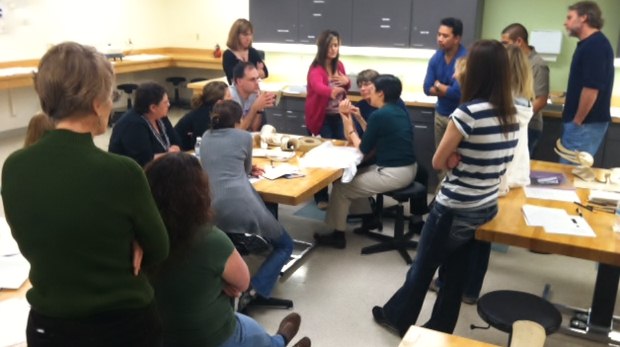
At Ensign Facility Services, Inc., we are committed to providing Learning “Oppties” to the therapy teams we support! The students in this picture are gathering around Nancy Chee as she and Ginny Gibson instruct a group of our therapists in the construction of customized splints. This hands-on workshop was held at Samuel Merritt University in Oakland, CA and was sponsored by Ensign Facility Services, Inc. for 18 of our therapists, demonstrating their passion for learning new techniques for touching the lives of their patients and residents. Last weekend, we held a Kinesio Taping 3 course in South Texas, giving therapists who attended the KT 1 & 2 course an opportunity to further expand their skills. Your Ensign Facility Services Therapy Resource team is looking forward to bringing more courses to our therapy communities.

Please share ideas for courses you would like to see offered in your community below. Be sure to include the name of your facility. The first 10 responses will be entered to win an “Opptie” prize.

Learning “Oppties” #14

WE LOVE OUR THERAPISTS! AND, WE ARE PASSIONATE ABOUT LEARNING! Throughout the month of February, we are providing Learning “Oppties”. To learn more about the February Learning “Oppties” program, please read the introductory article posted January 31.

Today’s Learning “Opptie” is related to the RAI Manual for MDS 3.0, v1.07, Chapter 3, Section O (manual can be found by going to cms.gov). As a refresher, set-up time is the time required to adjust equipment or otherwise prepare th treatment area for skilled rehabilitation service. Set-up time is to be included in the count of minutes of therapy and may be performed by the therapist, therapist assistant or therapy aide. The set-up time shall be recorded under the mode for which the resident receives initial treatment when he/she receives more than one mode of therapy per visit.

“Oppties” challenge. While following the state supervision rules, the Physical Therapist directs the therapy aide to prepare the treatment area for Mrs. Q and Mrs. R treatment sessions. The therapy aide records 4 minutes of time to set up the equipment for Mrs. Q and 7 minutes of time to set up the treatment area for Mrs. R. The physical therapist provides therapies that are not the same or similar to Mrs. Q and Mrs. R at the same time, for 32 minutes. Both patients are receiving therapy services under the Medicare SNF PPS Part A benefit. Using the “Oppties” challenge and MDS information above, answer the following question:

  • Which mode(s) of treatment and how many total minutes would be recorded for each resident?