PEPPER IS HERE!

pepper!written by Ellen Strunk, PT, GCS, CEEAA

The Program for Evaluating Payment Patterns Electronic Report (PEPPER) provides SNF-specific data statistics for Medicare services by provider. Each report compares a SNF’s Medicare billing practices with other SNFs in the states, MAC jurisdiction and nationwide, so the SNF can determine the level of risk for improper payments. The 2013 reports contain statistics for episodes of care ending between October 1, 2009 and September 30, 2012.

The type of information that can be obtained from these reports include:

  • Proportion of days billed in the highest ADL categories (X, L, and C)
  • Proportion of assessments completed as a change of therapy assessment
  • Proportion of days billed in the RU and RV RUGs
  • Proportion of episodes with a length of stay of 90+ days

The reports were mailed to each SNF individually on or before August 30, 2013 and are not available to the public; CMS is providing these reports “freely” to all SNF providers nationwide. SNFs are encouraged to use the data to support their own internal auditing and monitoring activities.

Ellen Strunk is owner of Rehab Resources and Consulting and a partner to the Therapy Resource Team at Ensign Services, Inc.

CMS National Partnership to Improve Dementia Care in Nursing Homes

Improving Dementia CareOn July 10th CMS hosted a National Provider Call that focused on the goal of improving dementia care in nursing homes. This National Partnership is focused on care that is person-centered, comprehensive, and interdisciplinary. During the call, care approaches that are person-centered and individualized were highlighted, and facility systems and tools to enhance care were discussed.

Shari Ling, Deputy Chief Medical Officer at CMS, stated that the partnership promotes the 3 “R”s to providing quality dementia care:

Rethink – rethink our approaches to dementia care

Reconnect – reconnect with people using person-centered care approaches

Restore – restore good health and quality of life in nursing homes across the country

CMS will measure our success in making these critical changes during our survey process, and by measuring our use of psychotropic medications in persons with dementia. Dementia care and psychotropic use is sure to be a focus for our annual surveys as our industry raised the bar to provide a higher quality of care for this fragile population.

During this inspiring National Provider Call, Dr. Laura Gitlin, a researcher at John Hopkins University and the Director of the Center for Innovative Care on Aging, presented findings on the use of an OT driven treatment intervention called a Tailored Activity Program (TAP). Recent research has shown that the Tailored Activity Program was effective in reducing behavioral symptoms in persons with dementia. The process is very similar to what we have put into place in some of our facilities using our integrated cognitive care approaches. In the next edition of the Flag POST, we will be sharing how some of these integrated care programs are coming to life in our facilities as we work with our clinical partners to individualize the programs for each facility.

Pet Therapy

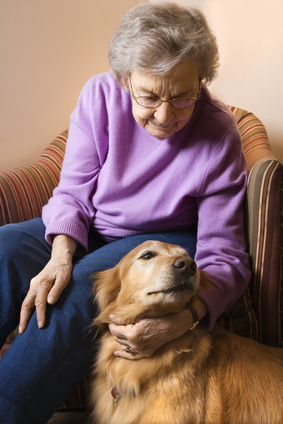
elderly caucasian woman petting dog.Can a pet improve the quality of life for a human? Those of us who own pets know they make us happy. But growing scientific research is showing that our pets can also make us healthy, or healthier. That helps explain the increasing use of animals — dogs and cats mostly, but also birds, fish and even horses — in settings ranging from hospitals to nursing homes.

Nursing homes were one of the first settings to graciously open their doors to the concept of pet therapy, which was developed by Therapy Dogs International (TDI) more than 30 years ago. Today, therapy dogs and cats are registered from all types of breeds, and many are rescue animals. In 2012, there were roughly 25,000 therapy dogs registered. All therapy dogs and handlers are volunteers and are located in all 50 states. The typical therapy dog is at least 1 year of age, and each dog must pass a temperament evaluation and demonstrate appropriate behavior around people with the use of some type of service equipment (e.g., wheelchairs or crutches) in order to become a therapy dog.

It is profoundly moving to see how dogs and cats have the ability to help calm and soothe agitated individuals while lifting the spirits of those who are sad and lonely. They provide a medium for physical touch and display unconditional affection for those who may live isolated lives. Therapy pets elicit responses from some nursing home patients who are typically withdrawn and limited in their abilities. Stroking the back of a dog leads to more movement from the patient and, consequently, increased physical activity. The introduction of dogs and cats increases interaction among individuals and promotes a positive change in self-esteem.

Over the last several decades, multiple studies have measured aspects of human interactions with pets (Katcher, Friedman, Goodman & Goodman, 1998; Millot & Filatre, 1986; Stallones, Marx, & Johnson 1990) and demonstrated validity and reliability. Evidence suggests that pets may enhance self-esteem in patients/people and may assist them in socializing with one another (Zimmer, 1996). Several studies report positive social behavior changes after introducing an animal into the nursing home environment or hospital. The Australian Joint Advisory Committee on Pets in Society conducted a six-month study of the interaction of 60 nursing home residents with a dog. Using pre- and post-test questionnaires, they found positive behavior changes in interest and conversation and an increase in participation in activities of daily living (Salmon, Hogarth-Scott & Lavelle, 1982).

Studies show that pets can aid in relaxation, lower one’s blood pressure, promote healing and prolong life. With the addition of a well-trained handler/health-care worker, the mere presence of a dog may facilitate therapeutic intervention with the non-communicative patient, assist in recall of memories and help sequence temporal events in patients with head injuries or chronic degenerative diseases of the brain such as Alzheimer’s disease, as well as teach appropriate behavior patterns to those with emotional disabilities (Brickel, 1991). According to the National Institutes of Health, among older people, the ownership of pets does not help the general illness status but does act in combating depression. Pet therapy has had a more positive response in nursing homes in comparison to arts and crafts or visitors coming in for the day. Indeed, visits with therapy pets encourage reminiscence and social interaction and result in stress relief and incidental physiotherapy (Island, 1996).

Furthermore, Lynch, Thomas and Weir (1993) examined marked physiological responses in patients who had a dog to pet. The heart rate of a patient with dementia decreased by five beats per minute when he was introduced to a dog and was allowed to pet him. Even managed care organizations are studying the idea of price breaks for pet owners. In a prospective yearlong study of 938 Medicare Advantage enrollees, beneficial effects of pet ownership on the general health of senior citizens were suggested (Siegel, 1990). Improvements in the quality of life in nursing homes have been suggested by a survey of the effectiveness of a pet therapy program with monthly visits to nursing homes in Florida. Commonly reported effects of the visits included shared experiences among residents and greater socialization among residents, and it gave them something to anticipate. A pet therapy program appeared to improve the quality of life for some residents (Yates, 1987).

The scientific evidence is plentiful that pet therapy is a great adjunct to improve the quality of life of older adults. It may not be possible to have a therapy dog or cat that lives at every facility, but it might be possible to have a therapy dog visit your facility periodically. Luckily, Therapy Dogs International (TDI) has 25,000 U.S. dog/handler teams whose purpose is to provide comfort and fulfill this need of therapy pets for each facility. A visit by a therapy dog/handler is absolutely free, and TDI will work with an individual facility to identify the best days and times for visits. TDI also provides liability and accident insurance to its volunteer teams. The teams have been carefully tested by qualified evaluators to ensure the well-being of those being visited, and all dog records are reviewed continuously and updated as recommended by the American Animal Hospital Association.

To request a TDI dog/handler team visit, send a request on facility letterhead with information about the facility and the type of visits you are seeking. Include a contact name and number. Fax to (973) 252-7171. Therapy Dogs International , 88 Bartley Road, Flanders, NJ 07836, Phone: (973) 252-9800, Email: tdi@gti.net, website: www.tdi-dog.org

By Jon Anderson, PT, Keystone Therapy Resource

The Alta Project

Congratulations, Alta Vista Rehabilitation and Healthcare Center, on recently being published in the Winter 2012–13 • Vol. 36 .No. 4 issue of Journal of the American Society on Aging!

The article highlights the Alta Project at Alta Vista’s facility in Brownsville, Texas. Led by Medical Director Dr. Lorenzo Pelly, the project focuses on patient accountability and delivering the highest-quality care before, during and after a patient’s admission. Dr. Pelly continually works with and trains staff to enable them to exceed standard care practices, using the following program goals as a guide toward delivering exceptional care:

  • Improve resident care
  • Reduce the number of rehospitalizations related to errors by 20 percent in less than two years
  • Reduce miscommunication at all levels of the care process
  • Improve healthcare professionals’ decision making through staff education and checklists
  • Increase understanding of criteria for admissions to the nursing home from the hospital
  • Avoid futile care (that which does not improve the illness or quality of life)
  • Promote awareness of highly detailed screening and the cross-referencing network for each resident

With the introduction of the new tools and processes below, the Alta Project offers an industry benchmark through which facilities nationwide can enhance their patients’ care.

Resident Admission Checklist

This checklist, completed by two nurses, reminds the nursing staff to place the new resident close to the nurse’s station and ensures the complete transfer of vital clinical information for each resident. The extra checks and balances enable staff members to obtain all of the information required to prevent rehospitalizations, while also allowing for a seamless transition for the patient from acute care into the facility.

Alta Individual Care Plan

This plan, tailored for each resident, offers complete instructions on the short- and long-term needs of residents, including a detailed analysis of medications, special needs, and timelines for treatment and improvement.

Alta Prevention Cart

This mobile cart is stocked with all of the essential medications and equipment needed to intervene in the event of a medical crisis, such as C-paps, B-pap technology, emergency box with IVs, antibiotics and fluids. By facilitating treatment at the Alta Vista facility, the cart helps to prevent patient rehospitalizations.

The Hospital Re-Admission Log

With this tool, the nursing staff and medical director can instantly identify residents who are most at risk for returning to the hospital in 30 days. It incorporates a tracking log spreadsheet that charts patients from high-risk to manageable status within 30 days.

The Resident Discharge Checklist

This innovative checklist includes a traditional medication reconciliation list and “tracker” designed to assist residents and their families in understanding the care requirements upon patient discharge. The document describes the patient’s common clinical conditions, symptoms and signs to watch for as well as special medical equipment in use. In addition, it provides caregivers with pre- and post-tests that enable caregivers to understand fully the expected level of care for their loved ones.

Alta DOT System

As a complement to the other systems, the DOT System consists of large colored dots placed outside a resident’s room that visually define his or her condition or need for special observation.

Through the Alta Project, residents are offered uninterrupted care as they move from one institution to another — whether from acute care into Alta Vista or from Alta Vista to home or hospice care. All staff members, including certified nursing assistants, nurses, dieticians and pharmacists, are equipped with the education and resources they need to provide seamless transitions — as well ongoing quality care throughout each resident’s stay.

You’ve Got It!

You have values and you OWN the responsibility for being ACCOUNTABLE to your team for knowing and following the rules governing your practice. You have a PASSION FOR LEARNING. And, with the moving target that healthcare regulation has become, your VALUES are the key to success. Your resource team is committed to keeping you abreast of some of the changes we are directly experiencing in our industry today, as well as the plans for implementation of other changes to come in the very near future.

As you know, on February 22, 2012, President Obama signed into law the Middle Class Tax Relief and Jobs Creation Act of 2012 (HR 3630, Section 3005), which carried with it several implications for therapy service delivery under the Medicare Program. Some of the more relevant items specific to HR 3630 included:

  • It prevented the expected 27.4% cut to the Medicare Physician payment rates (Part B Fee Screen), which were included in the Affordable Care Act. Instead, the signing of HR 3630 kept the rates frozen at their current levels through December 31, 2012.
  • The Therapy Cap Exceptions Process was extended through December 31, 2012.
  • All Claims above the Cap of $1880 are to be rejected without the KX modifier AND are subject to post-payment Manual Medical Review (MMR)
  • A Pre-Authorization Process, which includes MMR, is now required for claims above a threshold of $3700 for PT and SLP Services Combined and a separate threshold of $3700 for OT Services.
  • The spending caps and thresholds were extended to Hospital Outpatient Departments and Outpatient Rehab Agencies.
  • Beginning January 1, 2013, CMS is required to collect data to assist in reforming the payment system for therapy services on patient function.
  • In May 2013, the General Accounting Office (GAO) is required to submit a report to congress on the financial outcome of the MMR Process.
  • In June 2013, MedPAC is required to submit a report on the Outpatient Therapy Payment System.

Your therapy resource team is actively engaged in gathering the most pertinent and up-to-date information from CMS and the Medicare Administrative Contractors (MAC’s) regarding the Manual Medical Review process. We are committed to providing clear and consistent communication and resources as this information becomes available. For example, we are actively engaged in working with partners of the National Association for the Support of Long Term Care (NASL) to identify strategies for improving the processes. We also have an avenue for sharing our concerns regarding the inconsistencies within the MMR process.

Our partnership with RehabOptima has provided us with technology to help us more effectively manage the aggressive changes to processes in billing and tracking authorization. The most recent version of RehabOptima (4.13), released on October 1, 2012, includes several new components for managing the Medicare Part B threshold, MMR process and Cap management. If you haven’t noticed, please take time, to read the release items located under “Release Notes” through the “Help” button on the tool bar.

We are watching closely for the new Final Rule on the Claims Based Data Collection Strategy expected to be released by CMS on November 1, 2012. This new rule is designed to assist in reforming payment for outpatient therapy services and is intended to provide for data collection on patients receiving outpatient therapy services. The initial data collection system suggested is a 12-point scale that is considered to be untested, unreliable and has not been validated. However, work groups comprised of members from APTA, AOTA, ASHA, NASL and others have been presenting alternatives to CMS. While this new rule is scheduled to go into effect on January 1, 2013, some are suggesting that it may need to be delayed or rolled out in phases, due to the concerns surrounding the tool that was initially proposed.

Your therapy resource team will continue to stay on top of these regulatory changes which impact our service delivery. We are involved in CMS Feedback and workgroups. We are continuing our partnership with RehabOptima, and we are working to remodel our Therapy Portal Resources and Training Programs to provide a more systematic approach to giving you the tools you need to continue your quest toward inspiring true greatness by living your values each and every day. You’ve got IT!

by Deb Bielek, Therapy Resource

Our Goal? To Be a Magnet for Top Therapy Talent!

With more than 100 independent facilities currently developing new in-house therapy programs or fine-tuning their existing programs, our growing organization has an insatiable need for outstanding physical, occupational and speech therapy talent. An increasingly competitive market, paired with an ongoing shortage of qualified therapy professionals, has inspired us to ramp up the intensity of our recruiting strategies.

Those of us who have been fortunate enough to work with Ensign for many years sometimes forget how genuinely special our organization is. My goal is to ensure that all therapists (and soon-to-be therapists) out in the world have the chance to learn about our unique culture. If they know us, they will love us!

Here’s a snapshot of some of the cool and creative things we have been working on in order to spread the Ensign love in the past few months:

  • Our very first therapy-focused recruiting video filmed at Atlantic Memorial (you can view this at EnsignTherapy.com and also on all therapy jobs posted on Careerbuilder.com).
  • A more extensive and cohesive Web presence, including an ever-improving EnsignTherapy.com website, along with our brand-new Facebook page (also available through a link at EnsignTherapy.com), and all of our therapy jobs posted on a wide variety of career websites through our fantastic new applicant tracking system.
  • More than 30 university career fair and state therapy convention events attended by your Therapy Recruiting Resource, our enthusiastic Therapy Resources and awesome DORs during the months of September, October and November. Huge thank-yous are owed to Marlyn Praznik and Olivia Gonzales at the service center for their work in making this happen!
  • Per Diem Appreciation Project at select facilities with serious staffing challenges. We are promoting an iPad giveaway, which will take place in November. Per diem therapists can earn chances to win by working four-hour shifts — and 10 chances to win if they refer a regular part-time or full-time therapist to us!
  • Reaching out to Canada with jobs posted on the Canadian Physio-Therapy Association and Canadian Occupational Therapy Association websites as well as upcoming university career fairs and Canadian therapy conventions.
  • Taking advantage of the talents of two of our own stars, Rozina Hyderali and Nelson Layos, to spearhead the recruitment of foreign-trained therapists from India and the Philippines.

I am looking forward to the next three busy months of recruiting quality therapists for this great group of therapy departments. It’s exciting and rewarding to feel that spark in a new graduate when they suddenly grasp the amazing opportunity that Ensign offers to those who have the right stuff — or to help an experienced therapist who is burning out find their professional home in an atmosphere where they can renew and exercise their creativity and passion.

Ensign Closes NASDAQ


On Tuesday, October 23, Ensign was invited to participate in the closing bell ceremony for NASDAQ. This is a great honor and comes almost to the day of our 5 year anniversary of becoming a public company. If you missed it, you can visit the NASDAQ MarketSite to read the article: The Ensign Group, Inc. Rings The NASDAQ Stock Market Closing Bell and view the entire ceremony. When you bring up the video clip it may seem to do nothing for a while because what you are seeing are photos of our team being displayed on a huge billboard in Times Square. If you click on and hold down the two fast forward arrows it will bring up the presentation faster.

PRN Appreciation

PRN Appreciation Program happening now at select facilities!

Cloverdale, CA
Ukiah, CA
Willits, CA
Youngtown, AZ
Reno, NV

For each 4 hour shift worked, therapists will get a chance to win an iPad which will be given away in November. The more shifts worked, the more chances to win!

Refer for more points! A referral of a PRN, part time or full time therapist is worth an extra 10 points. (Each point is worth one entry form in the iPad giveaway!) If a PRN therapist chooses to be considered for a full time position at any of these facilities, they will also earn an extra 10 points. This program is running now through the last week of November with the iPad drawing taking place that week.

Watch for more fun therapy appreciation activities at a facility near you!

Stepping Stones - Balance and Falls Prevention

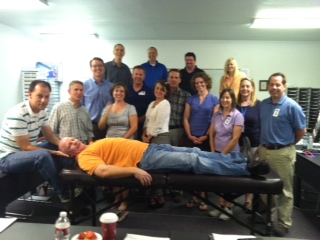
Mike Johanson, Physical Therapist for Horizon Home Health and Hospice, presented our first Stepping Stones – Balance and Falls Prevention course to therapists at our Horizon Home Health office in Boise, Idaho on July 25 and 26. With the support of Craig Esplin, Director of Rehab at Horizon, Steve Burningham, Administrator Horizon Home Health and Hospice, and Danny Walker, CEO of Cornerstone, Mike was given the time and support to create a very special program to help reach patients and clients in need. Seventeen therapists attended the course, including Beth Orcutt who traveled all the way from our Connected Home Health Office in Oregon. Mike and Craig are taking this awesome, interactive 1.2 (12 contact hours) CEU Course on the road, with their next stop at our Symbii Home Health branch in UT later this month. Stay connected at www.EnsignTherapy.com for more information.