Kinesiotaping Provides Positive Outcomes

by Rhianna Wagers-Hughes PT, DPT, CEEAA, CSST and future CKTP –Kinesiotaping became popular during the 2008 Beijing Olympics when Kerri Walsh of the U.S. Beach Volleyball Team utilized kinesiotape to her right shoulder during the games. I was interested in learning a new taping method for my geriatric patients in the skilled nursing setting due to what I had read about the benefits of the tape. Kinesiotape is used to facilitate the body’s natural healing process while providing support and stability to muscles and joints without restricting the body’s range of motion as well as providing extended soft tissue manipulation to prolong the benefits of manual therapy administered within the clinical setting. Latex-free and wearable for days at a time, Kinesio® Tex Tape is safe for populations ranging from pediatric to geriatric, and successfully treats a variety of orthopedic, neuromuscular, neurological and other medical conditions.
I registered for KT1 and 2 in January 2010 and learned the basic methods of kinesiotaping from Amy Stahl PT, CKTI. Immediately, I was able to apply the methods to the geriatric population for lymphatic corrections and facilitation for post-CVA PT in the skilled nursing setting. I contacted the KinesioTaping Association International (KTA) for a specialized geriatric application course so that I could learn specific techniques for the geriatric population. I learned that not many therapists were utilizing the taping techniques with this specific population, so I contacted the APTA and the Geriatric Section so that I could start some case studies with the geriatric population. I have received support from the APTA and KTA in the form of free tape, mounds of information and research articles, and techniques to use with my geriatric patients.

I recently have taken KT3 in McAllen, Texas to learn advanced kinesiotaping techniques for the whole body and to apply the new techniques with the geriatric population at my facility. Outcomes are positive with lymphatic corrections, mechanical corrections and fascial corrections to improve functional mobility and ADL performance with all orthopedic, neurological and neuromuscular patients. I will be taking my certification exam to become a certified kinesiotaping practitioner (CKTP) to add to the many tools in my toolbox to improve the quality of life for my patients.

An Allen-Cognitive Approach Improves the Care We Provide

In the United States, dementia is the most common diagnosis for nursing home residents, and the prevalence of dementia may be as high as 74 percent in nursing homes (Magaziner et al., 2000). You may have seen the statistic that 5.4 million Americans have Alzheimer’s dementia (Alzheimer’s Association, 2011), but did you know that another 5.4 million Americans over the age of 70 have cognitive impairment without dementia (Plassman et al., 2008)?
Ensign’s E-Prize

For those of you following the E-Prize competition, you may have noticed that two of the nine finalists in this contest specifically looked at improving the lives of residents with cognitive impairments. The facilities were Julia Temple and Holladay Healthcare, and the programs both facilities implemented were based on an Allen-Cognitive approach to care. Allen’s Cognitive Disability Model provides tools to evaluate the functional cognitive level of residents and gives you information on how to best interact with residents at different cognitive levels.

Evidence-Based Practice

The staffs of Julia Temple and Holladay Healthcare and the E-Prize judges agree that the Allen-Cognitive approach to caring for our residents improved their quality of life. We also have statistically significant results to support these observations. For my dissertation, I studied the effect of the Integrated Cognitive Program at Holladay Healthcare. The study looked at a group of 31 residents who lived at Holladay for the year before and 11 months after the implementation of the Allen-Cognitive approach to care. The study looked to see if implementation of the Allen-Cognitive approach had a measureable effect on the quality indicators of each resident. For the residents included in the study, quality indicators for three three-month periods before the implementation of the Allen-Cognitive approach were compared to quality indicators for three three-month periods post-implementation.

The residents in the study all had cognitive impairments — their level of impairment ranging from mild to severe on the MDS Cognitive Performance Scale. The study found a statistically significant reduction in the number of quality indicators for behavioral symptoms affecting others, and also a statistically significant reduction of total number of quality indicators for residents with an average of more than two quality indicators before the implementation of the program. These results suggest that an Allen-Cognitive approach can significantly improve the quality of care in nursing homes.

So how does the Allen-Cognitive approach work? The cognitive disabilities model presents six levels of cognitive abilities known as the Allen-Cognitive levels. Each level identifies the functional ability of a person, the scope of the person’s social ability and how much assistance the person needs to complete specific activities of daily living. The range of functional cognition covered in the Allen-Cognitive scale is from Level 1: profoundly disabled to Level 6: normative behavior. Each Allen level also is divided into five more specific levels called modes.

The Allen-Cognitive levels differ from most cognitive evaluations in that they measure functional cognition rather than verbal performance. The resident being assessed performs a task, and the therapist observes the sensory cues to which the client responds as well as the client’s motor actions during the task. At the lower end of the Allen-Cognitive scale, a person can respond only to internal cues and has only reflexive movements; at higher levels of cognition, a person can process more external cues and has purposeful movements.

Once we establish the resident’s Allen-Cognitive level, we can educate caregivers and family members on the abilities of the resident, allowing the caregivers to better understand and care for the resident. Allen refers to this as providing the person who has cognitive deficits with their “best ability to function.” By understanding the functional cognitive level at which a person is operating, we are able to provide cues that can mitigate the anxiety and frustration a person might experience when presented with a task that is too complicated for his or her remaining cognitive abilities.

Establishing a resident’s Allen-Cognitive level also allows us to identify excess disability based on the resident’s functional cognitive level. For example, a resident with an Allen-Cognitive level of 2.4 or higher has the functional cognitive ability to walk. Therefore, a resident with an Allen score of 2.4 or higher who is not walking and does not have a medical issue that precludes the ability to walk has the potential to walk. The fact that the resident is not walking is a disability in excess of the resident’s physical and cognitive conditions and may be improved with the intervention of a physical therapist. The physical therapist can use the Allen information to individualize treatment plans, set appropriate goals and justify the necessity of skilled services.

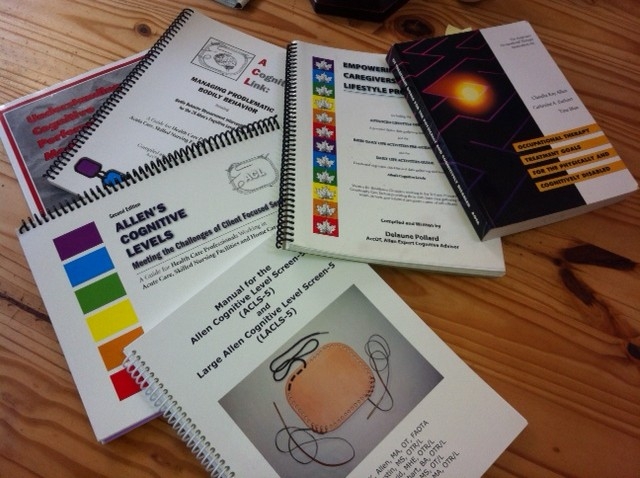
Several therapists who are skilled in the Allen assessments work for Ensign-affiliated operations and can be resources to you. There are also many books and continuing education classes available for the Allen-Cognitive approach. We encourage you to consider adopting this approach in your facility.

References:

—Alzheimer’s Association. (2011). Alzheimer’s disease facts and figures. Alzheimer’s & Dementia, 7(2). Retrieved from: http://www.alz.org/downloads/Facts_Figures_2011.pdf

— Magaziner, J., German, P., Zimmerman, S. I., Hebel, J. R., Burton, L., Gruber-Baldini, A. L., . . . Kittner, S. (2000). The prevalence of dementia in a statewide sample of new nursing home admissions aged 65 and older. The Gerontologist, 40(6), 663-672.

— Plassman, B. L., Langa, K. M., Fisher, G. G., Heeringa, S. G., Weir, D. R., Ofstedal, M. B., . . . Rodgers, W. L. (2008). Prevalence of cognitive impairment without dementia in the United States. Annals of Internal Medicine, 148(6), 427-434.

Have You Thought About Advancing Your Education?

… Or, perhaps even advancing your degree? Many of our facilities offer programs to assist you with living your “passion for knowledge.” Some of these programs include financial support for continuing education courses. Other programs may include tuition reimbursement for university courses or certification credit. Through one of our most recent relationships with the Rocky Mountain University of Health Professions (RMUoHP), we will be tailoring some courses to fit your needs in the area of leadership development. The RMUoHP also offers post-graduate doctoral programs in both Physical and Occupational Therapy, which are designed to meet the needs of the working learner. If the pocket book is a little tight right now, take advantage of the new courses being added to our Learning Management System, Brainshark. Not only are the Brainshark courses helpful for navigating through our ever-changing healthcare environment, but our development plans include information to challenge you to grow as therapists and leaders. Watch for a release mid-summer 2012 on the Allen Cognitive Levels, Part I. And Part II, being released in August, will include demonstration training for administering components of the Allen Cognitive Battery of Assessment Tools.

If you haven’t had an opportunity to attend a learning event sponsored by your therapy resource team at Ensign Services, please watch www.ensigntherapy.com for upcoming opportunities. During the past 6 months, we have partnered with facilities in different states throughout our company to bring a variety of educational events to you. South Texas has co-sponsored Kinesio Taping I, II, and III. The KT I and II course will be offered in Dallas, Provo, Arizona and Southern California sometime over the next few months. Therapy Resources Gina Tucker-Roghi, Ryan Hough and Debbie Ellis have also become certified trainers in an 8-hour course on Dementia Care, and they are beginning to schedule trainings with interested facilities in select areas. We are developing a seating and positioning training to assist with filling a need identified by several of our DOR’s. Our Southern California Resources are working with education specialists to offer modalities courses. We are also looking to offer another CI Certification Course sometime later this year.

Your therapy resource team at Ensign Services is proud of the therapy programs you have built and continue to build in your rehabilitation departments. Your programs are creative, individualized, transformational and second to none! By providing students and interns an opportunity to see the team in action and learn from Clinical Instructors (aka, CI’s or mentors) who are absolutely passionate about the work that they do each day, you will make an impression and dispel any preconceived ideas about long-term care that any of these students may have had . Students are our lifeline, our future, our profession. The golden opportunity we have created as an organization, by partnering with so many different accredited Therapist and Assistant training programs (over 80!), provides us the ability to mold our future.

We recognize that the commitment required to mentor a student is great. We have committed resources to developing tools and education to enhance the mentoring experience. In November 2011, we held a CI Certification Course in Southern California, which was attended by 22 of our therapists. We are developing an instructor “manual” which will help to streamline answers to questions regarding regulatory requirements, How-To’s for Students when it comes to ROX and PCC, as well as time management and scheduling strategies. We are developing two new Brainshark Curriculum programs and will introduce our first modules in June 2012. The first curriculum will be designed for the student learner in one of our facilities (Orientation Basics, ROX /PCC for Students, Etc.). The second curriculum will be designed for the mentor with short trainings meant to compliment the manual mentioned earlier.

We are deeply passionate about learning and knowledge. Please share your ideas and needs for continued enhancement of our development offerings. You can provide your suggestions here on this website by submitting a blog or via e-mail to dbielek@ensigntherapy.com. Thank you for giving us the opportunity to better serve you and your therapists.

Geriatric Sports Medicine — Total Shoulder, Hip and Knee

This is the third year that we are providing seminar/CEU credits for Flagstone and Touchstone therapists. This year, the topic is Geriatric Sports Medicine presented by Wilson Seminars. It will be held July 14 and 15 (and is already full with more than 90 participants). The later dates are September 8 and 9 on the same topic to accommodate the rest of Flagstone and Touchstone therapists. We have received overwhelming responses from our therapists, and they are hoping that Ensign Therapy will continue with the programs.

Osteoarthritis is a disease characterized by degeneration of cartilage and its underlying bone within a joint as well as bony overgrowth. The breakdown of these tissues eventually leads to pain and joint stiffness. With decreased activity, patients can expect a vicious cycle of increased pain and impaired mobility. Currently in the United States, there are more than 231,000 total hip replacements, 542,000 total knee replacements and 40,000 total shoulder replacements performed per year. Projections state this number will quadruple by 2030. Though the baby boomers are coming, joint replacement surgery is no longer reserved for patients older than 65. In fact, 35 to 45 percent of all Total Joint Arthroplasties (TJA) recipients in the United States are below age 65. The success of joint arthroplasty (and marketing) has created an improved general acceptance and expanded recreational opportunities for younger patients suffering from osteoarthritis. Rather than avoid activities and put off surgery until a later age — when there could be weight gain from inactivity and a greater risk from co-morbidities — younger patients are eager to elect surgery sooner rather than later.

The goals of joint replacement surgery are to relieve pain and to restore function and mobility. Physical and occupational therapists and assistants are the best trained and arguably in a good position to excel with the pre-and post-surgical treatment needs of this medical population. Wilson’s basic- to intermediate-level course combines lecture and extensive lab time designed for participants to practice motor skills covered in lecture that will immediately enhance a clinician’s ability to treat this population. This two-day course will investigate the total shoulder, reverse total shoulder, total hip, hip and knee fractures (S/P ORIF) and total knee replacement rehabilitation of patients. We will look at orthopedic hardware and healing principles, basic joint mobilization of the shoulder, hip and knee, therapeutic exercises and activities. An evidence-based medicine approach will be followed in regard to: 1) what surgical approaches are best and 2) what rehabilitation protocols are best.

Participants will leave this course with a safe, progressive, evidence-based approach of manual therapy dosed with individually prescribed, proprioceptively enriched, therapeutic exercises to allow for optimum therapy outcomes regardless of therapy background.

First Clinical Instructor Course

Ensign Facility Services Hosts First Clinical Instructor Course

Our first Ensign-hosted APTA Clinical Instructor Course was held in Southern California at Southland Care Center in November. We had a great turn-out of PTs, OTs, and SLPs from across the country. Debra Bierwas PT, DPT from Midwestern University was the course instructor. Debra is the Director of Clinical Education at the Doctor of Physical Therapy Program for Midwestern University. There was a wealth of information for both the experienced and novice clinical instructor, with a lot of real-life examples, with challenging situations discussed in detail. Debra Bierwas told us afterwards that it was the best and most interactive CI course that she has ever taught. Not a surprise to me with our outstanding Ensign therapists! Thanks to Deb Bielek for making this happen, and thank you to all the therapists who attended. We will be looking to host another CI course soon, so let your therapy resource know if you are interested!

Kinesio Taping Seminar - Applying the “Magic” of Tape Across Rehab Centers

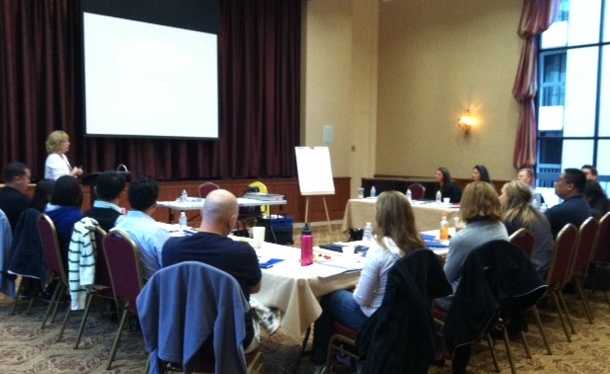
When Texas hosts a CEU course, they think BIG. Jon Anderson, Texas Therapy Resource, identified a growing interest and need for Kinesio Taping, and soon after he posted the course details, interested therapists from across South Texas clamored to register. Jamie Funk quickly worked with our Service Center to set up a PayPal account for outside therapists to register and pay through www.ensigntherapy.com. Deb Bielek, Jon, and Jamie met and talked with therapists throughout the 2-day course to share information about our facilities and our unique culture. 38 therapists attended in all, with 20 outside therapists from around the community. Jon used the money earned to pay for the course and the venue at South Texas College, and the residual earnings will go toward a scholarship fund for the college’s PTA/COTA program.

“Something better than any laser, wrap, or electric massager…The Tape. It is a special hot-pink athletic tape that came from Japan and seemed to have special powers. Every morning before the stage, they would tape us all up, different parts of our bodies . . . George’s back, Chechu’s knees. Sometimes we’d be so wrapped up in hot-pink tape that we’d look like dolls, a bunch of broken dolls. But the next day the pain disappeared–it was gone.”

—-Excerpt from Lance Armstrong’s book, “Every Second Counts”

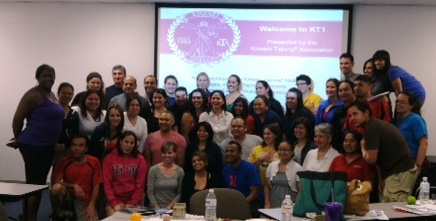
The description above of this magical tape is catching on and spreading like wildfire, and has now made its way from the athlete to the geriatric setting. Therapists working in skilled nursing facilities supported by Ensign Facility Services, Inc. (EFSI) have taken notice and recently participated in a three-part certification course to become certified Kinesiotape therapists. The first and second phases of the course (K1 and K2) were held on January 21 and 22 for nearly 40 therapists in South Texas (19 Ensign Therapists, and 21 outside therapists). The 16 CEU credit hour course received an overwhelming response and filled up in record time with nearly 30 outside therapists on the waiting list.

In K1 and K2, therapists learn about the tape itself and a variety of treatment approaches for the tape. To summarize, the tape is elastic-woven and comes in a variety of widths, colors and types. It is cut into different shapes and applied with a slight to moderate stretch and placed on the skin. Although it may look like conventional athletic tape, it is fundamentally different in that it has a specific elasticity that plays a role in its effectiveness. The tape should always be applied by professionals trained specifically for the different applications. Most often the tape is strategically placed in “waves” and is effective for 3 to 5 days before it needs to be replaced. You can shower or swim with it and it doesn’t contain latex, which is great for those with latex allergies.

In addition, the taping technique is based on the body’s own natural healing process. Rather than “strapping down” the muscle, the philosophy is to give free range of motion and allow the body’s own muscular system to heal itself bio-mechanically. Application of Kinesiotape encourages muscles to function as they would if they didn’t need the tape, which improves not only body movement but circulation of venous and lymph flows. If your sore muscles are supported and allowed to heal, you are not in as much pain and you relax. Your performance improves along with faster healing.

K3 course, which is an 8-hour CEU course, will be held for the same group of therapists on April 14 at South Texas College in McAllen, Texas, and will focus on advanced applications of the tape. Upon completion of this final third course, participants will have the ability to sit for the Kinesiotape certification exam and become certified Kinesiotape therapists. If you would like to participate in K1 and K2, an additional course is being set up for the Dallas area for early summer, an e-mail will be sent to the field when the dates are set.

Inspired to Transform

“Transforming Care” was the theme for the DOR meeting this year, and our DORs from across the organization had an opportunity to share ideas, interact with fellow therapy leaders, and enjoy the beautiful Ocean Institute in Dana Point. We are so fortunate to have this opportunity to come together, learn from one another, and strengthen our therapy foundation. This year’s theme was gently woven through each presentation, and we all left feeling a new charge to bring transformation and inspiration back to our facilities.

We’ll be back….

2011 Career Fairs

Feb 4, 2012 – NSSLHA Conf at Sacramento State (SLP) – Sacramento, CA
Jan 25, 2012 – Green River Community College (OTA/PTA) – Auburn, WA
Dec 14, 2011 – Hardin-Simmons University Career Fair (DPT) – Abilene, TX
Nov 12, 2011 – Colorado APTA Conference – Arvada, CO
Nov 4-6, 2011 – Texas OT Association Conference – Frisco, TX
Oct 28, 2011 – Loma Linda University Career Fair (OT/PT/SLP) – Loma Linda, CA
Oct 27-30, 2011 – Texas PT Association conference (PT/PTA) – The Woodlands, TX
Oct 18, 2011 – Texas Tech Univ Health Sciences Fair (PT/OT/SLP) – Lubbock, TX
Oct 7-8, 2011 – Washington OT Annual Conference (OT/COTA) – Bellingham, WA
Oct 6-7, 2011 – Iowa SLP Association Conference – West Des Moines, IA
Sept 28-30, 2011 – NE Speech/Language/Hearing Fall Conference – Kearney, NE
Sept 27, 2011 – The Keiser University Career Fair (PTA/COTA) – Jacksonville, FL
Sept 23-24, 2011 – Nebraska PT Association Fall Conference – Omaha, NE
Sept 23-24, 2011 – Nebraska OT Association Annual Fall Conference – Lincoln, NE
Sept 21, 2011 – Univ of St. Augustine San Diego Fall Conference – San Diego, CA
Sept 17, 2011 – Utah OT Association Fall Conference – West Jordan, UT
Sept 16, 2011 – Iowa OT Fall Conference – Des Moines, IA
Sept 16-17, 2011 – Arizona OT Association Conference – Phoenix, AZ
Sept 14, 2011 – University of St. Augustine (PT/OT) – St. Augustine, FL
Sept 13, 2011 – AT Still University (OT) – Mesa, AZ
Sept 9-10, 2011 – NMOTA NM (OT/OTA) – Albuquerque, NM
Sept 8, 2011 – The University of New Mexico (OT/PT/SLP) – Albuquerque, NM

Integrating Care: Alzheimer’s Disease

By Pat Jakubiec, OT

We can better understand individuals, support their success and quality of life, reduce the burden of care, and uncover the joy that can be experienced in care-giving in all stages of life.

Currently, there are over 35 million individuals with Alzheimer’s disease or a related dementia worldwide. This number has increased by 10 million in the last 5 years. There are over 5 million with the disease in the United States. There is no available cure. Adaptation through care-giving and environmental approaches is critical for the care of these individuals. Improving function, preventing secondary consequences and promoting their well-being can have a huge impact on society, both economically and socially.

The Allen Cognitive Network is an international group of professionals that pursue clinical teaching, service delivery and research activities related to psychosocial, physical and geriatric rehabilitation. Their mission is to promote and advocate for the value and understanding of Allen’s Cognitive Disability Model through education and networking opportunities that empower health care professionals to promote their best abilities to function for individuals with cognitive disabilities.

The Network recently hosted its 8th international cognitive symposium this year in Philadelphia with a theme of “Linking Evidence with Practice.” The Keynote speaker featured was Dr. Laura N Gitlin, PhD. Dr. Gitlin is a professor in the Department of Occupational Therapy, School of Health Professions, and the founding director of the Jefferson Center for Applied Research on Aging and Health at Thomas Jefferson University in Philadelphia. She is recognized nationally and internationally for her innovative research and publications on dementia care.

Dr. Gitlin uses the Cognitive Disability Model in her research and spoke of dementia as being a significant challenge to society, as it is 100% incurable. She feels we need better ways of diagnosing the disease and that culturally appropriate tools are underestimated. There is fragmentation in service delivery, and the direct and indirect costs associated with memory disorders are skyrocketing. Medications can be overused, and there is a growing body of evidence that supports non-pharmacological approaches. Some of the common challenges associated with dementia include:

  • Refusing care
  • Repeating questions
  • Toileting issues
  • Unmanaged pain
  • Verbal aggressiveness
  • Inappropriate behaviors
  • Agitation
  • Functional decline
  • Disengagement
  • Depression

Dr. Gitlin supports a collaborative care model and treatment that:

  • Maintains or improves quality of life
  • Maintains or increases function and engagement in activities
  • Supports medical management
  • Supports families
  • Customizes programs to address identified needs

After the international symposium, Delaune Pollard from Australia, author of several clinical books used for training in this program, and Pat Jakubiec, Ensign therapy resource, presented a two-course program at Grand Valley State University in Grand Rapids, Michigan. Also present were Joan Riches from Alberta, Canada, and Jo-Anne Gislesen from New Zealand, both past presidents of the Allen Cognitive Network (ACN), and Carol Luhmen, president-elect of the ACN.

As a therapy resource for Ensign, I am pleased to be able to bring forth an integrative approach and training program. Ensign has a culture that supports the standards and provides direction and leadership in this area. The program uses an evidence-based framework, both for application and training. It includes the use of standardized assessments, completion of a skilled personal profile, development of individualized programs that are integrated with all staff and family members, and environmental structuring. Teams are educated together to provide continuity of care and unified growth.

Last year we piloted this program in four facilities, all with positive experiences. Holladay Health Care in Utah, Julia Temple in Colorado, Vista Knoll Specialized Care in Southern California and Cloverdale in Northern California. One building has reported a significant reduction in falls, and others have reported better management of challenging behaviors, more focused activity programs, and better ways to educate the families.

We are currently looking at progressing some of the pilot sites and tracking outcomes. Julia Temple in Colorado is currently involved in a phase 2 intensive program. The building has strong core practice structures that will support an innovative program. They have a neighborhood structure, regular nurse aide assignments and a team that embraces caring and a continuous improvement process. They are managing challenging behaviors better, individuals are more engaged in their surroundings, the environment is calmer and some families have started to take note. They have implemented an innovative music program, using speakers under the direction of Audrey Lyons, a skilled music therapist. Later next year, we hope to implement a formal family program. This program will be available to all facilities and Home Health programs affiliated with Ensign as it develops within the organization.

Learning about the Integrated Cognitive Training has given me a totally different perspective on how to care for patients. I have been in skilled nursing for over 10 years and have typically done things in the same way, whichever has worked in the past. They say don’t change what isn’t broken. However, I have observed an increase in the number of cognitively impaired patients coming to our industry for rehabilitation; most of which we have given up in the past. No form of experience has given me the solution to bring out the best in these patients. We have accepted that we can only do so much for them; so you just have to try, with not much expectation. Learning about this system has given me a totally different perspective on how to do things. I now have the tools to truly work with different levels of cognitively impaired patients. Putting this theory into practice is just like a game, but with a very positive, promising outcome. I understand it will take time and everybody’s involvement, but this has given me the confidence to deal with staff and families, to ask their participation in totally supporting this program. I am a visionary. I would like to see Vista Knoll improve our program, not only for dementia patients, but to truly be called a Specialized Care Program, as our name suggests, and be well known for rehabilitation for the cognitively impaired.” Marivic Uychiat RN BSN , Director of Nursing , Vista Knoll Specialized Care

Catalina Healthcare has Patients Walking on the Moon!

When Bruce Fraser from a company called “ALTER-G” first contacted Lori Mitchell, Physical Therapist and DOR, she was ready to hang up almost immediately, thinking it was just another sales call. But, as soon as Bruce started talking about an “antigravity treadmill, developed by NASA, which will allow patients to exercise and maintain weight bearing restrictions,” Lori started listening. What she discovered was that this newly released, FDA-approved device could have the ability to make a tremendous impact with her patient and resident population at Catalina Healthcare in Tucson, AZ.

Lori invited Bruce to meet with her Therapy Department and share more about this unique piece of equipment. She thoroughly researched the technology of the device and arranged to have a 30-day trial, with the goal of incorporating the Alter-G into the therapy program of patients who could benefit from it. Lori also wanted feedback from patients, caregivers and therapists regarding the perceived benefits and challenges of the Alter-G. This information would allow her to make an informed decision about whether or not this could be something of value for her program. With that goal in mind, Lori developed a survey to use during the trial. The Alter-G was used in treatment at Catalina 54 times over two weeks for walking or static standing exercises at 50%-65% of body weight.

Patients reported the following:

Hip pain went away

Legs felt better in the machine

Able to do exercises and hop on one leg, and the other leg didn’t buckle

“I am walking on the Moon”

Less pain

Entire body feels good on it

No pain in arms (due to reduced Weight Bearing on UEs)

Therapists reported the following:

The majority of the patients did much better with ambulation after using Alter-G

It is good for endurance and functional activity tolerance for ADLS/Gait/Standing

Using the Alter-G really boosted the confidence of a new amputee

There was an overall boost to the patients’ confidence

The Alter-G is much easier to use than a pool and there are similar unloading results

How Does ALTER-G Work?

Originally conceived by Dr. Robert Whalen to design effective exercise regimens for NASA’s astronauts, Differential Air Pressure (DAP) technology has been adapted by Alter-G for use in training and rehabilitation. Cleared by the FDA in 2008, the Alter-G Anti-Gravity Treadmill is a medical device that can be used for:

Rehabilitation of lower extremity injuries

Treatment of neurological conditions

Weight reduction

Aerobic conditioning

General training to combat the diseases of aging

Unweighting is achieved in the Alter-G by using air in a pressure-controlled chamber to gently lift the user. Precise calibration using patented technology allows for very specific unweighting from 100—20% of the user’s body weight in 1% increments—something no other unweighting modality can do.

Clinical studies show that the Alter-G can help decrease ground reaction forces in walking and running. The restoration of normal gait mechanics is paramount to expected recovery.

The team at Alter-G makes the statement that there are numerous benefits of implementing a senior rehabilitation and mobility program that uses this technology. It can inhibit or postpone bone loss, diabetes and heart issues. It can also reduce arthritis pain, anxiety, and depression. It also prevents functional decline which allows for independence in essential activities of daily living, such as walking, bathing, dressing, getting up from a chair, and using the toilet.

For the first time, senior rehabilitation and mobility are easily monitored and progress verified with Alter-G’s Anti-Gravity Treadmill in the most needed exercise areas:

Endurance – walking strengthens muscles and improves the health of the heart and circulatory system

Strengthening – increase muscle tissue mass and decrease age-related muscle atrophy

Range of Motion – keep the body flexible and maintain good joint health

Balance – reduces the likelihood of falls by training in a controlled environment

FUNCTIONAL REHABILITATION

Physically frail elderly persons who received supervised functional rehabilitation therapy that included strength training improved on function, strength, balance, mobility, and quality of life measures, according to studies conducted by Yale researchers reported in the October 3, 2002 issue of The New England Journal of Medicine. Researchers saw a 45 % decrease in impairment after 7 months of balance and strength training. The Alter-G treadmill has been FDA-cleared for strengthening and conditioning in older patients. FDA-cleared rehabilitative uses include any lower body disability, neurological gait training, geriatric strength training, fall prevention and weight loss program.

Lori Mitchell and her therapy team at Catalina Healthcare have taken one giant step for mankind as they have their patients walking on the moon using Alter-G.

·