Online Training Modules to Implement the Abilities Care Approach™

Clients with dementia living in skilled nursing facilities have occupational needs that are often unmet. Individualized care approaches and engagement in meaningful activities are effective non-pharmacologic approaches to dementia care. However, they are infrequently implemented in SNFs, and patients with dementia are often medicated with antipsychotic medications to manage behavioral symptoms related to dementia.

Occupational therapy practitioners and students who practice in SNFs may benefit from training to develop the knowledge, skills, attitudes and beliefs required to meet the unique occupational needs of clients with dementia who reside in long-term care SNF communities.

Background

  • The Centers for Medicare and Medicaid Services created a national partnership in 2012 to improve dementia care in nursing homes
  • Individualized to interests and backgrounds
  • Tailored to the cognitive and physical abilities of an individual
  • Considers medical needs and complications

Abilities Care Approach to Dementia:

  • Meets the occupational needs of clients with dementia
  • Based on the cognitive disability model
  • Utilizes a collaborative model of care, partnering with caregivers to adapt caregiving approaches and the environment to engage clients in meaningful occupations
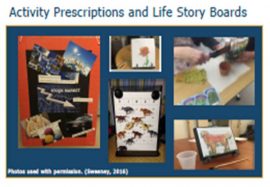
  • Includes the creation of individualized activity prescriptions, care approaches and life-story boards

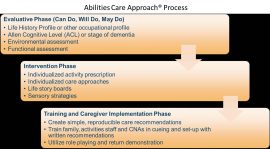
Abilities Care Approach Process

Implementation: Online Training Program

The online training program is available to OT practitioners and students through Ensign-affiliated SNFs. It incorporates effective teaching methods, including opportunities for student reflection, interaction with content, self-assessment of learning and application.


The training program is designed to:

  • Prepare OT practitioners to provide evidence-based, reimbursable services in an emerging practice area
  • Support reflection on the beliefs and values of OTs making the shift to a collaborative model of care
  • Familiarize OT practitioners with the Abilities Care Approach tools and resources available on the Portal

Note that additional references and literature are available upon request for those interested in implementing the Abilities Care Approach to Dementia.

By Gina Tucker-Roghi, OTD, OTR/L, Therapy Resource, Northern CA

Bladder Training Program/Continence Improvement Program

Urinary incontinence is a hidden epidemic. UI is among the 10 most common chronic conditions in the United States and is even more common than hypertension, depression or diabetes.

A majority of residents in skilled nursing facilities have some degree of incontinence. UI is quite costly in terms of quality of life of residents and the financial impact on facilities. As such, our Bladder Training Program seeks to address any incontinence issues among our residents.

Benefits of the program include:

  • Improves residents’ quality of life
  • Improves quality measures
  • Decreases the risk of pressure ulcers
  • Decreases the cost of UI care (the direct cost of UI care is greater than the cost of breast, cervical, uterine and ovarian cancers combined, to the tune of an estimated $12.4 billion annually)

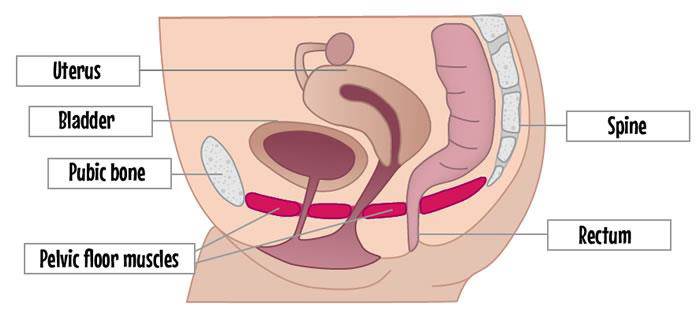
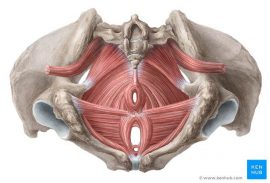
Pelvic Floor Muscles

  1. Pelvic Diaphragm: Levator ani muscle (Puborectalis, Pubococcygeus, Iliococcygeus) and Coccygeus muscles
  2. Urogenital Diaphragm: Deep transfer perineal, Sphincter urethrae
  3. Sphincters and erectile muscles of urogenital and intestinal tract: External anal sphincter, Bulbospongious, Ischiocavernosus, superficial transverse perineal

Methods

Step 1: Patient identification — Review Quality Indicator report. Look for residents with “Urinary Incontinence.” There is correlation between UI and fall, so consider those who have fallen. Look at female patients with history of hysterectomy (there is a strong correlation between the procedure and UI).

Step 2: Nursing assessment — Identify type of incontinence, i.e., stress, urge, mixed, functional or overflow, by using incontinence assessment form and simple three-day voiding diary:

  • Stress type: Leakage of small amount of urine during physical movement, usually from pelvic floor muscle weakness.
  • Urge type: Involuntary loss of urine associated with a strong desire to void. Leakage of large amounts of urine at unexpected times, including sleep. Sensory loss is a strong influence.
  • Mixed type: Occurrence of stress and urge together. This is the most common type in the elderly.
  • Functional type: Incontinence resulting from inability to access toilet due to physical disability, weakness, external obstacles, inability to manage clothing and/or cognitive impairment.
  • Overflow type: Unexpected leakage of small amounts of urine (without movement) because bladder is excessively full due to damaged bladder, obstructed urethra or nerve damage.

Step 3: Therapy evaluation — Stress, urge and mixed are the most common types to address by therapy intervention. Develop four-week pelvic muscle exercise (PME) training program.

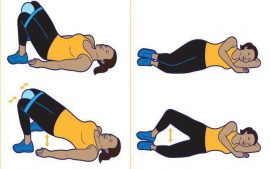
Step 4: Four-week treatment — PMEs to improve the strength and tone of pelvic floor and related muscles to maintain continence. PMEs include Kegel exercises, hip adductor exercises, obturator internus/abductor exercises, transverse abdominal exercises and gluteal sets.

Step 5: Re-evaluation — With improvement in urinary incontinence after four weeks of trial of PMEs, patient d/c from program. If no significant improvement in UI after four weeks of PMEs, electric stimulation and/or biofeedback is indicated, followed by reassessment.


By Kumar Pradeep, DPT, DOR, Legend Oaks Healthcare and Rehabilitation, South San Antonio, TX

Falling Leaf Program: Implementing a Fall Prevention Program

After noticing a recent increase in falls and fall-related injuries at our building, we wanted to better understand the mechanisms of the falls and implement a comprehensive, interdisciplinary fall prevention program.

Consider the following data:

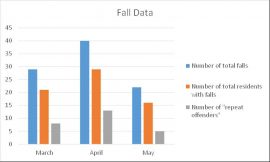
  • March 2016: 29 falls, 21 residents, eight repeat offenders*
  • April 2016: 40 falls, 29 residents, 13 repeat offenders*

*Repeat offenders refers to residents who sustained more than one fall in a one-month span

What is the Falling Leaf Program?

This program was developed by Carolyn Spradlin as an adaptation to the Falling Star Program. The identified problem with the Falling Star Program is that it identifies patients at any risk of falls and results in a large number of patients in the program, thus decreasing the effectiveness.

In contrast, the Falling Leaf Program identifies the residents who are at the highest risk of falls. The program works to monitor these specific residents and determine the underlying reasons for these falls. A visual symbol of a leaf is placed outside the patient’s door and is used as a way for team members to intervene more quickly and better meet their needs.

How is it implemented:

  • Spacing out Falling Leaf residents among CNAs
  • Reassessment of residents on effectiveness of interventions
  • Nursing staff identified causes of falls: toileting needs, ADL routines, timing of medications, environmental hazards, etc.
  • Visual symbol means all staff members check in on resident when passing the room to make sure all needs have been met

Initial Findings

  • Over 50 percent of falls during PM/NOC shifts
  • Majority of falls related to toileting needs and unsupervised transfers
  • Many falls occur within first week of admission
  • 28/99 residents were identified as “high risk” and placed on the Falling Leaf Program in beginning of May

Results After One Month of Program

  • May 2016: 22 falls, 16 residents, five repeat offenders. After one month of implementation, there was a decrease in the number of falls, number of residents falling and number of repeat offenders.
  • Of the 22 falls in May, 14 were sustained by Falling Leaf Program participants, indicating a need for further interventions in this population.
  • Only three Falling Leaf Program participants had more than one fall in May, demonstrating some effectiveness of our program in decreasing the number of falls of these “high risk” individuals.

Conclusion

The implementation of this program at our facility is still in its early stages as we continue to work out any issues that arise. Some of our initial future plans include weekly reviews to assess for residents who can be removed from the program as well as any additional identified high-fall-risk residents who need to be added to the program. Additionally, we have recently started involving our pharmacy representative in fall meetings to assist with medication reviews to further decrease potential falls.

By Nicole Veniegas, DOR, MS, OTR/L; Kathryn Case, MOT, OTR/L, Magnolia Post Acute Care, El Cajon, CA

View full poster here: Falling Leaf – Magnolia

Global Deterioration Scale OT Practice Implementation

As healthcare professionals, we often discuss dementia in the context of various stages, that is, how far a person’s dementia has progressed. Sometimes, we’ll define a person’s stage simply as early-stage, middle-stage or late-stage; however, to be more exact, we use the Global Deterioration Scale (GDS), which assigns seven different dementia stages based on the degree of cognitive decline.

Below, we’ve provided an overview of these stages, along with appropriate activities for the resident. You’ll see that the stages progress from pre-dementia through the final stages when a patient requires much greater assistance.

Stage 1

  • No other symptoms other than stress-related memory problems

Stage 2

  • Increased short-term memory loss
  • Individual is good at using compensatory strategies to mask short-term memory loss

Stage 3

  • Compensatory strategies are no longer working for the person
  • People are starting to notice that strategies are unsuccessful

Stage 4

  • Individual now recognizes strategies aren’t working for them
  • Family members are starting to notice individual is not safe at home

Appropriate activities: games, cooking axs, puzzles, crafts, bingo

Stage 5

  • Individual no longer realizes memory loss is occurring
  • Damage to the brain has progressed
  • If you work in a long-term facility, you might notice that in this stage the patient states “I’m just visiting here; I don’t live here”
  • Individuals should be independent with self-care activities and benefit from familiar signage and audio tapes from family for calming
  • Posture and gait will appear normal and the individual will still make eye contact when conversing
  • Validation therapy is important and entering the world of the individual with dementia

Appropriate activities: crafts, gross motor games, puzzles, sorting tools, stuffing envelopes, bingo, coloring, painting, baking and cooking, sorting and matching, sing songs, counting exercises, sorting and folding clothes, setting the table

Stage 6

  • In this stage, if the individual does not feel comfortable, the clothing item is usually removed
  • Vision changes occur and peripheral vision becomes limited or non-existent; depth perception is also limited
  • Falls increase due to decreased depth perception and shorter stride length (they begin to shuffle their feet)
  • Leather-soled shoes recommended
  • Eye gaze slowly progresses downward and at the end of this stage, it is about 1 to 2 feet in front of them. Signage should be placed 20 to 30 inches from the floor at this stage due to decreased ability to visually track upward.
  • Most will stop feeding themselves. Caregiver education is important to make sure the resident eats and stays hydrated.
  • It’s important to remember that in this stage, new learning does not occur even with constant repetition

Appropriate activities: same as stage 5 but with greater amount of cueing, scrapbooks, photo albums, busy boxes, reminiscing. May push objects such as mops or brooms, parachute, may hit or kick a target, dusting, washing tables, stirring juice or batter

Stage 7

  • This is the last stage of the GDS
  • Most of individuals with dementia will stop speaking during this period
  • This stage appears to be a time where senses dominate everything
  • Most people in end-stage dementia will die of aspiration pneumonia (this is where you will collaborate with other disciplines to enable the individual with a better chance for safely swallowing food items)
  • Research has shown that the last taste receptors we have are sweet and bitter. It’s better to provide food in separate bowls with sugar or sugar substitute all over the food.

Appropriate activities: tactile stimulation, music, drumming, reminiscing, roll golf ball, sitting and head control during axs, kneed bread dough, take out raisins, husk corn and remove silk, pudding painting

The GDS provides a precise means of identifying a patient’s degree of cognitive decline. By defining a patient’s disease stage, we can determine the best treatment approaches and facilitate good communication between patients and caregivers.

By Amber Howard, DOR, Legend Oaks Healthcare and Rehabilitation, North Austin, TX

Improving Proprioception and Ankle Strategy With New Balance Pad

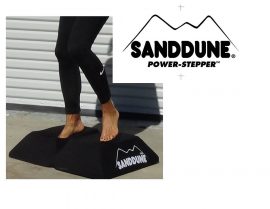
Last year, Ensign therapists were introduced to a new balance pad system called the Sanddune Stepper. It is said to have significant effects on improving proprioception and ankle strategy in patients with a neurological diagnosis.

The device is constructed of a combination of memory foam and closed cell foam, which causes a rapid rebound of the memory foam, increasing the challenge and resistance with each step. This also equalizes the reaction force on the feet when the patient is standing, making the device respond closer to the patient environment.

Clinical Observations

How well does the Sanddune Stepper improve proprioception and ankle strategy compared to other balance pads on the market? The main difference between the Sanddune Stepper and other balance pads is the different type of foam allowing for rapid stepping and the division between sides (giving the device the sand dune look). This division allows the contralateral foot to be lifted with no effect on the other, because it is essentially two pads in one.

Evidence states that muscle fatigue in lower extremities is a contributing factor to reduced postural control (Fox et al). “Balance exercises comprising steady-state and reactive components should be included in a balance program with the goal to prevent elderly people from falling,” according to Granacher, Muehlbauer and Gruber.

Using the “running in place or flutter step” exercise suggested by the manufacturer, we see a rapid onset of fatigue in our patients and use this technique to improve resistance to fatigue. Using this device with patients diagnosed with Parkinson’s disease, we observe immediate carryover in most cases following three minutes of rapid stepping on the device. The patient will usually demonstrate better stepping with gait on firm surfaces following this treatment intervention.

In patients with medical diagnosis of stroke and related balance deficits, this device improves carryover of ankle strategy from the Sanddune Stepper compared to other foam balance pads and on firm surfaces. Bird et al states that learned response with balance training improves carryover through leg strength and balance training. This can have a positive effect on fall prevention in older adults.

Conclusion

At Olympia Transitional Care and Rehabilitation, we have been using the Sanddune Stepper as our go-to balance pad. We consistently see more rapid recovery in proprioception and ankle strategy with our neurologically involved patients.

There is still evidence to be collected and more case studies to be written. Our initial observation is that this device is a power tool in our arsenal of balance training devices, and we use it more frequently than our other balance pads. We suggest that a dedicated study on the effects of the Sanddune Stepper would be beneficial to the field of rehabilitation for our neurological patients.

By C. Scott Hollander, DPT, Olympia Transitional Care and Rehabilitation, Olympia, WA

Physical Mobility Scale Is an Effective Standard Test for Skilled Rehab

When it comes to our long-term care patients, many of our standard tests simply do not serve them well in regards to monitoring subtle changes over time. Standard tests such as the BERG, DGI and Tinneti are not good for patients who are wheelchair-bound. Additionally, using these tests as short-term goals can create challenges, as the patient’s overall scores will remain relatively unchanged for several weeks in most cases.

In contrast, the Physical Mobility Scale (PMS) can be used to help determine improvements and declines in function, as it measures a wider range of functional skills. The PMS measures nine basic movements using an ordinal scale of 0 to 5 for a total of 0 to 45 possible points.

Article Review

Pike and Landers (2010) studied 70 LTC residents to determine the minimal detectable change (MDC) for the PMS. The same therapist was used for all tests. Residents were tested three months apart, and a 7-point Likert Scale (very much improved to very much worsened) was used to determine how much change indicated 95 percent confidence level (MDC95).

Results

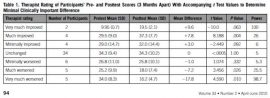
Table 1 shows the ratings of the pre- and post-tests (three months apart).


Data

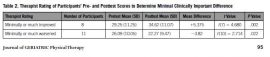
It was found that a 5-point increase and a 4-point decrease showed a minimal clinically important difference at the 95 percent confidence level (MDC95). The scores that reflected no change were removed, and all improved scores and worsened scores were combined into two separate categories as seen in table 2.


Conclusion

The Physical Mobility Scale is reliable, easy to use and understand, covers all the basic skills of our patients and has high validity. This standardized test will show steady progression over time and can be used to determine increases and decreases in our long-term and short-term residents.

By Scott Langdale, PT/DPT, DOR, Beacon Hill Rehabilitation, Longview, WA

SPARC Therapy Scholarship

Congratulations Q2 SPARC Winners!

SPARC Therapy ScholarshipWe congratulate Avenlea Gamble and Kellye McKee, our new scholarship winners for this quarter! Read their awesome essays below:

Avenlea Gamble, SLP Student at University of the Pacific, Stockton, CA, Grad Date: December, 2017

The opportunity I was afforded as a student clinician at the Pacific Speech, Hearing and Language Center was a formative experience to my education and cemented my interest in serving the adult population in the field of speech/language pathology. University of the Pacific has provided me the ability to work across a lifetime of demographics during the short time I’ve been here, but my favored clinical experience was within the adult clinic. There I was able to work with individuals who truly inspired me as a clinician. I believe the most rewarding aspect of working with an adult demographic is that you are returning a voice or supporting the ability to communicate with a group of individuals who could freely communicate prior to the incident or diagnosis that changed their lives.

Reading a textbook provides a limited academic view into the disorders and the individuals in which we will see these disorders realized. Actually working in the clinic brought a humanity to our field that a classroom can’t provide, and challenged me as a developing clinician to take static information and apply it to the improvement of my clients’ lives. I was working with individuals who were struggling or lost their jobs because of their communication problems; clients who had given up on past times or lifelong interests because of the deficits they now faced; or even people who couldn’t tell their family that they loved them.

I was raised in skilled nursing facilities, visiting one when I was three days old and returning regularly since then. My mother began working in the local skilled nursing facility in our rural hometown of Willits, California, when she was 17, and I started working there when I was 16. I worked under the social services department as a Care Partner, a position in which I was tasked with providing psychosocial support to the residents. One aspect of my job was attending residents’ appointments with them, and I began regularly taking one resident to his speech-language pathology appointments at the local hospital. Watching the clinician work with my resident lead to the realization that I could see myself in that position, fulfilling that role of returning and supporting the communicative abilities of my community members, and seven years later, here I am at University of the Pacific, in my final year of schooling to do just that.

I was also employed in the social services, dietary, human resources, compliance, and administrative departments at the nursing facility. My experience in the adult clinic at Pacific, as well as the different departments of the skilled nursing facility, have given me a unique and collaborative insight into the needs of the adult and geriatric populations that speech-language pathologists often serve. I want to improve the quality of life of individuals with dysphagia using the dietary and speech-language pathology experience I have gained, as well as bolster the cognitive-linguistic support for individuals with different neurological disorders or disorders secondary to brain injury or cardiovascular injuries. My personal goals lie in dementia capable care, aphasia therapy with couples or in the group setting, and stronger collaboration between the dietary staff, registered dietician, and SLP to provide a better quality of life for individuals on specialized or thickened diets. The adult and geriatric population are a precious resource to us because of their life experience and wisdom, and they must be respected and provided the highest quality of life they may receive during the golden years towards the end of their lives.

I supported clients who presented with different aphasias, voice disorders, dysarthria, apraxia, and a laryngectomy. A chart review gives the clinician a very limited view into the client – every client is incredibly unique, and no two people with aphasia present the same. It’s a continuous challenge which allows clinicians to continue growing and learning throughout their careers.

My combined experience at the skilled nursing facility and adult clinic at Pacific have fostered an empathy and compassion in me for the adult population that I will carry with me throughout my career and life. As long as I have the ability to serve, I have a duty to support the communication needs of this population and my community as a whole using my education and clinical experiences.

I come from a small community, a town of about 4800 individuals, so when a patient passes through my door, they are not a stranger. They are a community member, a friend, a member of the family. My wonderful education, clinical experience, and lifelong growth within skilled nursing facilities will allow me to be that spark for my patients, because serving this population has been what has defined my life thus far, and what gives me the deepest satisfaction that I have known.

Kellye McKee, PT Student at Rocky Mountain University of Health Professions, Provo, UT, Grad Date: December 2017

Go across the floor leading with your bones. Come back by moving your muscles. The words of my college dance professor resonated through my head as I attempted to move my body forward, leading with my pelvis and allowing the rest of my body to follow. Unbeknownst to me, that class and its concentration on dance anatomy would determine the focus of my college education. Ultimately, it sparked my passion for the human body and how it moves and works, leading me to pursue a career in physical therapy.

Dance allows me to comprehensively explore my body and the intricacies of its movements. Performing as a professional dancer from 2007 until 2015 gave me the opportunity to express my love and knowledge of dance. As a performer, I love envisioning and understanding the muscles, ligaments, and tendons that allow me to twist, bend, and leap across the stage. That connection to, and awareness of, my own body has facilitated a passion for kinesiology and anatomy, as well as a deeper understanding of how the body heals and recovers from injuries. After thoroughly enjoying a human anatomy course, I began exploring career paths centered on the human body and health care. This is when I discovered physical therapy.

My strongest draw to the profession of physical therapy was the opportunity to use my education and training to spark a passion in my patients and to empower each one. When patients gain insight into their diagnoses and deficits, they can use that education to help themselves improve and heal. Knowledge is power, and knowledge concerning one’s own body sparks a lifelong motivation to continue working toward a healthy body. Another passion of mine that is rooted in body awareness is working as an instructor for The Dailey Method barre exercise class. Being a TDM instructor has given me the opportunity to help people build strength and flexibility through education, encouragement, and hands-on adjustments.

The Dailey Method approach is centered around proper body alignment and controlled, non-impact movement that engages the body deeply. It has been rewarding to help people reach their physical and mental goals. That lifelong love of learning has contributed to each client’s well being. Of course, people coming on their own to The Dailey Method classes are motivated in a different way than some physical therapy patients, including patients in a skilled nursing facility. Sparking a patient’s desire to improve requires flexibility and a positive attitude, as well as knowledge and training in the importance of physical activity.

My appreciation for the human body has grown during my eight-year career as a professional white water raft guide. Being a raft guide provides me with extensive experience working with a diverse group of customers, each with his or her own individual needs, thoughts, and personalities. Rafting gives me the opportunity to accept and appreciate diversity as well as provide an environment for my interpersonal skills to flourish. These skills are essential for working as a physical therapist. My ability to communicate with a wide range of people, combined with my desire to facilitate healing, allows me to work collaboratively and effectively with patients and other health professionals. Being a raft guide has to do with safety first, and providing a safe trip often has much to do with the guide’s ability to motivate customers to dig in, work hard, and paddle together as a team. These skills are certainly transferable to the world of physical therapy. Creating a safe run down rapids require setting goals and planning how to achieve that success.

Creating success for a patient involves their help in setting their own goals and their involvement in planning for their own long-term and lasting success. Freedom to spend more time with each patient, beyond corporate limitations, would create a more patient-centered approach. Having that freedom was would allow the flexibility and time to try different evidence-based approaches. My physical therapy career choice was further affirmed at the beginning of the 2014 rafting season. I had begun the season with back pain that was not responsive to my usual stretching and strengthening regimen. I had also begun seeing a chiropractor and acupuncturist but had little relief. One of the guests on my first rafting trip of the season happened to be a physical therapist and was more than happy to help me. She explained what she believed was causing the pain and recommended several daily exercises. She also listed motions and movements that I should try to avoid, as these motions would have a negative impact on my back. I followed her advice and in just a few weeks I was feeling better than I had in months. It was inspiring to discover that a few physical therapy exercises and stretches could make such an impact. I strive to pass along that same knowledge: understanding and respect for the human body. I also want to be able to help others with their physical ailments the way this therapist had helped me.

As a student of physical therapy, I learned so much about the human body, what it is made up of, how it works and why, and what can go wrong. I found this education fascinating, and I am inspired to learn more everyday. Now that I am an intern and able to spend time with patients, I love to pass on my knowledge and hope to inspire everyone I encounter. I have worked with many patients who were unmotivated to participate in physical therapy. One that stands out was a male in his 30s who had been in a bad car accident ten years prior and had been living with severe back pain ever since. He was prepared to spend the rest of his life with limited activity and in severe and constant pain, but he decided to give physical therapy a chance. He did not particularly enjoy the first few treatments, but he was compliant with the home exercise program I prescribed, and he continued to come in for his appointments. After three treatment sessions, he reported a decrease in back pain, and by the fifth visit claimed to feel the best he had felt in ten years. By the end of our visits, the patient was able to participate in every activity that his pain levels had kept him from enjoying. He was so thankful for the help and education that he had received. I was inspired by the improvements he was able to make, and his profound appreciation for the successful treatment resonated deeply with me. This gratitude will serve well as a reminder throughout my career as a physical therapist that even the most unmotivated patients can be helped.

Witnessing firsthand the interactions between Ensign physical therapists and their patients, I am continually inspired by the communications I witness, the improvements the patients make through therapy, and the compassion shown by the physical therapists. Using my background as a professional dancer, raft guide, and as an instructor at The Dailey Method, it is my goal is to inspire each and every physical therapy patient I have the privilege to treat.

Introducing: Thera-Troopers!

Did you know we have an exciting new opportunity with Ensign? We are starting our very own internal travel program! What? Yes, we’ll have our own internal team of travelers who will go and serve in any of our communities. We have been asked by several DORs and EDs for the past several years when we could start something like this … well, here we go!
It’s a brand-new program, and we’re starting it from the ground up. Holy smokes! Sounds crazy and overwhelming, right? It definitely is, but it is much-needed and well worth the efforts. We are spending millions of dollars each year on outside contractors, registry, travelers or whatever you want to call them. It’s a huge financial and cultural burden. With a typical contractor, we invite strangers into our communities and expect them to act like family, without much training on our core values. They are not invested in our people and often don’t understand our culture.

On the other hand, what if we could save our Ensign facilities just a little of that burden — what would that do for our employees and patients, let alone our bottom lines? Think about it. What would it mean to have our own Ensign family members go into facilities and serve where they are needed most? What would it do for us to enlist someone who already has CAPLICO ingrained in them, can lead in clinical excellence, and who is passionate and team-oriented? The implications are huge!

We are calling these elite therapists Thera-Troopers. They will be part of a team of special forces (OT, PT and SLP) who will be called to serve our new builds, our most staffing-challenged or newly acquired facilities. We understand this is not a typical travel job, where therapists get to call recruiters and say, “Hey! I want to go to Sacramento for three months!” and the recruiters say, “Hey! OK!” Instead, it’s more like, “Hey! We need you to go to Reno for three weeks until our new therapist starts! Then Sonoma for two to cover a vacation!”

We realize that this opportunity to serve our company is challenging and is not for everyone. For others of you reading this, you may be getting excited with possibilities of leadership opportunities, exploring our great countryside, networking and building lifelong relationships, and learning new settings and environments in which to hone your therapy skills.

As a full time Thera-Trooper with Ensign, you are considered family and are treated accordingly. We are looking for those special therapists who feel compelled to serve wherever the greater need. It is not an easy task at hand, but with lots of love and support, and a few extra goodies gently placed in a care package, it is an opportunity worth exploring!

Contact Tara Brown if interested: tarabrown@ensignservices.net, 816-516-0985.

New National Long Term Care Survey Process to Roll Out in November 2017

Currently, you will find different variations of the survey process based on the state where you operate. Depending on where your facility is located, you find yourself preparing for the Traditional Survey process or a Quality Indicator Survey (QIS). However, the Centers for Medicare and Medicaid Services (CMS) will implement a new survey process nationwide during Phase 2 (effective Nov. 28, 2017) of the three-phase implementation schedule for the new regulations released in the CMS final rule entitled Medicare and Medicaid Programs: Reform of Requirements for Long Term Care Surveys.

At the first national American Association of Directors of Nursing Services in September 2016, Evan Shulman, CMS Deputy Director in the Division of Nursing Homes, Survey and Certifications Group, stated: “There are positive and negative aspects to both survey processes. The QIS is computer-based and can seem regimented. The traditional process allows the surveyor a little more flexibility. The new survey process leverages practices of both.”

According to the recent CMS slide deck and speaker notes previewing the upcoming changes to the long-term care survey process, the new survey process is an innovative computer-based, resident-centered process that balances structure and surveyor autonomy. Individuals who currently operate in a Traditional Survey environment will find surveyors utilizing a tablet or a laptop PC throughout the entire survey process and inputting their findings into a new software system. While this is current practice for QIS states, this is vastly different in our Traditional Survey states, where surveyors can be found walking the halls with clipboards and colored pens in hand.

In the new survey process, sample size selection will be based off of the facility census. Seventy percent of the total sample is MDS-preselected residents, and 30 percent of the total sample is survey-selected residents. Yes, you read that last sentence correctly: 30 percent of the total sample will be handpicked by the surveyors. Surveyors will pick their sample size based off of their observations, interviews and a limited record review.

Off-site preparation includes surveyors reviewing the Casper report as well as other facility history information. When surveyors hit the door, they will request a completed matrix for new admissions, an alphabetical resident census list, and a list of residents who smoke as well as the facilities’ designated smoking times. The surveyors will then begin observations with no formal tour process mandated by the new survey.

Observation will commence along with observations and limited record reviews. CMS has determined surveyors will take approximately eight hours on average for interviews, observations and screening. Surveyors now have the ability to ask questions to the residents however they deem most appropriate, whereas in the QIS survey process, surveyors were required to not deviate from the CMS-provided interview script.

Investigations, facility tasks and closed record reviews will be completed for the remainder of the survey using Critical Element Pathways to guide the investigations. Surveyors will now be required to participate in a Resident Council meeting with the active members within the committee as well as review previous council minutes.

According to CMS, active testing and validation is occurring throughout the country by contracted surveyors. Training on the new process for surveyors will begin at the regional offices level and then trickle down to the front-line state agency surveyors. Training for surveyors is occurring through various webinars and in-person training sessions. As of today, implementation of the survey process on a national level will occur on Nov. 28, 2017.

Providers can submit questions about the new survey process to the NH Survey Development mailbox at NHSurveyDevelopment@cms.hhs.gov. Information about the survey process and implementation can be found at: https://www.cms.gov/Medicare/Provider-Enrollment-and-Certification/GuidanceforLawsAndRegulations/Nursing-Homes.html

References: New Long-term Care Survey Process – Slide Deck and Speaker Notes [PPTX, 8MB]

By Christine Aliberto, Director of Clinical Services, Mission Viejo, CA

TheraTrooper® Special Forces Arriving

As a director of rehab, you’re familiar with the challenges of finding therapists. Filling a critical opening can’t happen fast enough! Yes, you can hire a contractor or traveler, but filling a job this way often comes at a cost. The traveler may have the credentials, but culture-fit is often overlooked by therapy contracting companies, and this can be a problem. After all, the Ensign culture and core values are what makes an Ensign-affiliated facility more than a building with people. And because culture is critical, an idea was floated. Why not create a new traveling therapist position in the Ensign family? Place therapists who are not only qualified with credentials, but who also know and support the unique culture that is Ensign. These elite therapists would be available for temporary placement whenever and wherever they’re needed by an Ensign-affiliated facility.

And that’s how the TheraTrooper position came to life. TheraTroopers represent all disciplines–OT, PT, and SLP–and are called to serve our new builds, our most staffing-challenged, or newly acquired facilities.

Not a typical traveling therapist job

This isn’t a typical travel job where therapists get to call recruiters and say: “Hey! I want to go to Sacramento for three months,” and the recruiters say, “Hey! OK!” Instead, it’s more like: “Hey! We need you to go to Reno for three weeks until our new therapist starts! Then Sonoma for two to cover a vacation!”

If you’re a therapist looking to explore new cities, expand your professional network, and build lifelong relationships, then becoming a TheraTrooper is a great opportunity. As a full time TheraTrooper with Ensign Services, you are considered family, are treated like family. We are building a team of Special Forces therapists who thrive in a fast-paced, ever-changing therapy work environment. It won’t be easy, and we realize this opportunity to serve our Ensign-affiliated facilities will be challenging, but with lots of love and support, and a few extra goodies gently placed in a care package, it is an opportunity worth exploring!

Check out the Therapy Jobs page and look for TheraTrooper positions to read job descriptions and apply online.

Ready for deployment!

First TheraTrooper Deployment

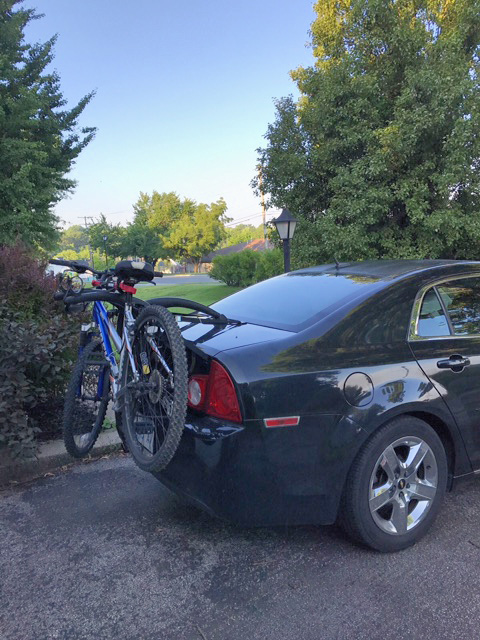
July 2017 – Mountain bike, check. Gas tank, full. Nav system set. Our first TheraTrooper is an adventurous empty-nester. She is traveling to Reno, Nevada, and then on to Santa Rosa, California. What a great opportunity to get out and see the country!

Have questions about the TheraTrooper program?

Call or send an email to Scott Hollander.

(207) 952-4268
CHollander@ensignservices.net

Job Description & Online Application

Current Open TheraTrooper Jobs