Thriving (Not Just Surviving!) With PDPM

By Shelby Donahoo, Bandera Therapy Resource, & Tonya Haynes, DOR, Mountain View Care Center, Tucson, AZ

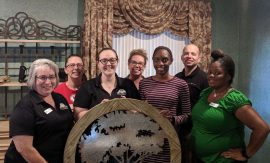
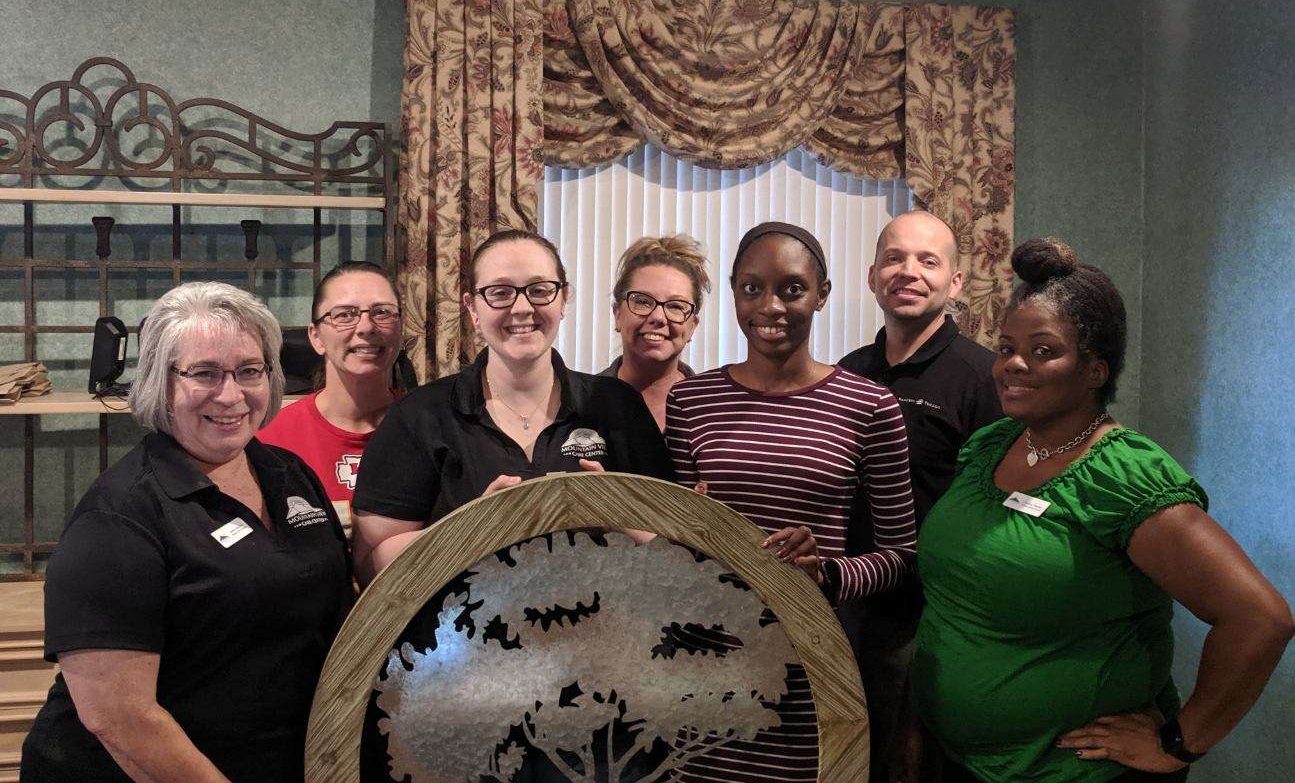
L to R: Heather Stiles, DON; Talitha Thrasher, Med Records; Jessica Ganz, ADON; Della Richardson MDS; Juanita Skidmore, BOM; Tris Rollins, ED; Tonya Haynes, DOR

Mountain View Care Center in Tucson, Arizona, has been an “all team on board example” of how to manage and succeed with PDPM. Here are some reasons why:

  • Consistent IDT team participation: DON, ADON, MDS, Medical Records, Business Office, DOR, Case Manager and ED!
  • They have a system in regards to timeline of PDPM components to investigate starting day of admission, day two, day three and so on.
  • Day one, they start looking for missing hospital documents; if not present, they are requested immediately in the PDPM meeting. They keep a log of documents and labs requested, reviewed and followed up on daily.
  • They keep looking — not just once, but repeatedly through the five-day assessment process, adding or altering diagnoses, comorbidities, NTAs; daily floor and rehab updates included.
  • They create fun competition — challenging each other to find patient PDPM components first. “We sound like an auction during PDPM meeting!”
  • Their goal is to stay one step ahead; their tracker is color-coded for followup. Red: urgent; yellow: missing info; green: ready to submit
  • They do a full team MDS review to ensure score matching before submission

Success is in the data and feedback from staff, patients and providers.

  • Mountain View processes the most PDPM assessments in their market (54 monitored in November); daily rates are up 7.6% with PDPM
  • Average nursing rate is highest in the market
  • Section GG outcomes remain strong and are building
  • Mountain View group/concurrent is 19.6%, highest in market
  • “I actually love the group approach for our patients. They help engage our patients more, help lower-level patients perform ‘up’ and encourage participation.” — James Reyes, PTA
  • “Our patients love coming to group. Some get more out of it than individual treatment, and they get more treatment overall. The opportunity to treat patients from low to high level at the same time with individualized goals during group supports their overall outcome. Groups open up a lot of room for creativity and thinking outside of the box.” — Roger Reyes, COTA
  • Mountain View is opening another skilled unit in January.

Success Is in That CAPLICO Moment

Knowing Mountain View was excelling with PDPM, a cluster facility requested to come observe their PDPM meeting process. But instead, Mountain View came to them. The entire PDPM team drove over to their sister facility and spent two hours offering PDPM support and assisting with transitioning patients. Now that’s culture!

PDPM All Stars - St Joseph Villa

Submitted by Lisa Brook, DOR/PT, St. Joseph Villa, Salt Lake City, UT

St Joseph Villa in Salt Lake City, Utah, has embraced the PDPM process and developed a daily technical and weekly skilled system that optimizes efficiency in their operation. The system they have adopted is one where individuals have accepted specific roles in the process and then those individuals come together as an interdisciplinary team to determine appropriate capturing of each patient’s specific medical condition.


IDT Members: BOM, nursing unit manager of sub-acute unit, DON of rehab unit, DOR, RN discharge planner/case manager, MDS coordinator, ED

IDT Roles

  • ED ensures that the right people are in the room, that time is built in the day for the process, gives process oversight, helps to investigate inconsistencies and facilitates collaboration.
  • BOM verifies insurance information and projects daily technical spreadsheet from her computer. Enters information on the spreadsheet. Keeps team on track when determining primary medical diagnosis, NTA, SLP comorbidity, or if any other “rabbit hunting” needs to occur outside of the daily technical meeting.
  • DOR is responsible for having section GG information from therapy evals, SLP comorbidity, and speech related swallowing assessment for swallow disorder and mechanically altered diet. Assists with discussion and searching for NTAs.
  • DON/Unit manager completes medical record scrub for primary medical diagnosis and NTA’s for skilled patients on their unit. Determines necessary medical record inquiries and delegates to medical records. Utilizes paper section GG from staff to collaborate with therapy findings.
  • RN discharge planner/case manager has PCC open looking for nursing documentation and reports the discharge plan to the team.
  • MDS is involved with GG collaboration, reports BIMs and PHQ9 findings to the team, medical record review for NTAs

The Process

To start the meeting, the BOM projects the daily technical spreadsheet. She reads off insurance information including current length of stay, number of days left, and last covered day, if determined. She utilizes the spreadsheet to guide the process and asks questions to the IDT member responsible. This facilitates discussion with primary medical diagnosis, non-therapy ancillaries, section GG collaboration, speech case mix, and nursing case mix.

Primary Medical Diagnosis

Primary medical diagnosis is presented to the team by the DON/UM and is discussed and agreed upon as an IDT.

NTA and Nursing Case Mix

The patient’s active medical condition, in addition to the primary medical condition, is discussed to determine ability to capture NTA’s and to determine appropriate nursing case mix.

Section GG

When section GG is discussed, the DOR has section GG in Optima and the PDPM calculation worksheet open. Nursing utilizes a paper GG document and collaboration occurs. While they discuss each section, the MDS coordinator is entering the information in the MDS. Once the PDPM portion of GG is completed, the DOR and MDS coordinator finish discussion with PLOF information, assistive devices used, discharge goals and other non PDPM related GG information and it is added into the MDS.

BIMS

The BIMs is completed by OT on a paper form, which is given to the MDS coordinator upon completion. The MDS coordinator relays the score to the IDT. There are cases where this triggers discussion around the patient’s cognition that potentially wasn’t captured on the BIMS.

PHQ-9

PHQ-9 is completed by one of the other MDS coordinators and reported to the team in daily technical.

Discussion around all of these items is thorough and concise. If an item needs to be tabled due to lack of documentation available or lack of IDT understanding, the item is logged as a follow up item and the team member responsible is identified according to the role this item fits.

Weekly Skilled Review

The St Joseph team has determined that it makes more sense, for their operation, to have their weekly skilled review ongoing throughout the week. The discussions being held around all PDPM items correlate with what is discussed in a weekly skilled review format. As the PDPM discussion continues and follow up items are completed or listed, the discharge planner has the weekly skilled review progress note open and the IDT completes the discussion for weekly skilled review progress note. What has already been discussed is documented as appropriate and additional items are included as needed to ensure accurate and thorough patient discussion and review. The DON tracks the patients that have been discussed and informs the team of patients that will be discussed during the next meeting to ensure timeliness of the weekly skilled review progress note.

Keystone Receives $700K Grant to Implement Award-Winning Technology to Improve Senior Care

By Jon Anderson, PT, Therapy Resource

Technology makes life better in so many different ways. It could be robotic surgery, skipping the toll booth on the highway or paying for groceries with your phone. It’s also helping Keystone seniors have a safer, healthier life. Thanks to a generous $700K grant received, Keystone has selected It’s Never 2 Late® (iN2L) to provide senior-centered digital engagement technology throughout 10 of its communities that will impact nearly 1,000 senior residents across Texas.

Keystone facilities residents and caregivers will have access to the full breadth of iN2L systems. These include iN2L Engage, which supports the company’s continuously updated library of personalized engagement content, and allows caregivers to reach seniors where they are, regardless of physical or cognitive abilities. In all, nearly 200 systems are scheduled for implementation, as gateways to iN2L’s vast applied content library.

How does it work?

Residents and caregivers use a touchscreen to easily access and “favorite” educational, spiritual and social content personalized to their unique preferences, as well as their level of cognitive, physical and technical ability. They’re able to access email and web cams to connect with family and friends, participate in mind-stimulating activities and improve hand-eye coordination.

The senior-friendly design makes it easy for residents, even those who have never used computer technology before, to stimulate their intellectual curiosity, prompt joyful memories and stay connected with the people in their lives — individually, in group settings or one-on-one with caregivers. Additionally, the mobility of the technology enables caregivers to take the technology where the resident is — a patient’s room, a common area or a favorite cozy corner of the community.

For caregivers, iN2L personalizes engagement with residents and aids in care workflow through device settings configurable for each senior. iN2L also supports initiatives to improve memory care, mitigate the effects of boredom and loneliness, and modify negative or unhealthy behaviors.

The system also has applications for physical, occupational and speech therapies. The platform includes music specifically for residents with sundown syndrome, which is a state of confusion among people with dementia that occurs late in the afternoon and spans into the evening. The sundowner music calms them down and lets them know everything is OK.

The iN2L platform can also help forge social connections among residents and staff. Each user has access to the content suite with their own personalized landing page where they can add a “my story” function — a virtual scrapbook that shares their background with the community. There’s also an option for residents’ family members to upload videos or photos to their page so they can view special events like a grandchild’s graduation or recital. The idea is to share information with each other and provide talking points, which naturally increases socialization. You find things out that are just really exciting about each other.

Some residents have used the iN2L system to play trivia and access Google Maps to show staff a virtual tour of where they grew up or where they worked. For example, one patient showed a community college, where she once served as director of the school’s nursing program.

About iN2L:

Colorado-based It’s Never 2 Late was co-founded by Jack York, his late brother, Tom, and Leslie Sweeney in 1999. The business grew out of Sweeney’s suggestion to donate computers to assisted-living facilities and nursing centers in California, said York, president of It’s Never 2 Late. “We just donated some computers without any thought of it being a business,” York said.

York, who at the time worked for semiconductor manufacturer Vishay Intertechnology Inc., saw potential to connect seniors with technology, but through a platform that was more user-friendly than a traditional computer. “We know people who were doctors, teachers, lawyers and welders. They deserved so much better than the programming that took place within a community,” he said. “People still want to stay engaged and enjoy their day, so what we try to do is make it easy for that person and staff around them to be able to address that person’s unique interests.”

York said although there was some initial skepticism surrounding the platform, programming has evolved based on requests from users and has since become accepted among senior-living facilities nationwide to engage seniors with technology. “The first 10 years were pretty tough with trying to move the needle on the perception of what people could and couldn’t do in nursing homes,” York said. “We were fascinated with touch-screen technology way before it was mainstream, and, as years have gone by, we’ve become a content company as much as anything else.”

The iN2L platform is now in more than 3,000 senior-living communities in the United States and Canada. “People make erroneous assumptions of what people can and can’t do, especially folks living with dementia,” York said. “This technology is a marvelous tool for them to still be relevant and experience joy.”

Dignifying Therapy in the Eyes of the World

By Brad Heal, OTR/L, DOR, Desert Terrace Healthcare, Phoenix, AZ

This past October, Craig Johnson PT, the Lead Physical Therapist at Desert Terrace, traveled with the nonprofit organization Wheels for the World to the Middle Eastern country of Jordan. This is the 11th volunteer journey that Craig has made with this organization. Other trips have taken him to Peru, Brazil, Costa Rica, Haiti, Ukraine and Guatemala. Wheels for the World receives donated broken wheelchairs and refurbishes them through a program with the prison system. Those wheelchairs are then shipped to the country the organization is assisting. Then a team of occupational therapists and physical therapists customize the wheelchairs for needy people in the area.

Craig travelled with a team of 13 physical and occupational therapists to Jordan. In a span of two weeks, this team developed customized seating systems for 300 wheelchairs. Eighty percent of the wheelchairs were created for children. Most of these children had physical challenges from birth, including cerebral palsy and spina bifida. Most of these children had never had a wheelchair, much less a wheelchair fitted just for them.

While in Jordan, Craig and the other therapists provided wheelchair workshops for two days at orphanages. They travelled to the Syrian border and spent two days fitting wheelchairs near the Syrian refugee camp. They also customized wheelchairs for a day by the West Bank. By invitation of the Crown Prince, the team of therapists visited and performed wheelchair evaluations and customization at the Wounded Soldier’s Hospital.

In this time of change in the healthcare world, Craig Johnson and other volunteers, who donate their time and their talents, remind us why we became therapists. Their service shines as an example of dignifying therapy in the eyes of the world and the core value of love one another.

Keystone Student Programs: A Record-Breaking Year

By Kai Williams, Therapy Resource, Director of Keystone Therapy Student Programs

Passion for learning is an actionable term that many of our therapists and therapist assistants display throughout their day-to-day. This can be evident through your engagement in learning from others and teaching. Oftentimes, we have clinicians who shy away from accepting a therapy student due to fear of it affecting their productivity, or they may have insecurities in their ability to provide expert clinical training. From the perspective of many students, they truly value the time they are able to spend with clinicians. Didactic work only takes students so far; it is the true clinical experience that produces the confidence and backing of their clinical capabilities.

Keystone has developed a student program that not only provides students an opportunity to intern at our facilities, but also allows us to forge purposeful relationships with our local university and community college partners to aid in the enhancement of our profession. So far in 2019, Keystone has had a total of 58 students of a variety of disciplines and from a variety of academic institutions. Through the partnership of our Texas therapy programs, we have garnered a reputation of excellence. We have taken on a variety of clinical research studies to help look at ways to better serve our patients within the SNF setting. Some of those studies have included the effects of certain modalities and the impact it has on fall prevention, as well as the effectiveness of standardized assessments as predictors of outcome performance.

The skilled nursing setting offers exposure into post-acute care that some students often have a misconception about. Our clinicians have set the standard high, and each therapist/therapist assistant offers a level of rigor to their students, so once they complete their affiliation, they are better prepared for life as a licensed professional. Our utmost priority is to prepare the next generation of therapists/therapist assistants to enter our profession with readiness.

We also have received operational and clinical strength amplification from the time spent with interns, improving productivity for several therapists/assistants and creating a greater level of confidence in their patient care delivery and interaction with other colleagues. Through the Keystone student program, we have also had many of our students return and become employees within our organization. We’ve even had some that we met as students later become a staff therapist and then transition into the role of Director of Rehab. Talk about full circle!


A Dry Needling Success Story

By Evette Ramirez, PT, DPT, Keystone Therapy Resource/DOR Legend Oaks, Waxahachie, TX

Dry needling is a technique that has many uses, although it is often confused with acupuncture, which follows the principles of Chinese medicine. Dry needling is a technique in which varying lengths and gauges of acupuncture needles are used at nerve roots, nerve pathways, homeostatic points, muscle bellies, scars and/or the area of motor endplates as treatment areas.

The dry needling technique follows the rules and knowledge of the human anatomy and has a background derived from traditional medicine. It has been shown to help promote physiological homeostasis and allow the body to maximize self-healing of soft tissue dysfunction by creating a small lesion in the tissue, triggering an inflammatory process and healing. Dry needling should be practiced by a clinician who has had thorough training in needling techniques, has a strong knowledge of the human anatomy, and knows and understands precautions and contraindications so as to avoid doing harm.

Mr. A is a 76-year-old male who has had chronic pain for years. Years before coming to reside in our facility, he was treated by a pain management doctor for chronic pain in his back with radicular pain radiating into his bilateral quads. Our client was treated unsuccessfully for his pain. He also had a stimulator implanted, which he also reports did not help. This stimulator stopped functioning years ago when the battery ran down. He reports he has been unsuccessful in convincing any surgeons to remove it.

Due to his chronic condition, he came to reside with us at Legend Oaks of Waxahachie. At the time, he was not able to ambulate without assistance and the use of a walker. His condition continued to deteriorate, and walking became more and more difficult. His pain became so unbearable that he was having trouble sleeping. Functional transfers were difficult, and he began to develop muscle tightness in the bilateral hamstrings.

Mr. A received rehab services and made some progress, but he would begin declining once rehab services were discontinued due to a plateau in progress. Intermittently, there were complaints of hand pain, spasms and tightness, which was also treated. Along with these complications, he had a diagnosis of Parkinson’s, which was also progressing, and a neurology consult was acquired to assist with medication management and monitoring for progressively worsening tremors.

After I took the dry needling course through Integrative Dry Needling, he was the first person I wanted to work on. I explained to him what I wanted to do, which would be to start with his primary problem area. I placed him on the treatment table in a side-lying position and palpated his lumbar spine. I explained to him what to expect as far as sensation during the needling. I palpated L5 and the PSIS. Two finger’s width distance laterally from the spinous process of L5 is where I placed the guide, angled toward the spine, and inserted the 2-inch needle.

I did this bilaterally, inserting the needle until I felt the needle reach a bony barrier. As the needle was being inserted, I felt resistance. The sensation felt like rigid barriers being crossed. I described the sensation as feeling like pushing a needle through layers of paper — feeling resistance, then a slight “pop” and then free movement of the needle until the next layer was reached. I did this from L5–L3, bilaterally. He had an area at T12 that was also a problem area and was flared up that day. I inserted a 1-inch needle at that level, 1 inch from the spinous process, angled toward the spine. This was done as an “in-out” procedure. I inserted each needle until I felt a bony barrier. The entire treatment only took a few minutes and he reported only a mild ache at L5. He then completed the rest of his PT session for strengthening, manual stretch to B lower extremities progressing to WB activities.

The next day, our client’s roommate came to us and told us to keep doing whatever we did to his roommate because it was the best sleep either has had in a long time. He explained that typically, whenever Mr. A would even roll over in bed, he would call out in pain. Mr. A then came into the therapy gym with the biggest smile on his face. He said that within hours, his pain had decreased from a reported 8/10 to 4/10 and he hadn’t felt so little pain in years. He also reported having had a full night of sleep, and reported he could not remember the last time he felt so rested. We continued needling twice a week, primarily along these same areas.

The next week, our client was feeling much better where the back pain was concerned, but he was still having leg and quad pain. Along with needling his back, I added needling to the bilateral quads, hamstrings and IT bands with a 2-inch needle, again using the in-out technique. He reported feeling the needle on his quads during the needling but no other sensations. He then proceeded with his PT session.

The next day, he reported a decrease in quad pain, and the PT who was working with him reported improved ROM in knee extension bilaterally with manual stretch (as well as improved tolerance), improved standing tolerance and ability to stand more erect.

As he continued to receive PT services, he had a flare-up of hand pain and cramping. Pain was reportedly increased while maneuvering his wheelchair throughout the facility. In the past, OT had worked with him and had even attempted splinting with some improvement in pain level, but none of the relief would last once OT services had ended.

By this time, one of my staff PTs had also been trained in needling by IDN and asked him if he would allow her to needle his hands. He agreed to try because of the success with decreasing his back and radicular pain. She chose to needle at two homeostatic points in the bilateral UE. She needled at the deep and superficial radial points, which are along the path of the radial nerve. She needled at the forearm, distal to the radial head, then in the trigger point in the muscle between the thumb and forefinger, the dorsal interosseous muscle. This trigger point is also one that you will often hear of people pressing to relieve headaches and other pains.

He had an immediate reaction, with an extreme sense of euphoria and relief of the pain in his hands. He was kept in the therapy gym for monitoring, as we had not experienced anyone with this type of reaction. His vital signs were all within normal limits. Within a few minutes, he was back to feeling “normal,” and the pain in his hands had gone from 8-9/10 to a 4-5/10.

Mr. A has progressed so that he is off of routine pain medications and now takes them only PRN, when he has a flare-up. He continues to increase in function, with decreased pain at rest and with activity. ROM and coordination as well as tolerance to standing and ambulation continue to improve. We are working to lengthen the time he can go between needling sessions, and he is on more of a maintenance program for needling and pain management.
How Do You Measure Ownership?

By Chad Long, Therapy Resource

Recently I had the privilege of participating in a Market Meeting in IA. After great presentations about Case Mix and PDPM from our Service Center subject-matter experts (thank you, Matt Stevenson and Rob Ady), we reviewed therapy metrics. One facility, Hillcrest Healthcare Center, has been demonstrating some very interesting results. The Market Leaders asked Cassie Nielson, DOR, and CJ Rickard, ED, to present on the “secrets” of their improvements. Instead of discussing programs that were developed, or what type of accountability conversations happened with staff, Cassie simply discussed the challenge of being an “owner.”

Cassie began discussing how Hillcrest had gone through significant changes over time, from being a previous Flag flying facility to a financially struggling facility. Recently, CJ came on board as a new Operations leader (another change for the facility), and Cassie confessed to the group she was seriously considering leaving Hillcrest. Cassie then described her conversation with CJ about leaving, and how CJ, very lovingly and with compassion, asked her if she was willing to be an “owner” with him in the future of Hillcrest. He told her how being an owner was not easy and would have some sleepless nights and require tough decisions.

What struck me most about watching Cassie and CJ recall for the group their previous discussions, was how emotionally raw and real they both were as they said, “We never talked about metrics.” They just got to the very heart of what it takes to turn a person, a team and an entire facility around … true ownership.

Cassie said she really had to think, and question herself, about being an owner. Her answer did not come immediately. However, once she made the decision, she started seeing changes. She became more grateful for her team and frequently thanked them. She looked at her schedule and patient care differently and noticed opportunities. She had tough discussions with strong-opinionated therapists about patient/resident clinical care potential, and she started sharing the financial metrics with her team to include them in the overall understanding of the building operations. She also gave more control (ownership) to members of her team for clinical or operational processes.

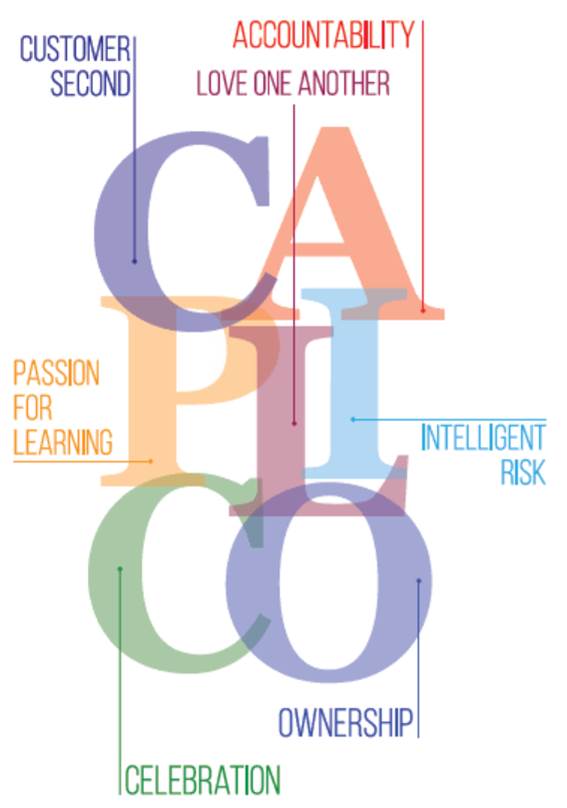
Cassie and CJ were able to demonstrate CAPLICO in is purest form. I know they will have struggles and challenges ahead, and the metrics will not always be perfect. However, going through the challenge of being an owner will hopefully continue to define their success in the present and future.

Add Heart to Your Teams!

Heart Rate Variability (HRV) training using HeartMath devices continues across our markets. By learning how to bring your body to a state of neurological coherence, you can interrupt the stress response, and actually bring order to the nervous system. The biofeedback devices that the therapy teams are using give real-time feedback on achieving and sustaining coherence. The training has a cumulative effect on the nervous system, and can essentially “reset” our stress responses.

Our heart-brain interactions have a profound impact on overall health and vitality. With each beat, the heart transmits information to the brain and the entire body. Learning how to tap into the power of the heart can not only change our stress levels, but can impact our overall health. Our teams are using the personal devices to improve resilience, and they are also using the devices with patients to improve function, reduce pain, and increase the ability to tolerate treatment sessions. The most recent team to be trained was our HCR Plano team in Plano, Texas. Here is just one of their success stories:

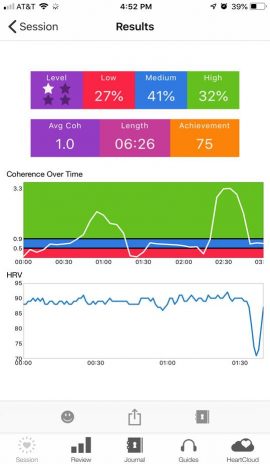
Mrs. Y is a patient at HCR Plano with a recent diagnosis of cancer. One of her goals is to get stronger to be able to tolerate a chemotherapy treatment regimen. The team’s new COTA, Jay, decided to try HRV training to reduce pain and increase function. During the first session, the patient was able to briefly get into what is called neurological coherence, as indicated on the biofeedback device as the green zone. However, the pain quickly brought her out of coherence. Jay decided to try another technique. He asked her about one of her favorite places to be, and she told him it was Hawaii. Jay pulled up some Hawaiian music and talked her through the coherence steps, and she was very soon able to sustain coherence. What is really amazing is that she had been refusing physical therapy treatments due to pain, but after her session with Jay, she was able to participate in a full PT treatment, with a smile on her face. The biofeedback readings below show the spike in coherence when her favorite music and memories were introduced.
 

Patient Highlight

By Jennifer Wintle, Therapy Resource, Colorado

It’s easy to get caught up in the day-to-day routine in this line of work. You have new programs you want to start, financial markers you strive to hit, and all of this trickles down to your team. However, every so often, you are reminded of why you chose this profession. It’s the people, their stories, their lives, and all they share.

One of my PTAs at Sloan’s Lake, Meghan Ricketson, just shared this with me. We had a patient recently who wanted to get better so badly, but his body (his heart) just wasn’t having it. He was sent back to the hospital twice while he was a skilled resident with us. He even asked another PTA, Brent Cook, to just try to ride the bike even though his O2 sats were in the high 70% just sitting in his w/c. He asked Brent in an unsure voice, “Am I dying?”

He was one of those patients where, even though I never worked with him, it just tore at my heart to see him want to do something so badly and not be able to do so. Meghan only works 2.5 days a week but obviously had formed a bond with this patient. He had traveled all over the world, but what struck Meghan was that he had traveled to the South Pole. She is a mother of three boys and knew the boys would think that was so cool. They would talk during his PT sessions about all of his crazy feats.

He was an incredible adventurer and was able to do things that many of us in Colorado, with an obsession with mountains and thrills, would love to be able to do. He climbed 54 14,000’ers, Mt. Fuji and Mt. Kilimanjaro, and attempted to swim across the English Channel. These are only a snippet of his experiences. Unfortunately this patient ended up discharging home with hospice care on May 23, and passed peacefully on June 1.

Shadow Boxes are a Hit at Legend Oaks New Braunfels

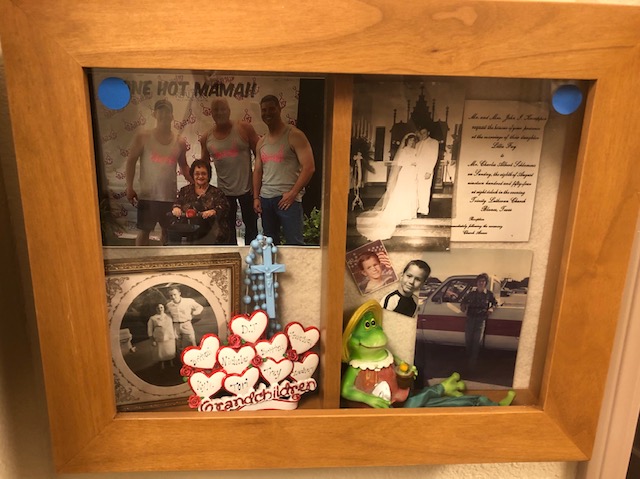
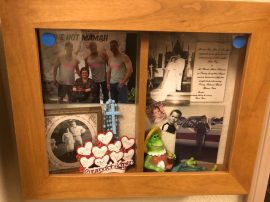
Over the last year, Legend Oaks in New Braunfels, Texas, has implemented shadow boxes for all long-term care residents in an effort to decrease wandering, increase the patient’s ability to engage in meaningful interactions with other residents/staff/caregivers, and provide personalized, meaningful care in accordance with the patient’s Allen Cognitive Level. Residents were evaluated by a licensed therapist and determined if skilled therapy services were appropriate for the design and implementation of an FMP (Functional Maintenance Program).
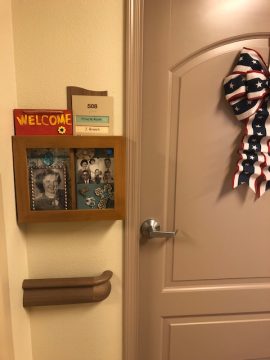
Skilled therapy services’ typical duration was 2.5 weeks to complete this FMP program “shadow box.” Initial evaluations were utilized to determine the patient’s Allen Cognitive Score, which consisted of the leather lacing test and placemat test to determine baseline (ACL) Allen Cognitive levels; however, the FAST and GDS can also be utilized and converted to an Allen Cognitive Score, if the Allen test(s) are unavailable.

The patient’s Allen Cognitive Level was represented by color-coded dots on the outside of the shadow box, and the clinical staff, nurses and nurse aides received a three-week training course to increase their understanding of Allen Cognitive Levels and what each color represents. Examples of goals for the initial evaluation included:

Short-term goals:

  1. “Patient will reminisce about past for a maximum duration of 30 minutes with min cues provided utilizing items from shadow box.”
  2. “Patient will identify location of room utilizing shadow box visual cue in 10/10 attempts in order to decrease wandering and decrease amount of assistance required to redirect resident back to room.”
  3. “Nursing/caregivers/staff will demonstrate 100% understanding of the patient’s risks/challenges/and preferences in accordance with the patient’s Allen Cognitive Level in order to provide personalized/meaningful care to the resident.”
  4. “Patient will maintain topic for a maximum duration of 15 minutes in order to increase the patient’s ability to engage in meaningful interactions.”
  5. “Patient will engage in conversational speech with other residents regarding content of shadow box for a maximum duration of 15 minutes in order to increase the patient’s ability to engage in social interactions.” (This is a good goal to include to be able to utilize the shadow boxes as a group treatment).
  6. “Caregivers/family/staff will be able to utilize items from shadow box to engage the resident in meaningful interactions with min cues provided.”
  7. “Caregivers/family/staff will demonstrate 100% understanding of the patient’s remaining abilities, risks and challenges in accordance with the patient’s Allen Cognitive Score.”

Long-term goals:

Perhaps you can utilize a “Social Validity Test” to assist with long-term goals. This test asks the resident questions such as: How often do you have difficulty locating your room? How knowledgeable are you of other resident’s lives? How much do other residents know about your own life? Options to answers were: not at all, some, extensive. These were assigned a point from 1-3, with 3 being the highest score. Long-term goals for this test:

  • “Patient will increase shadow box social validity score from 1/6 to 5/6.”

Additional long-term goals can include increasing GDS and Allen Cognitive Scores.

Treatment Approaches:

During treatment, patients and family members (if able) engaged in a Life History and Questionnaire to determine memories of importance to the resident, appropriate items/pictures to reflect these memories, and patient’s preferences to provide personalized care. Timers can be set to measure how long the resident is able to reminisce about past, duration of time for topic of maintenance, and the patient’s ability to engage in conversational speech with other residents.

Additionally, if the resident exhibits difficulty in locating his/her room, measurements can be taken to determine if the resident’s ability to locate their room increases with shadow box cueing. You could also use group treatment to have residents explain their shadow box and engage in meaningful interactions with other residents. Extensive education is provided to caregivers/staff/family regarding Allen Cognitive Scores, providing the patients’ remaining abilities, risks and challenges.

Examples of Daily Treatment Encounter Notes:

  1. “Min cues provided, staff was able to provide three remaining abilities, risks, challenges, and preferences for the resident in accordance with Allen Cognitive Score.”
  2. “Patient was able to engage in meaningful interactions utilizing items from shadow box for a maximum duration of nine minutes.”
  3. “Resident able to locate room in 8/10 attempts utilizing shadow box as a landmark.”
  4. “Extensive education with patient’s family and staff regarding the resident’s remaining abilities, strengths and preferences.”