Group Therapy: F.A.S.T Pace Rehab Program at St. Elizabeth

By Dennis Baloy, DOR, St. Elizabeth Healthcare & Rehabilitation, Fullerton, CA

Our facility is heavy on short-term patients (HMO and Medicare). Most patients come from St. Jude Hospital. Our payer sources and MDs are as aggressive and enthusiastic as the staff and team that we have. We wanted to capitalize on this and incorporate our group and concurrent treatment along the way. We came up with St. Elizabeth’s F.A.S.T. Pace Rehabilitation Program.

F.A.S.T. stands for Function and Ability based interventions for Safe and successful Transition to Home.

St. Elizabeth Healthcare & Rehabilitation prides itself on improving patient outcomes and providing excellent customer service. Our therapy programs are evidenced-based and patient-centered, implemented within a fun, encouraging and supportive atmosphere. Our goal for each resident is to go back home or to a safe discharge environment.

The F.A.S.T. rehab program includes:

  • Client-centered goals
  • Family involvement during therapy
  • Education with patient and caregiver to increase self-efficacy and empowerment
  • Use of group and concurrent activities (enhances motivation, engagement and commitment to goals)
  • Teaching of home exercise program/home accessibility recommendation
  • Provide adaptive equipment and teach compensatory techniques
  • Address instrumental ADLs (cooking, stair climbing, walking on uneven surfaces, etc.)
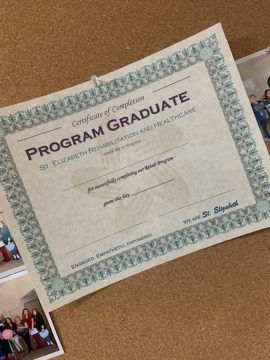
  • Program Graduate Certificate for all residents successfully meeting their rehab potential

The following are some groups that have been implemented:

Corn Hole Board Activity — The game is social and involves a number of people from two to four. Physical movements that are required are the ability to toss/throw a beanbag. Cognitive demands include the ability to add and focus on the game. Emotional demands might include the ability to enjoy yourself and to handle competition positively.

Cooking Activity — Participating in meaningful, client-centered occupations is a cornerstone in the profession of occupational therapy in promoting health and well-being for patients. Occupational therapists can use group-based cooking interventions to increase quality of life, social participation and autonomy, and to decrease depression of patients who reside in LTC. (1)

Graduate Program — Every Wednesday, we hold a mini graduation rite for patients discharging home or to a lower level of care. We have staff (rehab and facility staff) line up in our lobby and hold a mini program that celebrates their journey in therapy.

Nursing/Therapy Partnership

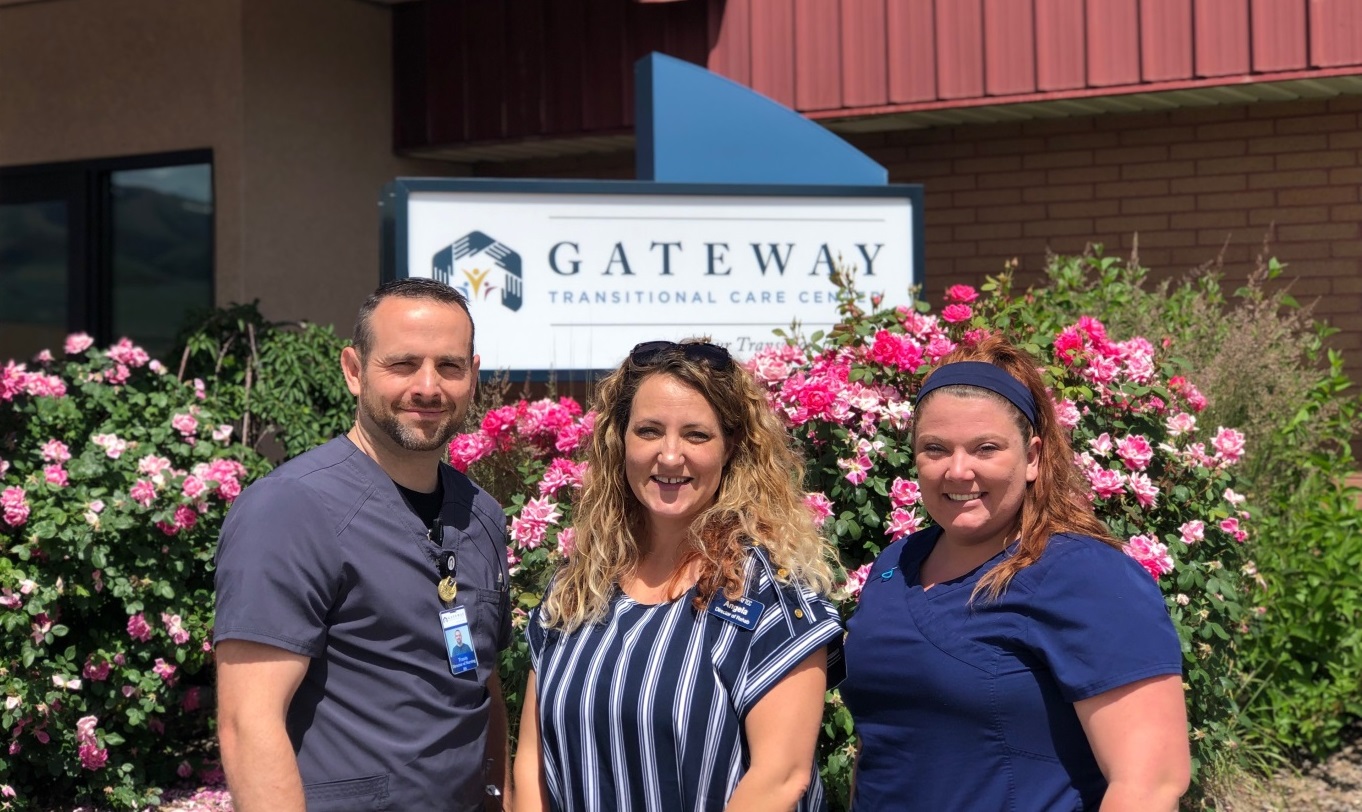
By Angela Anderson, DOR, Gateway Transitional Care, Pocatello, ID

Travis Jacobsen (DON) (L) and Brooke Burt (ADON)(R) with DOR Angela Anderson, Gateway Transitional Care, Pocatello, ID

At Gateway in Pocatello, Idaho, we are blessed to have a very cohesive team that believes in making a difference for our patients. We have been able to create a task force with Nursing, CNA staff, RNS and activities, as well as PT/OT/SLP, to identify the greatest risks and needs for our patients and implement a true IDT approach.

This collaboration has empowered the different departments to develop new ways to address a common goal. It started years ago when our nursing leadership, Travis Jacobsen (DON) and Brooke Burt (ADON) started coming to the weekly rehab meeting. It was in this setting that the Therapy and Nursing teams started building trust and working on patient impairments as a team.

Travis and Brooke have led the nursing department with IDT programs such as HeartPARC, and have pushed the education and team approach that allows the entire team from the CNAs to Social Services to Therapy and Nursing to address cardiac conditions and achieve great outcomes! The wound team was Travis’ baby even before I started at Gateway; however, he was quick to bring Therapy into that team and together we can address wounds and skin breakdown from multiple angles and several approaches.

Travis has been instrumental in developing interdisciplinary management of ESRD patients in conjunction with a local nephrologist. With his help, we have developed programs addressing fall risk and quality of life in addition to excellent medical management. Because of the team approach and leadership of our DON/ADON, we have been able to approach all patients from a patient-centered perspective and treat the “whole person.”

Host an Entry-Level OTD Capstone Student

A Great Way to Extend the Reach of Your Department! By Ciara Cox, Therapy Resource

As many of you know, entry-level occupational therapy degrees are available at the master’s and doctoral level. Excitingly, part of the requirements for an entry-level OTD included is a 14-week Capstone experience.

The students will have finished their internships and will be looking for 14 weeks’ in-depth exposure to one or more of the following areas:

  • Clinical practice skills
  • Research skills
  • Administration
  • Leadership
  • Program and policy development
  • Advocacy
  • Education
  • Theory development

The students can work fairly independently; their onsite mentor does not have to be an OT, and the onsite role is mentoring rather than supervising. (If the student is treating as part of their Capstone, then student-supervision rules apply.)

Some examples of planned Entry-Level OTD Capstones at SNFs include:

  • Environmental Modifications to Increase Participation and Quality of Life for Individuals with Dementia
  • The Abilities Care Approach: Life Story Boards for Individuals with Dementia
  • Cultural Competency in Dementia Care
  • Mindfulness Education for Stress Reduction

You can find a university offering an entry-level OTD by clicking on this link: https://www.aota.org/Education-Careers/Find-School/AccreditEntryLevel/DoctoralEntryLevel.aspx

Please email ccox@ensignservices.net if you would like more information.

Using HeartMath Spontaneously!

Heart Math Variability, By Casey Murphy, Therapy Resource

I was at our Legend Greenville facility to assist with Mock survey, and I ended up (organically and unplanned) doing an impromptu in-service with the therapy team on HeartMath. I demoed the Bluetooth device on one of the therapists who told me she was “stressed,” and we saw amazing results just with a three- to five-minute session (in front of a bunch of therapists!). She felt more relaxed afterward and was smiling a lot more for the duration of the day.

The team was so impressed, they wanted to try it on one of their patients. I sat with a speech therapy student with a patient who had dementia (and a pacemaker). I was able to sit and talk to her, taking her through the breathing exercises and talking about her family for a total of 6.5 minutes. She was only in high coherence for 12% of the time, but was in medium coherence for a whopping 41% of the time. We ended things with her smiling and thanking me for taking the time to talk to her about her family. The supervising SLP told me that she normally is not able to hold her attention; in fact, they had a goal for holding attention span for five minutes. She also told me she is usually very anxious.

Later that afternoon, I walked back into the gym and noticed the patient on the bike working with a PT, smiling and waving at me as I walked by. The PTA (who I demoed the unit on) pulled me into the charting office elated! She informed me that the patient hasn’t been able to ride the bike previously because she would scream out in pain. The staff couldn’t believe she was participating and enjoying working with everyone! The team was convinced it was the HRV session. Who knows, maybe we got lucky, but it was really cool to see that therapist and patient benefit from just one short session each!

So, needless to say, the Greenville therapy team is very interested in learning more. I loaned them my device so they can practice on their patients and themselves.

LTC Think Tanks – A Vision to Reality


We are only just beginning. We started with a vision about wanting to share the best practices that we are seeing in our facilities throughout the organization. With a centered focus on long-term care, we turned our vision into reality with the creation of the LTC Think Tanks. Below you will read a brief recap about a few of our LTC Think Tanks, and we hope to continue to bring you innovative, inspiring, passion-driven ideas to help keep your long-term care residents performing at their highest level of potential with the ultimate goal to decrease their risk of further decline.

If you or members of your team would like support in program development, patient care identification strategies, and/or feedback on questions regarding long-term care, please reach out to LTC_TaskForce@ensignservices.net. Our mission is to provide a centralized hub to facilitate the dissemination of ideas.


Renew Purpose and Restore Peace

The rehab team at the Garrison facility, led by Christa Keesee, is inspiring us all. By identifying the needs of their patients, they created a specialized program to “Renew Purpose and Restore Peace” for their ever-deserving long-term care residents. Molly Setliff, occupational therapist from Garrison, provided a thorough presentation to help walk you through the mission and implementation process of the program. Molly also takes you through challenges you may experience and helpful alternatives.

Reach out to Christa Keesee to learn more.


Benefits of Using Therapy Animals in LTC

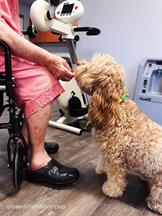
We had great contributors such as Michelle Wang, Jon Anderson, Barbara Mohrle and Ciara Cox who centered on the benefits of using therapy animals in LTC. Each has had great experience with using therapy animals in their facilities, and it provided great joy to many of the patients during their treatment sessions. We have a detailed presentation that bullets the ADL and musculoskeletal benefits of using therapy animals during patient care.

If considering a pet therapy program, consult with your state to ensure you have all requisite elements in place and also that the facility has a policy in place, as the state will look for this on survey.

Below are some helpful sites to visit if you are interested in learning more about therapy animals or getting your animal trained:

  • Take a look at the Good Dog Citizen program at https://www.akc.org/ to learn more about the specialized training program.
  • Contact your local zoo. Many are available to come on site and visit your facilities with a variety of animals.
  • Search Google under Therapy Animals along with the name of your city. This search will populate contacts for therapy animals in your area.


…But How Should I Document

We usually receive tons of questions regarding how to best document our skilled maintenance services that are provided to our LTC patients. A special thank-you to Lori O’Hara for debunking some documentation myths surrounding Skilled Maintenance Therapy and for also giving us clear breakdowns of what this type of service should look like. We offer a skilled Maintenance POSTette, located on the portal, which includes documentation examples.

During the Think Tank, we also shared a really cool therapy tracking tool. The creator, Shaun Baldwin, was unable to join us, so I hope I did it justice with my explanation. We viewed the spreadsheet, which has a ton of information; he uses it during his Medicaid meetings to keep track of patients during the week. To make sure that he does not overlook any of his LTC residents, he built a section that lets him know how long it has been since a discipline last treated a patient. If the patient has not been on a discipline for longer than 75 days, the cell will turn yellow, and if it has been greater than 150 days, the cell will turn red. He uses the spreadsheet as a visual reminder of who may need to receive a follow-up by therapy. Shaun is very open and available to answer any of your questions regarding the tracking tool. Shaun Baldwin is the DOR at our San Marcos facility in Texas.

Functional Jobs Program

Program development is not always about structured exercise programs and textbook balance training. There are a variety of programs that may not sound like therapy in the traditional sense, but they are oftentimes the most beneficial to our patients’ physical and psychological well-being. Do your residents need a “job”? Barbara Mohrle, DOR/Therapy Resource, and Marisa Parker, DOR/Therapy Resource, reminded us all about living a purposeful life and why that is so important to our residents.

What is the Functional Jobs Program? It is a LTC program designed to allow residents an opportunity to serve and take part in daily activities that keep them fulfilled.

  • The therapy team realized that many of their residents had a passion to serve, and they wanted to take part in daily activities that allow them to improve/maintain their level of functional mobility and decrease the risk of injury.
  • As therapists/assistants, we have an opportunity to provide skilled care to our patients and help prepare/engage them in their “job.”

Reach out to Barbara Mohrle and Marisa Parker for more information on implementing the Functional Job Program in your facility.

PTNM and NMES

Marci Williams, PT, DPT, and Katie Kellagher, CCC-SLP, discussed two types of modalities that can significantly impact a patient’s quality of life.

Here are some key takeaways:

Percutaneous Tibial Neuromodulation (PTNM)

  • Geared toward patients suffering from urinary incontinence
  • Huge opportunity for the therapy and nursing partnership
  • Email LTC_Taskforce for assistance with implementation
  • This is a service-based billing code with opportunity to provide care to more than one patient at a time

Neuromuscular Electrical Stimulation (NMES)

  • Certification in Vital Stim or NMES is a great adjunct to traditional interventions
  • Referral sources are always excited to hear about therapists who are certified in NMES
  • Please reach out to Elyse Matson, SLP Educational Resource, for additional support in modality implementation and/or documentation

Figuring Out LTC

Jennifer Kuehn, DOR from the Endura Market, led an excellent presentation on how to effectively navigate the area of LTC. Jenny dove into the clinical decision-making and patient identification process with great strategy and clinical reasoning. Reach out to Jenny to get your hands on her PowerPoint presentation. We received tons of great questions on the call; one question in particular stood out regarding patient weight loss. Elsye Matson, MA CCC-SLP, serves as our SLP educational resource. Elyse, with great detail, answered the posed question below. Please feel free to follow up with Elsye directly for further clarification.

What is the desired weight loss that a patient must have to warrant speech to evaluate?

SLPs should either be a part of the weight-loss committee or get updates from the RD in their facility on a weekly basis. The MDS triggers issues with weight loss at 5.0, 7.5, or 10.0% weight loss over a period such as a week or a month. There are a multitude of reasons one loses weight, including issues with self-feeding (refer to OT), medical complications affecting appetite and desired weight loss. A small amount of weight loss may indicate a serious issue if the patient was admitted weighing 80 pounds. Alternatively, a large weight loss from a 300-pound patient may be desired.

Finally, it is important to know information about meds, labs and conditions to differentiate a patient losing weight from diuresis/CHF issues versus true weight loss. So the circuitous answer re: weight loss and dysphagia is that it depends on each individual situation. We must always look at the whole patient and assess what is needed. There really is no correct answer, as weight loss is one symptom of many problems. We need to know our residents, stay in contact with our IDT and re-assess tube feedings and modified diets on a regular basis.

How Culture and Clinical Meet Financial

We had a great speaker by the name of Karlena (Valerie) Brooks, COTA. Karlena joined the Legend North Austin team as the Therapy Program Manager almost a year ago. Through her focus on revamping the culture and implementation of clinical programs, Karlena has tremendously grown her financial results in the area of LTC. It was wonderful to have her ED, Jocelyn, contribute to the discussion by sharing the effectiveness of what the development of a true partnership with the IDT can lead to. Reach out to Karlena to learn more; it will be well worth your time.

By Kai Williams, Therapy Resource

Therapy/Nursing Partnership

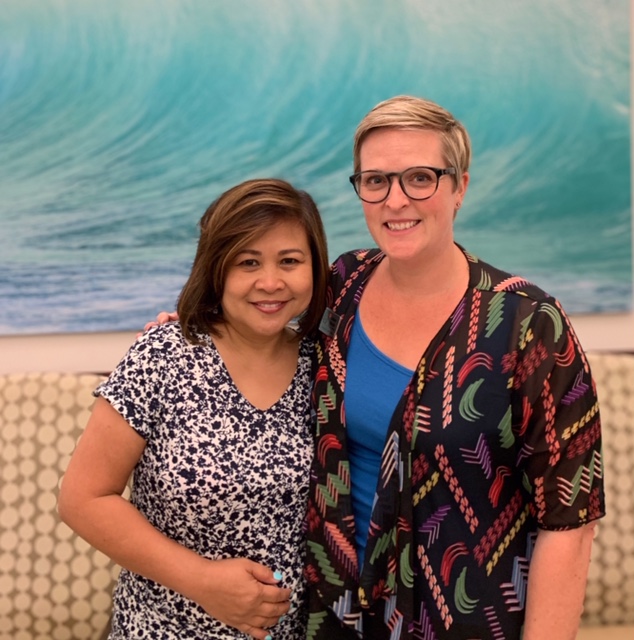
At Glenwood Care Center in Oxnard, CA, Cherryll Santos (L) and Aimee Bhatia (R) have a unique close relationship. Cherryll’s 18 years of leadership are evident in the culture of the nursing department, as this is a happy, cohesive team with strong clinical systems in place. Aimee, DOR, has been at Glenwood as a treating OT for five years, and a DOR for almost three. The relationship between these two leaders has a big impact on how nursing and therapy work closely together.

Cherryll and Aimee collaborate on clinical decision making and utilize each other’s strengths to collaborate with physicians, build programs, nurture relationships with families, and ensure excellence in patient care. The therapy team has a Culture Committee to partner with nursing in spreading love, celebration and appreciation to the CNAs and nursing staff. It’s amazing what a little bit of recognition and gratefulness does to boost morale!

The department head team also initiated a “random acts of appreciation” task force where the department heads pass out small gift cards when someone on the floor is noted to go above and beyond with their job assignments or to assist co-workers — once again, a simple gesture that goes a long way. For nurses week this year, a few department heads teamed up to plan daily dress-ups and games/events to appreciate staff and make them feel loved.

On a daily basis, therapy assists with CNA training and in-services to ensure quality of care and reduce workplace injury. We work closely with nursing to establish appropriate fall precautions for high-risk residents. We advocate for needed services for our long-term residents while working hand in hand on identifying appropriate residents, and we work closely with RNA to ensure a continuum of care and no loss of function that is preventable. Our Glenwood Care Center nursing and therapy partnership is a powerful team of dedicated clinicians with the common goal of providing quality care, a safe environment and opportunities for residents and staff to flourish.

Parkinson Disease Programming

The Emerald Market has been focusing on building a partnership with the Heartland PD Foundation in an effort to enhance and grow our facility programs. Initially we met with the Foundation’s Community Program Manager, Kim Nitz, to inquire if they had any unmet needs and to discuss how we could possibly meet those needs. Her first response was sponsorship of their fundraising and awareness events like The Moving Day PD Walk and secondly providing meals after their weekly exercise class to both participants and their caregivers.

As a Market, we became a Bronze Sponsor — as shared in a previous FlagPOST. Beginning in May, the Healthcare Resort of Kansas City, Riverbend PARC, the Healthcare Resort of Leawood, and the Healthcare Resort of Olathe started providing lunch for 25 participants and their caregivers on a monthly basis. The focus was more on building relationships rather than heavily marketing our programs/facilities per the request of the Foundation.

We had great dialog at the initial meet-and-greet lunch and were able to provide educational pieces based on their feedback at the subsequent lunches. We discussed safe transfer training techniques, how to cope with “freezing” during transfers, car transfers, balance deficits and balance exercises. The initial four months were such a success that the Foundation has invited us to continue to hold lunch and learns until the end of the year. I strongly believe our partnership has been so successful because the participants see and feel our sincere compassion for the PD community.

As a Market, our goal is to establish and offer a PD Support Group by the first of the year in the northern part of the city at the Healthcare Resort of Kansas City and the southern part of the city at the Healthcare Resort of Olathe. We are diligently working to increase our relationships with Movement Disorder Physicians and vendors to have as possible guest speakers at our support groups.

I look forward to sharing the next chapter in our PD program development successes after the first of the year.

By Madeana Galler, Therapy Resource – Emerald Market, Kansas

HCR OLATHE IS ROCK STEADY EXCITED!!!!

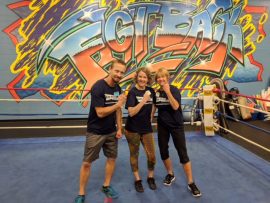
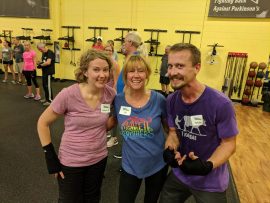
Pictured L to R: Jill Casey Weyer – COTA, Valerie Briggs – OT, Nik Kalinichenko – PTA

I wanted to officially introduce our newest Kansas Rock Steady Boxing Coaches (see photos)! They have had their new titles for one week and had 5 calls for patients ready to start the program. We are super excited for what’s to come! Pictured: Jill Casey Weyer – COTA, Valerie Briggs – OT, Nik Kalinichenko – PTA

Rock Steady Boxing (RSB), a 501(c)3 nonprofit organization founded in 2006, gives people with Parkinson’s disease (PD) hope by improving their quality of life through a non-contact, boxing-inspired fitness curriculum. RSB’s mission is to empower people to “fight back” against Parkinson’s disease and enriches both individuals and the community by improving the wellness of older adults.

RSB is the only organization in the world well-positioned with an effective, replicable model to address the quality of life needs of men and women dealing with Parkinson’s disease today. Bring RSB and hope to your community by becoming an affiliate of Rock Steady Boxing.

As an affiliate of Rock Steady Boxing you will have the benefit of brand marketing, training support, website presence, startup materials and online certification training. Read More…RSB Benefits of Affiliation

By Jordynn Knipp, DOR, The Healthcare Resort of Olathe, Olathe, KS

C

Stop Managing Incontinence. Start Treating It! Here’s How…

By Jon Anderson, Senior Therapy Resource – Texas

If you or a loved one has bladder control issues, you’re not alone. Millions of people in senior living facilities are in the same situation. In fact, more than 70 percent of long-term care residents are not in complete control of their urinary bladder function.

Bladder control problems, such as overactive bladder (OAB), are not a normal part of aging. OAB is not something one has to accept. OAB can limit social life, making it harder to share meals, play cards and stay active in the community. There are also serious health risks associated with this condition, from urinary tract infections and poor sleep to skin problems and falls. OAB is a treatable condition and can be treated in the long-term care facility by a physical therapist.

What Is OAB? OAB is a common condition that prevents you from controlling when and how much you urinate. People living with OAB may experience any of the following:

  • Urgency — the sudden sensation of needing to use the bathroom
  • Frequency — using the bathroom more than eight times per day
  • Urge incontinence — unexpected small or large leaks

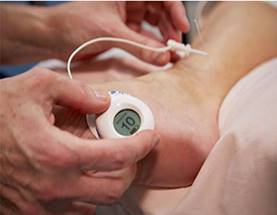
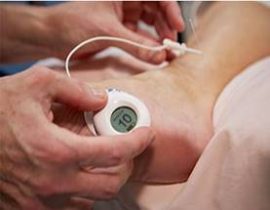
Physical therapy can treat OAB through utilization of Medtronic NURO system. How does this therapy work? Medtronic Bladder Control Therapy delivered by Medtronic NURO system restores bladder function by stimulating the tibial nerve through an acupuncture-like needle placed near the ankle.

The therapy is delivered during a 30-minute session, once a week for 12 weeks, by a licensed physical therapist and is covered by Medicare and most insurance providers. This therapy is proven to significantly improve the symptoms of OAB, reducing urgency, frequency and daily urge incontinence episodes. Several recent studies have shown the therapy to decrease OAB type symptoms by 40 percent. At Ensign Affiliates, we are currently piloting this therapy at Legend Oaks San Antonio West and are looking to expand the pilot in the coming months. The most common side effects of PTNM are temporary and include mild pain and skin inflammation at or near the stimulation site. Rest assured, the stimulation is gentle on the patient. It is not painful, although your patient may feel a slight tingling in their heel or the base of their foot. For full prescribing information, see professional.medtronic.com/NURO.

Six Simple Steps to Launch a Successful Heart Math Program

By Jen Farley, Therapy Resource & DOR, Sea Cliff Health Care Center, Huntington Beach, CA

At Sea Cliff Health Care Center, the therapy team actively incorporates Heart Math techniques into daily treatments. Heart Math is a highly effective, multifaceted program that has had a positive impact on the majority of our patient population. Self-regulation is recognized as a key factor to assist in recovering from illness and improve functional performance. Listed below are the six steps used to implement the Heart Math system.

Step One: Get Trained

Contact Mary Spaeder or your local Resource to plan for a hands-on training experience. Generally, the train

Kristi Rosales, PTA, will be the team lead for the HeartMath program at Sea Cliff

ing is completed in an hour. Invite IDT members, EDs, cluster partners and marketers to a Lunch & Learn training. IDT member education highlights the benefits of Heart Math programming. Additional training provided by Dr. Timothy P. Culbert, M.D., is available for advanced certification. Sea Cliff has identified a PTA for completing the certification program and will be recognized as the team lead.

Step Two: Identify Your Target Resident Population

An effective treatment plan includes an evaluation and four to six treatment sessions, 30 to 45 minutes each, within two to four weeks. Collaborate with the resident and the family in setting up a consistent treatment schedule. Sea Cliff has incorporated the emWave Stress relief system with Heart Math techniques. Sea Cliff’s resident population has a broad scope of medical diagnosis. Participating residents have experienced a significant reduction in hypertension, pain, poor sleep, anxiety and depression.

Step Three: Establish Your Treatment Location

A quiet environment is recommended. Sea Cliff consolidated two work offices into one, and the benefit is now a quiet treatment room. Team members collaborated on room design, color and furnishings. Therapists initiated and purchased a pre-owned, low-cost high-low mat. Extra seating is available for family members to attend the treatment sessions.

Step Four: Provide Consistent Follow-Through

Follow-through is both the greatest challenge and the greatest opportunity for therapists as they work to achieve successful treatment outcomes. Scheduling treatment times in a quiet environment enhances the resident’s experience. It is important for the DOR to review the treatment goals and progress. Residents, caregivers and family members appreciate the opportunity to participate.

Step Five: Get Reimbursement

At Sea Cliff, we include billing under Therapeutic Activities or Self Care. For example, charting may include “Heart Variability training to address SOB, fatigue and low endurance to increase activity or ADL tolerance.” Therapists will want to write a specific goal. Documentation should focus on how the use of Heart Math Variability training can increase focus and decrease anxious behaviors to increase safety and participation in self-care and therapeutic activities.

Step Six: Have Fun!

Share your success stories at the Annual Therapy Meeting, the quarterly DOR Meetings and the Monthly Cluster Meetings. Other pathways to highlight this unique program include marketing events, facility tours, IDT care plan meetings and community outreach. When Therapy has fun, everyone has fun!