HeartMath: Utilizing Heart Rate Variability Biofeedback

Utilizing Heart Rate Variability Biofeedback in a Patient With CVA to Improve Psychophsyiological Coherence

By Amanda Call, MA, OTR/L, Draper Rehabilitation and Care Center, Draper, UT

At Draper Rehabilitation and Care Center, we treated a 74-year-old female patient who sustained L hemispheric hemorrhagic CVA. She presented with a host of symptoms, including R hemiplegia, dysphagia, aphasia, R neglect, malnutrition, HTN, pain, muscle spasms, constipation, depression, anxiety, neuropathy, GERD, nausea/vomiting, hyperlipidemia, and R foot and coccyx wound.

The patient spent approximately two months in a rehab hospital, followed by two months in another SNF, then came to AVR four months after her admission to the hospital. She was six months post-CVA at the time of this intervention and was reaching a plateau with therapies because of difficulty regulating her emotions, which caused increased tone and aphasia.

As the therapists involved with the case brainstormed ideas to address the barriers preventing the patient’s progress, the patient’s ability to self-regulate emotions and physiological states came up as a common barrier that was limiting progress and functioning. At this time, OT learned about heart rate variability biofeedback and theorized that the patient might benefit from this intervention to facilitate self-regulation skills. She suspected that teaching the patient to control heart rate and breathing would help with emotional regulation as well as improving tone and aphasia, which would allow her to progress with her therapy goals and become more independent.

Literature Review

“Heart rate variability is a measure of the naturally occurring beat-to-beat changes in heart rate.” (McCraty et al 2004). When an individual’s respirations and heart rate are at an optimal frequency, this is referred to as coherence. Coherence is “the maintenance of a physiologically efficient and highly regenerative inner state, characterized by reduced nervous system chaos and increased synchronization and harmony in system wide dynamics” and “is conducive to healing and rehabilitation, emotional stability, and optimal performance” (McCraty et al 2004).

Research studies suggest that “individuals with brain injury and impaired self-regulation often display HRV patterns with reduced HRV” and speculate that interventions which address HRV “could directly enhance the ability to self-regulate.” (Kim et al 2015).

A study of individuals with severe brain injury found that there was an association observed between HRV coherence and improved emotional control, attention, life satisfaction, self-esteem and self-awareness and concluded that “HRV biofeedback has promise as an effective, cost-efficient method for improving self-regulation in individuals with severe brain injury” (Kim et al 2015).

An additional study of individuals with chronic brain injury found that there was an association between HRV training and the regulation of emotion and cognition and that “individuals with severe, chronic brain injury can modify HRV through biofeedback” (Kim et al 2013).

Intervention

OT facilitated seven treatments utilizing heart rate variability biofeedback training during a period of three weeks. Interventions were completed using a computer-based system that tracked heart rate using a pulse oximeter and created a visual representation of heart rate variability on the computer screen. The visual representation was in the form of a line graph and a bar graph, but the system also allowed for the feedback to be given in the form of a variety of games. This patient preferred to receive feedback through the games.

This intervention was used as a preparatory activity for ADL tasks such as toileting. At the beginning of this intervention period, intervention focused on discussion of toileting because toileting was a task that caused significant fear for the patient, resulting in increased tone, difficulty communicating and difficulty problem solving to complete the task.

As the patient improved her ability to modify her heart rate variability, intervention progressed to toileting in the therapy gym, then in the patient room and with her CNAs. Furthermore, as the patient became better at regulating her physiological states while using the program, therapists began encouraging her to apply the strategies during ADL tasks. For example, if the patient became upset or frustrated during toileting, the patient was encouraged to close her eyes and picture the biofeedback games.

Example of game available in emWave Pro™ program. As patient coherence improves, the rainbow extends to the pot of gold and gold coins can be earned.

Results

During the three week period after initiating the intervention, the patient showed improvement in the following areas of OT functioning: View here: HeartMath – Draper
 

Happy Feet Effect on Quality of Life

As the efficacy of medical treatments increases, the average life expectancy has also increased. Geriatric populations are getting older. The life expectancy of a person born in the United States in 1900 was 49 years, which has significantly increased to 78.8 years as of 2014.

As longevity increases, an important factor to consider is an individual’s quality of life. Quality of life is multidimensional and has been measured by the CDC using the health-related quality of life (HRQOL) and the Healthy Days Measure.

The HRQOL measures quality of life considering physical health, mental health and an individual’s ability to perform activities of daily living (ADLs). Another questionnaire used by the CDC is called the Healthy Days Measure, which asks individuals how their last 30 days have been affected by different factors such as pain, sadness, anxiety, sleep and energy.

Studying the Happy Feet Effect

About five or six years ago, Pinnacle Rehabilitation and Nursing had a program called Happy Feet. Residents were brought to the nurses’ station, and then music was played while residents were assisted down the hall to the dining room, either walking or riding in the wheelchair according to their abilities. This program has not been implemented in the past four or five years.

At Pinnacle Nursing and Rehabilitation, we recognize the importance of quality of life and hope that the care the residents receive has a positive impact on their quality of life. The purpose of this study is to see if the implementation of Happy Feet will improve the residents’ quality of life and to see if the number of residents coming to the dining room increases.

To evaluate the effectiveness of Happy Feet on the residents’ quality of life, the residents were asked subjective questions from the HRQOL and Happy Days Measure prior to Happy Feet and then 30 days later. Initial surveys were taken the week of April 17, 2017, and ending surveys taken the week of May 22, 2017. Happy Feet intervention occurred Monday through Friday in the interim. Attendance in the dining room for brunch varies with changes in census.

On April 21, there were 12 residents in the dining room, and 10 regularly attended breakfast and would be in Pinnacle a month later. Of the 10 regular residents, eight were cognitively able to answer the first question and six were able to fully answer the questionnaire. Questions were asked such as: Now thinking about your physical health, which includes physical illness and injury, for how many days during the past 30 days was your physical health not good?

Results

Regarding general health of the eight residents surveyed, on average the health improved from good to very good. On average in each survey, the number of “not good” days decreased.

In the healthy days questionnaire, in all areas the number of unhealthy days also decreased. There was a significant change in unhealthy days related to pain, worry and amount of sleep. The last question asks how many days they felt full of life, and on average this amount went up from 11.7 to 15.8 days.

When the first survey was completed, 12 residents were attending the dining room, and after the second survey, there are now 16 residents at brunch in the dining room.

Conclusions

We cannot say definitively that we improved the quality of life of all the patients who participated in Happy Feet. However, on average, there was an improvement in all areas. Also, during Happy Feet, the residents were usually smiling or expressing that they were having a good time, the staff enjoyed having a change in their day, and we feel it improved the culture in the building. Additionally, the number of residents attending the dining room at brunch increased. Residents also reported that they enjoyed doing Happy Feet and would like to continue to participate in it on their way to brunch.

By Maresa Madsen, DOR, and the Pinnacle Therapy Team, Pinnacle Nursing and Rehabilitation, Price, UT

View Full Poster Here: Happy Feet Effect on Quality of Life – Pinnacle

Initial Responses to Using an Alter-G Treadmill at Parklane West

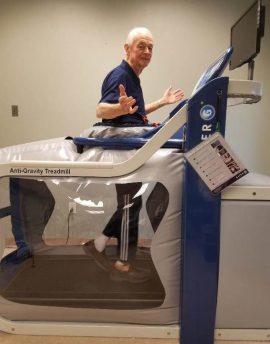
At Parklane West, we posited the following problem/question: Would our physical therapy patients feel the Alter-G treadmill will benefit them long-term after the initial use? We hypothesized that they would, due to research about the Alter-G treadmill provided to each patient before initial use.


Project Overview

Our definition of initial use is that it follows completion of the first trial in Alter-G and is before the second use. Our population includes participants ages 65 and older, and we used convenience sampling to choose patients for the trials. All patient data was used; no data was discarded.

Patients were informed of the risks and benefits of using the Alter-G treadmill as well as the process of getting in and out of the treadmill. Visual demonstrations were given upon request. The patient tried the machine for a single trial before using it for multiple sessions.

After the initial session, patients were given a survey on whether they feel it would benefit them long-term, along with their personal subjective feedback after their first trial in the machine. Information was then analyzed.

Variables/Research

Controlled variables

  • The same Alter-G machine is used
  • The same survey is given to each patient
  • The survey is given after initial use in the machine

Independent variable

  • The amount of weight taken off the patient in the initial use of the treadmill

Dependent variable

  • This might call for future research based on weight taken off
  • Measurement will be on yes or no satisfaction rate

Materials

Survey for Initial Use in Alter-G Treadmill

Do you feel the Alter-G Treadmill will benefit you long-term after your first use? Circle one.

YES/NO/UNDECIDED

Explain why: __________________________________________________

Data/Observations

Fifteen patients agreed to participate and be surveyed following initial use and before second use. Here are the results:

  • 11 felt it would benefit them long-term
  • Two felt it would not benefit them long-term
  • One reported nausea after initial use, two reported increased back pain after initial use, and another patient reported feeling confined
  • Two were undecided

Results

  • 73.33% felt the Alter-G treadmill would benefit them long-term after just one use, as indicated above by the blue area
  • 13.33% of patients felt the Alter-G was not going to work in their rehabilitation process, as indicated by the green area above
  • 13.33% were undecided, as indicated above by the yellow area

Conclusion

A majority of the patients participating in physical therapy at Parklane West felt the Alter-G treadmill would benefit them long-term. They came to this conclusion due to the elimination of gravity, which allowed them to extend the amount of time they were able to walk and to increase their speed compared to when walking with gravity.

Further research would need to be conducted to include follow-up surveys at one, three and six weeks of Alter-G treatment sessions to further justify initial research. In addition, further research regarding the amount of weight taken off in initial use will need to be conducted for comparison on satisfaction rates.

By Heather Smith, DPT, PT; Rosa Benade, COTA; Jennifer Henderson, OTR, DOR, Parklane West,

San Antonio, Texas

Ensign Emergency Fund

What if…

You could help someone recover from a personal tragedy?
You could help a colleague rebuild a home, a family, or even a life?
You could comfort hundreds of suffering people and let them know they are loved?

You can.

As part of the Ensign family you can do all of these things and more by joining the Ensign Emergency Fund. Contribute as little as a dollar a paycheck and Ensign Services will match your contribution to help your coworkers in a time of need.

Join this tangible example of our core value of loving one another and help us build something great!

www.theEmergencyFund.net


Love makes a difference
 

Solutions for Oral Care: A Joint Project With Nursing and Speech

Solutions for Oral Care
 
Oral care in our facilities is most often thought of as a nursing measure, likely performed by the nursing assistant. Due to time constraints and other factors, oral care may be overlooked by staff. In addition, patients often do not ask for oral care in the same way they may ask for assistance with other ADLs, such as toileting or dressing.

As we sought solutions for this critical issue, we needed to consider the following factors:

  • In our skilled rehabilitation unit, the increase in short-term stays and managed care patients has meant more critically ill patients with advanced care needs. Some of these patients are admitted with tube feedings, oxygen, IVs or isolation needs.
  • Patients who are NPO have an increased risk of aspiration pneumonia due to an increase in bacteria in the oral cavity. Therefore, the CNAs were often afraid to use a wet toothbrush on these ill patients.
  • Research suggests that the patients most likely to get aspiration pneumonia are those who are dependent for oral care, dependent for feeding and missing multiple teeth.

Finding Solutions

There is a long-standing precedence of speech therapy addressing oral care as it relates to swallow safety and speech clarity. In the past, speech therapy recommended the use of a suction machine and suction toothbrushes for patients, but it was difficult to get follow-through as it was seen as a speech directive only.

As part of our sub-acute unit, our staff instituted the use of Sage Products suction toothbrush kits to help prevent VAP/HAP (ventilator/hospital-acquired pneumonia). An oral care decision tree was developed, nursing was trained and a system instituted to help nursing identify who the patients are, what the procedures are and who is responsible for the care. The decision tree is not the only solution, but it is beginning to work at Carmel Mountain Rehab.

Conclusions

In our facilities, the challenge of providing good oral care is not a new problem, but it is an important one. We do not often see the immediate results of poor oral care, but we do see the increase in infections, hospital transfers, poor patient outcomes and increased costs. A system to have nursing determine the patient’s needs gives them control and ownership over the process, which likely will lead to better compliance.

At Carmel Mountain Rehab, we are five stars because we continue to strive for better care for our patients, and we know that doing better than “good enough” has its benefits.

Submitted by Carmel Mountain Rehabilitation and Healthcare, San Diego, CA

Applying Research on Cues to Reduce Freezing of Gait to WC Propulsion

Applying Research on Cues
 
At Draper Rehabilitation & Care Center, we admitted a 79-year-old male patient with advanced Parkinson’s disease, referred to OT for wheelchair mobility. The patient recently obtained a power-assist lightweight manual wheelchair but has been unable to propel functional distances (to nursing station, dining room, activities, etc.). He demonstrates movements reminiscent of freezing of gait wherein he does not move for several seconds or minutes and appears stuck in place despite his efforts to initiate movement.

Research and Applications to WC Propulsion

Research on FOG reveals applications for WC mobility because freezing occurs in a variety of motor tasks, and UE kinematics have been shown to improve with the use of auditory cues.

OTs and PTs can innovate in low-tech and high-tech ways to apply this evidence to functional activities beyond gait. An example of a low-tech intervention would be attaching a laser to the wheelchair or using a bell, a metronome or music during WC propulsion. An example of a high-tech intervention would be designing a smartphone app that utilizes a smart watch or other sensor to monitor freezing and triggers visual cues or auditory cues. Therapists should also stay up to date on products that are in development and testing.

OTs and PTs can combine multiple sensory cues to increase effectiveness. OTs/PTs should also experiment with continuous and on-demand cuing.

By Amanda Call, MA, OTR/L, Draper Rehabilitation & Care Center, Draper, UT

Developing a Community Reintegration Program for Older Adults

At Magnolia Post Acute Care, there has been an increasing number of community-dwelling adults admitted to our facility with high prior level of function who are discharging back to the community. An interdisciplinary approach with both occupational therapy and physical therapy was used to identify appropriate assessment tools applicable to community reintegration and to use the indications from these tools to guide treatment interventions.

The assessment tools chosen focused on safety and fall risk as well as sit or stand balance, distance of ambulation or wheelchair mobility, safe functional reach, and overall safety awareness in the presence of high sensory demands in the community. Overall, our goal is to be able to create a comprehensive community reintegration program where patients can practice components of community re-entry in a safe environment.

Assessments Used

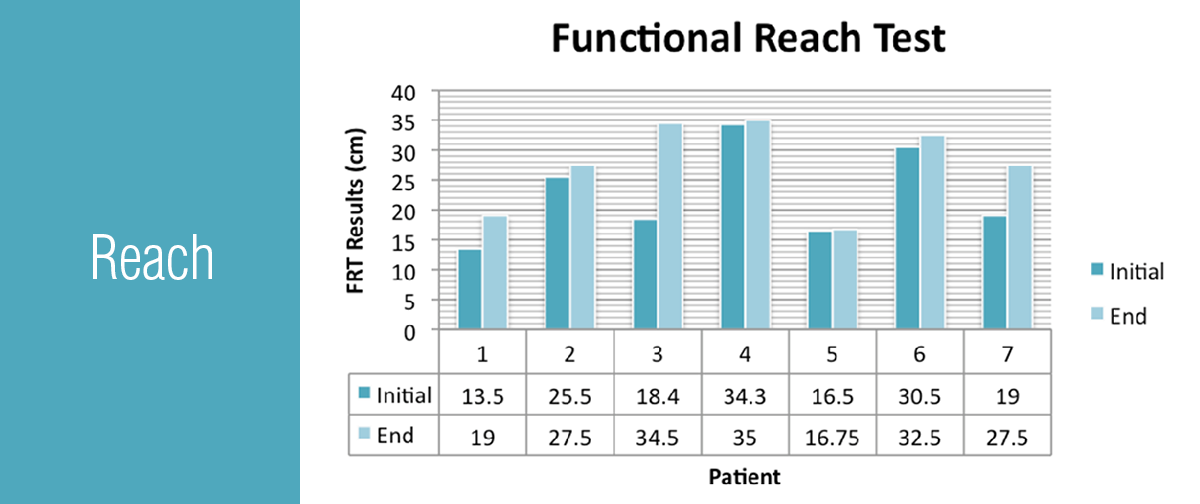
  • The Functional Reach Test (FRT) addresses community activities such as retrieving items during grocery outings, opening doors, operating a crosswalk push button, accessing public transportation and managing money. This assessment determines a patient’s stability by measuring the maximum distance an individual can reach forward outside a base of support while standing in a fixed position. Results of this assessment were used as an indicator of fall risk.
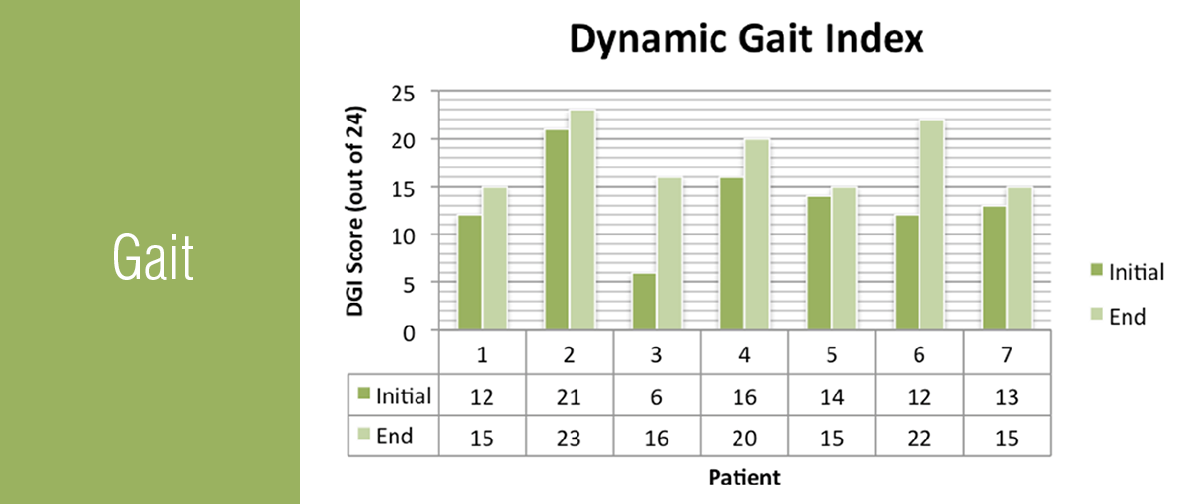
  • The Dynamic Gait Index (DGI) addresses more challenging aspects of balance that can be more relevant to community activities such as negotiating curb cuts, looking both ways when crossing a street, and modifying the speed of gait quickly due to changes in the environment. The Dynamic Gait Index assesses an individual’s ability to modify balance while walking in the presence of external demands.
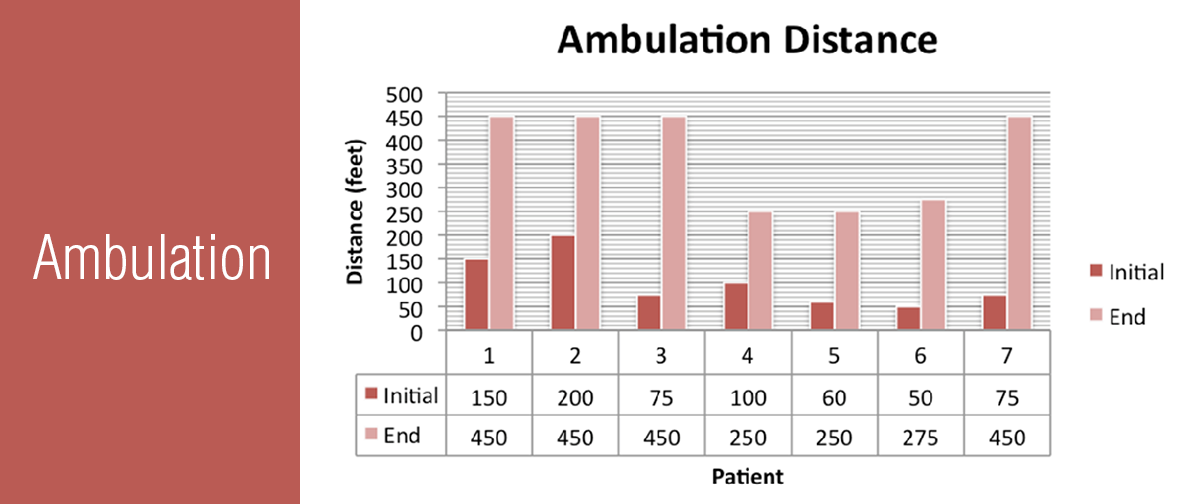
  • The distance of ambulation is also relevant. According to Brown et al. (2010), the 200-meter, or roughly 650-foot, distance is a good starting point for older adults with the goal of returning to community independence. According to Andrews et al. (2010), full community ambulation may need to be increased to 600 meters or more.

Results

Of the seven individuals, six were taken out to the community and ambulated to a nearby 7-Eleven store, which is approximately 1,600 feet round trip from the facility. This outing addressed money management skills, navigation skills, managing intersections, item retrieval, safety education and curb cut negotiation.

Upon discharge to the community:

  • FRT — Using a cutoff score of 18.5 cm to determine fall risk (Thomas et al., 2005), six of seven patients’ scores indicated they did not have a high risk of falling.
  • DGI — Using a cutoff score of 19/24 to determine fall risk (Wrisleyand Kumar, 2010), three of seven patients’ scores indicated they did not have a high risk of falling.

 
Functional Reach Test
Dynamic Gate Index
Ambulation Distance


Discussion

With the use of these assessment tools, the therapists are able to examine the underlying physical requirements necessary for reintegration with the community. They establish an effective treatment plan from an evidence-based perspective with an interdisciplinary approach.

The therapists incorporated the use of compensatory strategies, alternative assistive devices, environmental supports and services, as well as referral to home health or outpatient therapy services in order to best reintegrate patients to their communities safely.

By Nicole Veniegas, MS, OTR/L, Kathryn Case, MOT, OTR/L, Harini Desai, MPT, Magnolia Post Acute Care, El Cajon, CA

The Use of Baby Dolls for Behavior Management

Baby Dolls Behavior Management
 
Our IDT Falls Committee initially discussed the implementation of baby dolls for some of our long-term care residents with a high incidence of falls and elopement and who were difficult to redirect during care. We identified four residents for a trial use of baby dolls as a means of providing the residents with a sense of purpose and to redirect positive attention during their daily routine.

Our Process

Each resident was screened with both the FAST and GDS to determine cognitive staging.

  • Resident #1: Stage 6 on the FAST, Level 6 GDS. She had frequent episodes of crying out for family and attempts to get out of bed, and she was combative during care.
  • Resident #2: Stage 5 on the FAST, Level 5 GDS. She was often trying to elope, constantly looking for family, combative with staff and resistant to care.
  • Resident #3: Stage 5 on the FAST, Level 5 GDS. She was depressed, looking for family and trying to get up on her own.
  • Resident #4: Stage 6 on the FAST, Level 6 GDS. She was often looking for her deceased husband and waiting at the door for her children, and she often expressed wanting to die because she was a burden.

We determined it would be appropriate for these residents to take place in our trial use of baby dolls in the facility. Residents’ families were informed of our plan.

Our residents were all provided with ethnicity-specific baby dolls to increase the likelihood that they would relate to the doll they were provided. We monitored their ability to relate, their interaction with the baby dolls and their overall behaviors.

Findings

  • Resident #1 was more easily re-directed, had decreased episodes of crying, decreased attempts to get out of bed, and decreased conflict and anger associated with her family.
  • Resident #2 was interactive with her baby doll, but she continues to attempt to elope from the facility and look for family.
  • Resident #3 experienced an effective dose reduction with psychotropic medications, fewer attempts to get up on her own and decreased verbalization of being sad.
  • Resident #4 had decreased episodes of wanting to find her family and a decreased incidence of verbalizing wanting to die.

Plan

Daily Activities programming revolved around care for the baby dolls. The Activities Director provided diapers, wipes, clothing and blankets, and residents cared for their baby dolls during morning activities. Residents gained an extreme sense of satisfaction, care and purpose during this care.

We will continue to work with our psychiatrist on gradual dose reduction of psychotropic medications when appropriate. We also will continue to trial the use of baby dolls with other residents who may benefit from this programming.

Conclusions

The use of baby dolls has proved to be an asset in our skilled nursing facility. Our residents have a sense of purpose, are brought back to a nurturing time in their lives and are distracted with a positive outlet. We will continue to use baby dolls as a valuable part of our programming with residents who fit our criteria.

By Aimee Bhatia MSOTR/L, PAM, Glenwood Care Center, Oxnard, CA

Dementia Care Programming: A Person-Centered Approach

Dementia Care Programming Person Centered Approach
 
“Too often we underestimate the power of a touch, a smile, a kind word, a listening ear, an honest compliment, or the smallest act of caring, all of which have the potential to turn a life around.” — Leo Buscaglia

Our Dementia Care Program was established to improve the quality of life of each person living with dementia entrusted to our care at Oceanview Healthcare & Rehabilitation. Our goal is to steadily increase the well-being of those we affect directly, while becoming an influential model within the community for a widespread shift in how we view dementia as a culture. Program objectives include the following:

  • Preserve autonomy
  • Ensure safety
  • Promote dignity
  • Maintain ability
  • Facilitate active participation
  • Encourage resident friendships

Programming Process

To meet the above objectives, we have a multi-step process designed to uncover each resident’s unique background, needs, wants and abilities. Our process includes:

  1. Interviews to discover each person’s life story, unique experiences, hobbies and interests.
  2. An assessment of physical and cognitive abilities as well as personal needs and desires.
  3. Development of person-centered programs that preserve each resident’s abilities and enhance their quality of life.
  4. Education and training for caregivers to ensure competency when implementing each program.
  5. Completion of quarterly or biannual screens to re-assess abilities. If necessary, programs are revised and staff is retrained accordingly.

Research-Inspired Environmental Modifications

At Oceanview, the above process enables evidence-based integration of our dementia patients into environments alongside like-ability peers. We call these environments “neighborhoods.”

These neighborhoods enable us to customize care. Whether it be through activity planning or caregiver training, we emphasize preservation of ability, dignity and independence. By improving caregiver education, we are able to better prevent communal conflict, implement beneficial activities, encourage meaningful relationships and strategically modify environments.

Caregiver training, specific to each neighborhood, includes the following:

  • Communication strategies
  • Cuing techniques
  • Behavioral strategies
  • Estimated assistance necessary

At Oceanview, we pride ourselves on an “outside of the box” philosophy that enables us to maintain a person-centered approach while enhancing the well-being of all. Beyond this, we aspire to be a catalyst for cultural change by encouraging others to abandon the negative stigmas attached to dementia and emphasize the value and uniqueness of each distinctive life.

Submitted by Oceanview Healthcare & Rehabilitation, Texas City, TX


Progressing a Bilateral BKA Patient to Ambulation

Mark (name changed), a 66-year-old male, presented at Coral Desert Rehab with pneumonia, COPD, diabetes mellitus, hypertension, and most notably, bilateral BKA. He had previously been admitted to an acute hospital following surgery resulting in L BKA, but he checked back into the hospital after coming down with pneumonia, after which he came to Coral Desert.

In his initial evaluation, physical therapists noted the patient’s goal to return to living independently with functional transfers and household ambulation and noted his “good rehab potential.” The task ahead was monumental, as the patient had fallen twice in the last year, was unable to complete any functional tests or measures, and was Max-to-Mod Assist on all transfers.

Treatment

Initial treatment focused on regaining ROM and strength in the patient’s LEs, transfer training, UE strengthening and core stability. While the patient was highly involved and motivated in his rehabilitation, at one week of treatment, he was unable to make any progress on any short-term goals.

Oxygen saturation, dyspnea upon exertion and overall weakness remained serious barriers to progress, and the patient still required Mod-Max Assists for most transfers. After having been treated for just over a month, while a few of his transfer levels had gone from Mod to Min Assist, the patient’s inability to ambulate limited any further progression and visibly frustrated the patient.

Turning Point

Four weeks after being admitted to Coral Desert, the patient’s lead physical therapist brainstormed an idea to get the patient spending more time upright and headed toward ambulation. The patient stood in parallel bars upright on his RLE and his LLE on a stool. This was progressed to having the patient ambulate within the bars, sliding the stool along with him. Then, the stool was replaced by a knee caddy placed backward to support the LLE.

Once the patient adjusted to this new setup, he progressed to ambulating outside of the parallel bars with the knee caddy facing forward and therapists guarding both sides. The patient loved being upright and the feeling of walking again, and it seemed to lift his spirits greatly.

Carpe Ambulation

After six weeks at Coral Desert, the patient’s doctor had expressed that the patient just wasn’t strong enough and that plans for a second prosthesis should not be followed as the patient wouldn’t be able to walk.

However, the patient was dedicated during rehab sessions and even put in extra time after-hours. Soon, he was able to show off his progress while ambulating with the knee caddy while representatives from a prosthetics company observed. He impressed them enough that plans to get his second prosthesis were put in place. Within several days, a temporary prosthetic was being fitted.

Conclusion

Throughout treatment, clinical expertise and results implied that the patient would struggle given the opportunity to not only perform a sit-to-stand transfer, but also ambulate with both prosthetics. However, once the prosthetic was on, Mark not only stood up with only CGA, but also proceeded to walk on both prosthetics much better than expected for 50 feet, with a therapist only occasionally giving a Min-Assist and mostly just Contact-Guard Assist.

In the following sessions, Mark also began training to step up one step, weight-shift between his legs, and continue increasing his ambulation distance. Although Mark still has impairments to overcome, his progression increased exponentially upon spending more time upright. This has not only allowed his strength and functional mobility to greatly increase, but has led to his prognosis to eventually return home as well. Mark’s story is an amazing example of the power of both physical therapy and of giving people a chance.

[include graphic of the timeline for patient]
Submitted by Coral Desert Rehabilitation, St. George, UT