The Pomp and Circumstances of Hiring a CFY

Spring is in the air, and many SLP graduate students are breathing a sigh of relief as they finish their theses, pass their oral exams and start to look for their CFY positions.

What is a CFY? Clinical fellowship year is the full meaning. It is a residency of sorts. The CFY/SLP is hired and employed but still requires supervision by a more experienced (and licensed) SLP. There are important rules regarding the hiring of CFYs that come from the American Speech-Language-Hearing Association (ASHA). In addition, there is often a separate set of rules for your own state licensure. In California, for example, a newly hired CFY might have to wait up to two months to process paperwork and be able to start treating patients. As a Director of Rehab, if hiring an SLP is on your to-do list this summer, here is some basic information to help you decide if a CFY is right for you and your department.

  • A CFY is a paid employee.
  • The CFY is 36 weeks of full-time (35 hours per week) experience (or the equivalent part-time experience), totaling a minimum of 1,260 hours.
  • The initial hourly rate is slightly lower than a licensed SLP. Their rate is adjusted when they receive certification and licensure.
  • It is best to interview more than one candidate if available.
    • Need to have potential CFY supervisor participate in the interview process
    • The SLP supervisor needs to be current with his or her ASHA CCCs and state licensure
    • Make sure the potential supervisor has the skill set to mentor a CFY
    • In California, the SLP needs six hours of supervision training
    • The CFY will have his or her own caseload immediately
    • They may be placed in their own facility with a supervisor off-site
    • The CFY will be introduced to colleagues and patients as a staff SLP
    • They may need some guidance and training
    • They may need added time to learn some aspects of the position
    • The CFY supervisor must supervise a minimum of eight hours per month for a full-time CFY and four hours for part time
    • CFY candidate who will work in facility without supervisor needs to have the personality and capability to take on this challenge
    • The supervisor needs to be given the time to provide the necessary supervision
    • It is clear that there are pros and cons to hiring a new-grad SLP. The supervision time and need for added training may be considered a negative. However, often these new grads are bright and energetic with a strong willingness to learn and grow into the position. With this information on hiring CFYs, DORs and SLPs can decide what is right for you and your department.

      By Elyse Matson, M.A., CCC-SLP, Carmel Mountain Rehabilitation & Healthcare, San Diego, CA

Poetry in Motion: A Tribute to the Eden Alternative

Sonny Gonzalez, DOR, and Jennifer Daniels, SLP of Oceanview Healthcare and Rehabilitation in Texas City, Texas, have been participating in a national grant project of the Eden Alternative called Creating a Culture of Person-Directed Dementia Care. The Eden Alternative® is an international, nonprofit 501(c)3 organization dedicated to creating quality of life for elders and their care partners, wherever they may live. Through education, consultation and outreach, we offer person-directed principles and practices that support the unique needs of different living environments, ranging from the nursing home to the neighborhood street.

Both Sonny and Jennifer have each shared poems they’ve penned in response to what they’ve learned. Sonny’s poem, Alone, echoes the message behind Eden Alternative Principle Three, which acknowledges that companionship is the antidote to the plague of loneliness. Click here to read Alone. Jennifer shares Night and Day with us. Her poem reflects the essence of Eden Alternative Principle Five, which names spontaneity and variety as the antidote to the plague of boredom. Read Night and Day.

(Sonny Gonzalez shared the above from the Eden Alternative site at http://www.edenalt.org/inspired-words-make-worlds/)

Helping Respiratory Patients Breathe Easy At North Mountain

Kelly Schwarz article photoNorth Mountain Medical and Rehab Center in Phoenix, AZ has continually had an increase in respiratory patients over the years, making it well known to the community as a premier respiratory facility. The goal of almost every resident coming through our doors is to return to the community, and the Therapy Team chose to implement a Pulmonary Rehab Program designed with specific interventions for these residents, which often means taking a different approach to rehab due to their lower level of activity tolerance. A patient must first meet the criteria to participate in the Pulmonary Rehab Program, and once admitted into the program, we have select guidelines for assessments, treatment plans, educational material, and involving community resources to continue to help our respiratory patients thrive while in our facility and then discharged home.

After a successful 1st quarter kick-off, the team continues to grow the program with new goals. Shannon Dougherty, PT, is working towards a specialized PT Certification in Pulmonary Rehab. Kelly Schwarz, DOR, is getting involved in community education programs through Breathe Easy Arizona. The team has researched the use of different standardized tests to add to their assessments, and will implement the use of manometers and inspiratory muscle trainers to their treatment sessions.

At North Mountain, we are truly taking an interdisciplinary approach to helping our residents “Breathe Easy” on the road to success!!

By Kelly Schwarz. DOR, North Mountain Medical and Rehab Center, Phoenix, AZ

Legacy-Building at Sea Cliff Health Care

Arrangement of color-coordinated scrapbooking itemsPrior research has indicated that older adults treated with four weeks of reminiscence-structured activities to target specific personal memories showed fewer depressive symptoms, less hopelessness, improved life satisfaction and retrieval of more specific life events (Allen, 2009). Toward that end, we wanted to provide rehab patients and/or their caregivers with a value-added service — one that emphasizes a celebration of life and identifies the patient’s volition, rituals and habits through the use of a client-centered legacy-building intervention.

Through legacy-building activities, such as engaging with family members, creating slideshows, creating scrapbooks and creating videos, the patient and family improve existential awareness of their past, present and future. The goal is to improve activity tolerance, facilitate out-of-bed activities and address underlying deficits that influence ADL performance skills.

Partnerships and Collaborations

Our partnership with the Loma Linda University Occupational Therapy department, as well as other higher education institutions, allows us to recruit graduate-level fieldwork students to participate in our legacy-building project. By the end of week 12 (the end of fieldwork rotation), the FW II student presents a facility in-service regarding implementation and outcomes of the legacy-building program.

A Case Study in Legacy-Building

One patient, an 87-year-old woman, was admitted to Sea Cliff Health Care after a hospitalization secondary to generalized weakness, decreased functionality and decreased oral intake that revealed UTI, dementia, dehydration, coronary artery disease, anemia and urosepsis. The patient was evaluated by physical and occupational therapists for intervention once a day, five days per week, from March 24 to May 18, 2015.

Plan-of-care goals had to be modified throughout the process to address the patient’s increased aversive behaviors, outbursts and anxiety with therapy requests. We introduced behavioral modification techniques and legacy-building interventions, such as scrapbook making, a quote book and an interview for personal needs.

Thereafter, the patient met several functional goals and showed increases in other areas of ADL function, including BUE strength, seated balance, UB/LB dressing tasks and hygiene/grooming tasks. With the help of behavioral modification techniques and legacy-building interventions, the patient was able to demonstrate decreased aversive behaviors, confabulations, outbursts and anxiety and increased socialization (she sang more) without the use of psychotropic drugs.

Conclusion: a FW II Student’s View

Is the legacy-building project a valuable interpersonal teaching exercise? Why?

The experience during my level 2 fieldwork with the legacy-building project has allowed me to be a part of making a difference in the life of a patient that otherwise may have not had the means to advocate for their own care or means of participating in meaningful occupations at a vulnerable time in life.

What characteristics should future FW II students possess to be successful in this program?

It was important to be able to use therapeutic use-of-self in order to shape therapy sessions based on the patient’s needs and desires. Patience and empathy were also important characteristics for building rapport necessary to facilitate patient honesty, thoroughness and willingness to reveal personal anecdotes and experiences.

Did the program meet its objectives? The program reached its objectives to create mementos and informative aids for facilitating increased communication between patient and family/caregivers, while creating a product that is meaningful and can be used to maintain the patient’s legacy.

By Kristine Lewis MOT, OTR/L, Sea Cliff Health Care, Hungtington Beach, CA, In partnership with Loma Linda University OT Department
 

Therapeutic Use of Self at Southland Rehabilitation & Healthcare

help word on product box

At Southland Rehabilitation & Healthcare Center in Lufkin, TX, we have found success in using a “Therapeutic Use of Self” method of treatment. Defined as “the use of oneself in such a way that one becomes an effective tool in the evaluation and intervention process” (Mosey, 1986), Therapeutic Use of Self consists of a planned interaction between a patient and another person in order to:

  • Alleviate fear
  • Provide reassurance
  • Obtain and provide information
  • Give advice
  • Assist the other individual to gain more functional use of inner resources

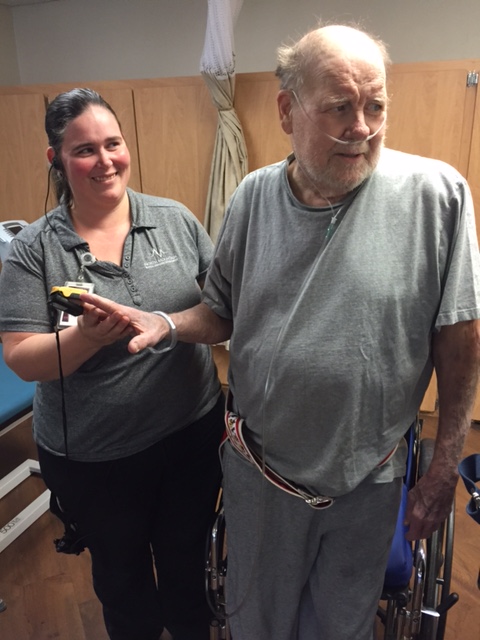
We implemented the Therapeutic Use of Self method with Mr. K, using various techniques to engage the patient, including patience, rapport, trust, humor and honesty.

Since the use of Therapeutic Use of Self, Mr. K. is a changed man! Today he actively participates in occupational and speech therapy, inquires about other ideas to improve his health, smiles more often and enjoys his therapy. We look forward to using Therapeutic Use of Self with many more patients in the future and seeing the benefits firsthand.

Evidence-Based Fall Prevention Program at Willow Bend Nursing & Rehabilitation

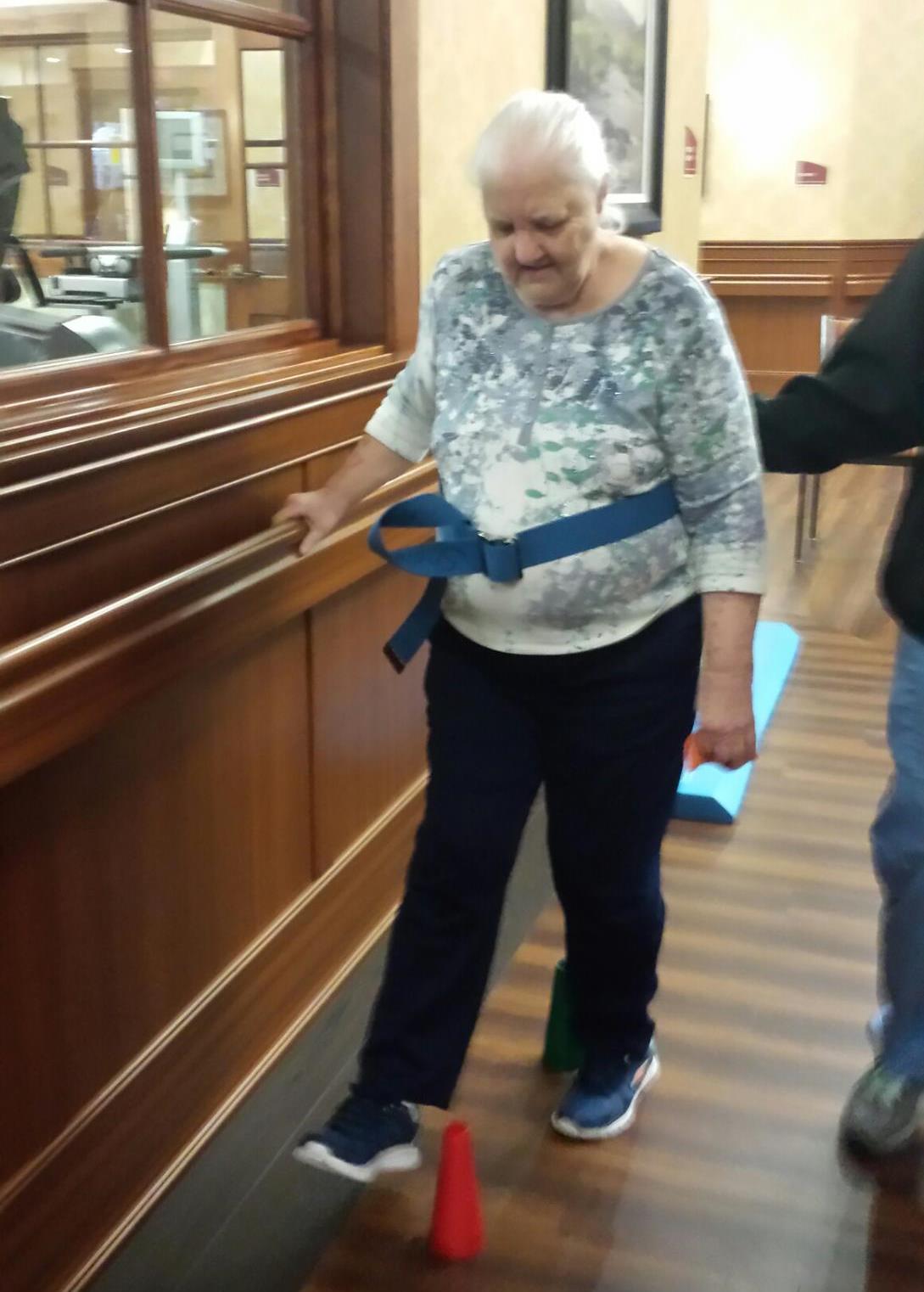
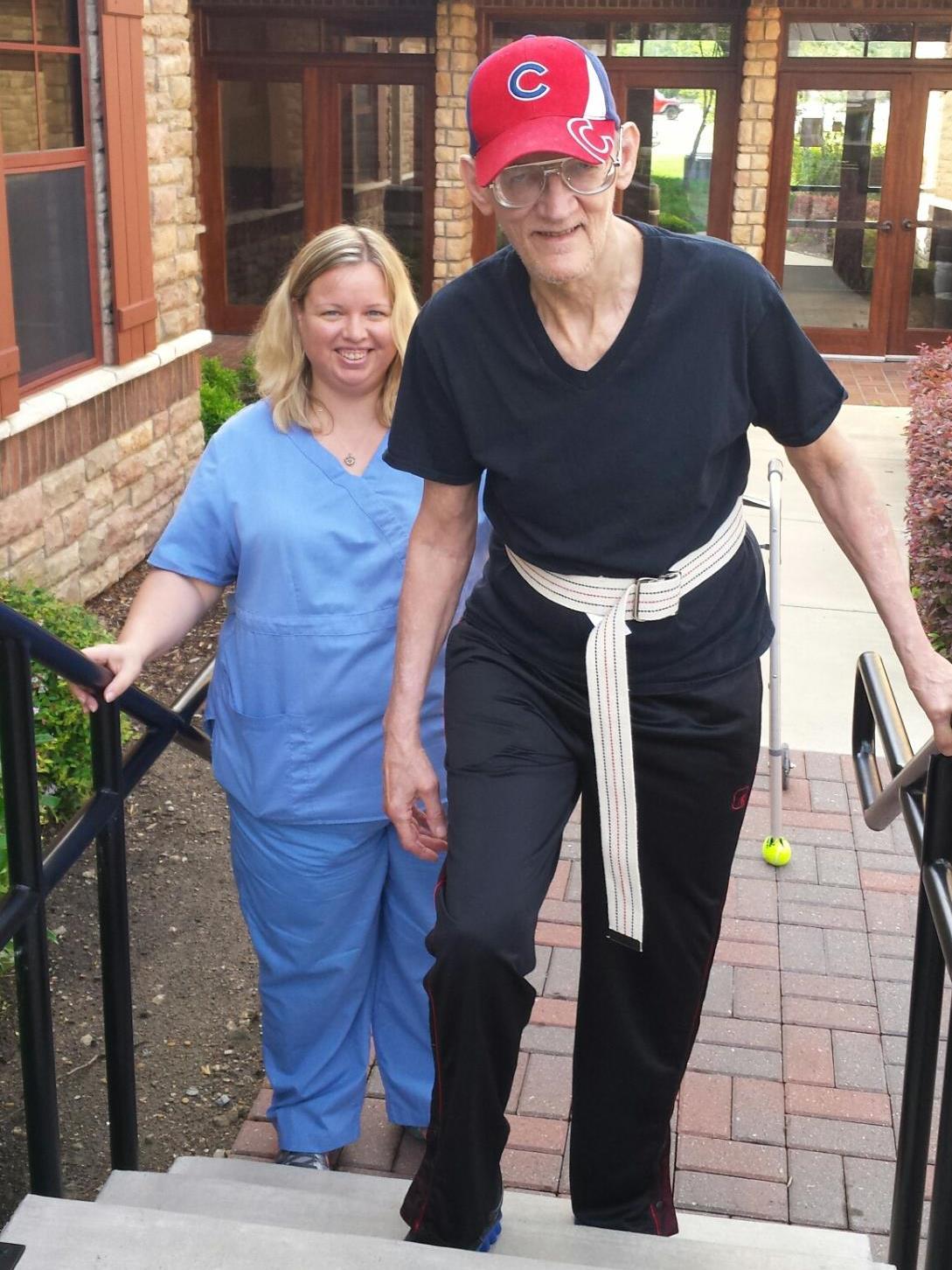
Fall prevention is a primary concern at Willow Bend Nursing & Rehabilitation, and we Willow Bend FallPrevention1work diligently to evaluate patients for fall risks as well as implement preventative measures. With Therapy working closely with our Activities Department, we have helped many patients to avoid falls as well as gain greater independence.

Our Balance Program consists of a screening, an evaluation with a standardized test upon admission, therapeutic intervention, quarterly balance assessments and various balance-related activities. The goal is to progress patients from a medium fall risk to a low fall risk, with modified independence in activities such as ambulating, standing balance in grooming tasks and toileting.

Willow Bend FallPrevention3In our program, we had a patient move from a Berg score of 27 and a medium fall risk at evaluation to a score of 47 and a low fall risk at discharge. The patient was able to return to assisted living at PLOF and continue being independent with all basic ADLs, simple meal prep, light housekeeping, leisure activities, walking to the dining room and community outings.

Through a close collaboration between Therapy and Activities, we are able to develop and implement balance-related activities for our patients, such as tai chi, core stability and our walking program. The combination of therapy and balance-focused activities enables us to progress patients safely through the program and reduce their fall risk significantly.

An Abilities Care Approach at Oceanview Healthcare and Rehab

Tree with hands and hearts figures logo vectorAt Oceanview Healthcare and Rehab, our mission is simple: to improve the quality of life for residents with dementia, while secondarily improving employee satisfaction. Through the development of patient-specific programs that target each resident’s best ability to function, we are able to accomplish that goal. Below, we’ve outlined just a few of the many success stories we’ve seen at our facility.

Goal: Fall Prevention

  • Nursing concern: A resident was having multiple falls, sometimes more than one per day.
  • Solution: Therapy identified that the resident was a wanderer and was not safe to walk. We provided a cushion and WC with the height adjusted to allow the patient to wander. We also instructed caregivers to have shoes on the patient at all times and to avoid locking the WC brakes.
  • Results: The resident has had a significant decrease in falls.

Goal: Behavior Modification

  • Nursing concern: A resident was non-compliant, often displaying physical aggression during care.
  • Solution: Therapy provided caregiver education to identify high-risk situations and prevention strategies.
  • Results: Caregivers are now better able to prevent situations where the resident becomes aggressive.

By collaborating across disciplines, we are able to maintain patient independence, integrity and safety. We are committed to facility-wide education to improve awareness of the dementia disease process, so that we can speak a common “language” when communicating about patient care. By staying true to our mission, we set up our patients for success, as well as our entire team.

By Jennifer Yocum M.S. CCC/SLP and Sonny Gonzalez DOR, Oceanview Healthcare and Rehab, Texas City, TX

As If by Magic: The Use of Magic as a Therapeutic Intervention at PVPA

Hands of magician holding cards. Wearing black suit. Studio shot against black.

I have found that the use of sleight-of-hand magic as a therapeutic intervention has yielded great success and positive outcomes throughout my occupational therapy career. It provides a wonderful opportunity to facilitate functional gains with occupational skills, including pincer grasp, hand-eye coordination, in-hand manipulation, sequencing, problem solving, short-term memory, crossing the midline, activity engagement, concentration, decision making, among many others.

The use of sleight-of-hand magic as a therapeutic intervention also enhances the psychosocial aspects of our clients’ lives. Learning a magic trick that incorporates skill and technique, and then sharing it with friends, family, or other patients, encourages a social component that is vital to support a healthy quality of life. A patient’s self-efficacy immediately rises after successfully showing a magic trick to a family member who comes to visit.

Additionally, the use of magic as a therapeutic intervention breaks up the monotony that may come with a skilled nursing facility stay. It allows for a creative outlet to attempt something new or experience something novel. The use of sleight-of-hand magic as a therapeutic intervention is evidenced-based, dynamic and client-centered. I have found it essential to include magic in my therapeutic “bag of tricks”!

I was working with a gentleman who had a CABG x 3, as well as middle-stage dementia-related decreased short-term memory. He loved magic and the idea of magic tricks but doubted his ability to perform one himself. Some barriers to his ability to perform included cognitive declines and decreased short-term memory.

I graded down a simple magic trick to reflect the patient’s skill level and to compensate for his short-term memory decline. The patient successfully learned the magic trick! After successfully performing this trick, my patient was overjoyed, stating, “It actually worked, and I did it!” He looked forward to showing it to his grandson who was coming to visit later that day!

By Max Zweig, Occupational Therapist, Park View Post Acute Care, Sonoma, CA