Get Your WRAP On!

By Eileen Smith, DOR, Paramount Health & Rehabilitation

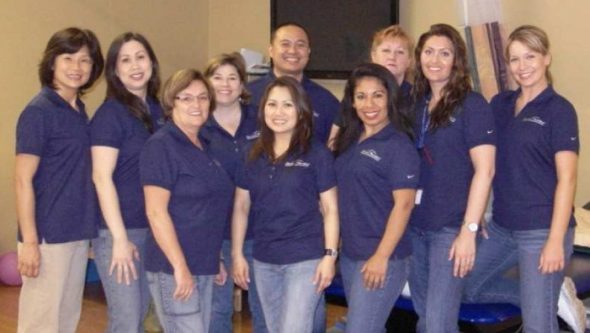
This past September, Milestone had an opportunity that was the first of its kind in Utah. The University of Milwaukee sponsored a 5-day lymphedema course in Salt Lake City, UT. In this course, we learned about the lymphatic system, different methods of wrapping and “Massage for Lymphatic Drainage” (MLD). As we all know, the lymphatic system is a complicated but delicate system that can be obstructed by a simple injury, certain diagnoses or surgery of any type. Through this course, we were able to problem-solve and learn different techniques to address these issues from start to finish, beginning with MLD, to lymphedema wraps, down to a compression stocking that will assist in increasing the patient’s quality of life. Along with our course instructor, we were able to learn from our own Milestone member, Mary Egbert, DOR, Draper Rehabilitation, the different techniques and problem-solving she has experienced from taking this same course a few years earlier. After 5 days and an intense case study presentation, we were all certified in lymphedema.

The training did not end there! We had participants from seven of our facilities (Draper, Provo, Orem, Copper Ridge, Paramount, St Joseph, and Arlington Hills) that included therapists, our Wound Nurses, and our Wound Physician who supports several of our facilities. We also had several community therapists participate, which provided a great opportunity for us to intermingle. After the course, we exchanged emails, etc., and have all kept in touch to either assist in problem solving different methods or ideas on patient care or share success stories.

Powerful Beyond Measure

These are words that describe the momentum occurring at Wellington Place and Rehabilitation in Temple, TX. The Wellington rehab team has made tremendous strides fiscally and clinically over the last eight months under the direction of Curtis A. Merring, OTR/L, MOT. Curtis brings an evidenced-based approach to rehabilitation. As a published clinical researcher himself, he has conducted research involving people who have experienced a stroke or SCI at University Medical Center Brackenridge and the University of Texas at Austin. Two of his most recent publications include, “Recovery nine years post stroke with Standardized Electrical Stimulation” in Occupational Therapy in Health Care, and “Muscle spasticity associated with reduced whole-leg perfusion in persons with spinal cord injury” in the Journal of Spinal Cord Medicine.

Curtis has challenged his entire rehabilitation team to take an evidenced-based approach to their treatments. Currently, all disciplines use a standardized outcome measure to document progress and produce monthly reports to the local hospital and for local community events. such as the recent Bell County Senior Expo Fair where the rehab team demonstrated the effectiveness of Kinesiotape. In addition to community outreach, the entire rehab team has made a point to attend courses and conferences providing the most up-to-date treatment strategies that are shared during their monthly rehab in-services.

Several of the unique cutting-edge treatment strategies being implemented and utilized at Wellington have created a buzz in the community that has helped boost referrals to not only the SNF but to the facility’s recently revitalized outpatient department. One of the most talked about new treatments at Wellington is Kinesiotaping. This has been implemented and applied by Rhianna Wagers-Hughes DPT, and Josh Reis PTA, in order to facilitate muscle, inhibit muscle, reduce pain and reduce edema. This treatment approach was traditionally used with sports, but is growing in evidenced-based outcomes with the geriatric population. The occupational therapy department led by Curtis Merring, Roger Rice OTR/L, and Becky Winsor COTA, has recently begun using standardized approaches to electrotherapy including a combination of Somatosensory and high intensity neuromuscular electrical stimulation to stroke patients resulting in improved active range of motion and voluntary control. Speech therapist Stephanie Kozeny SLP/CCC, is Vital Stim-certified and has improved the swallowing qualities of many residents through vital stim, strengthening exercises, and has also began using Kinesiotape to facilitate muscle re-education.

For 2012 the Wellington team has created a vision that reaches even higher marks and includes growing the outpatient rehabilitation program through developing needed community outpatient programs. One such program the team is pioneering and refining is a Wheelchair Seating System Program that is already receiving praise from the local physicians. Through programs such as this, Wellington is truly demonstrating true Ensign Ownership, and that’s what makes this team powerful beyond measure.


A Thriving Student Partnership at Atlantic Memorial

Alex Nguyen started at Atlantic Memorial a little over 2 years ago with a vision to start a thriving student program. Only a year out of school himself, he knew the impact of what a phenomenal clinical experience could make. His experience during his internship with Jenny Farley, the DOR at Atlantic Memorial, influenced him to take a position with her despite multiple job offers in a variety of settings. His vision with his student programs was to weave it into part of the vision of the facility: building extraordinary relationships with the surrounding community. Alex set out to build these same extraordinary relationships with the academic community.

The first student contracts were signed in December of 2010. Since January 2011, Alex and the Atlantic team have accepted 11 students: 5 OT interns, 2 PT interns, and 4 SLP students. Over half of the staff has taken a lead clinical instructor role. One of the important clinical benefits of staff assuming a leadership role is raising the daily standard of patient care. Therapists who may have been practicing for awhile are infused with renewed passion for learning and teaching. One of the externs became an Ensign employee! Atlantic Memorial currently receives many inquiries from previous and future students to set up future internships, and there is even a waiting list now because of the excitement in the academic community.

Alex’s passion for teaching is infectious! You only need to spend a few minutes with him to catch the excitement and energy that he has. The community visibility has greatly increased with students attending ortho appointments, patient home visits, and interfacing at community events. In addition, Alex has been invited for guest lecture opportunities at Loma Linda University and USC. Alex and the staff at Atlantic Memorial are helping to define the “new face” of skilled nursing settings!

If you are interested in taking a student or are unsure where to start, please let your DOR and your therapy resource know. We have lots of week-by-week tools for you to use to guide you through the process, and we have signed contracts ready to go with many schools throughout the country. We can be an integral part in shaping our new generation of therapists, and we have heard first-hand from several academic coordinators that the buzz about our therapy programs is out there, and they are eager to send their students to our facilities for an outstanding clinical experience.


Brookfield Rehab Gardening

Transforming Care at Brookfield

The tiniest rehab gym in Ensign is turning out some of the biggest ideas. The Brookfield Rehab Team is led by Lito Ortiz, a PT who has been a part of Ensign for 9 years, and DOR at Brookfield for a little over a year. Lito assembled an all-star group of therapists who continue to amaze us with their creative ideas to enhance the lives of patients and staff. They are a beautiful example of not waiting for an Eprize to transform their care. Here are just some highlights of the great things happening there:

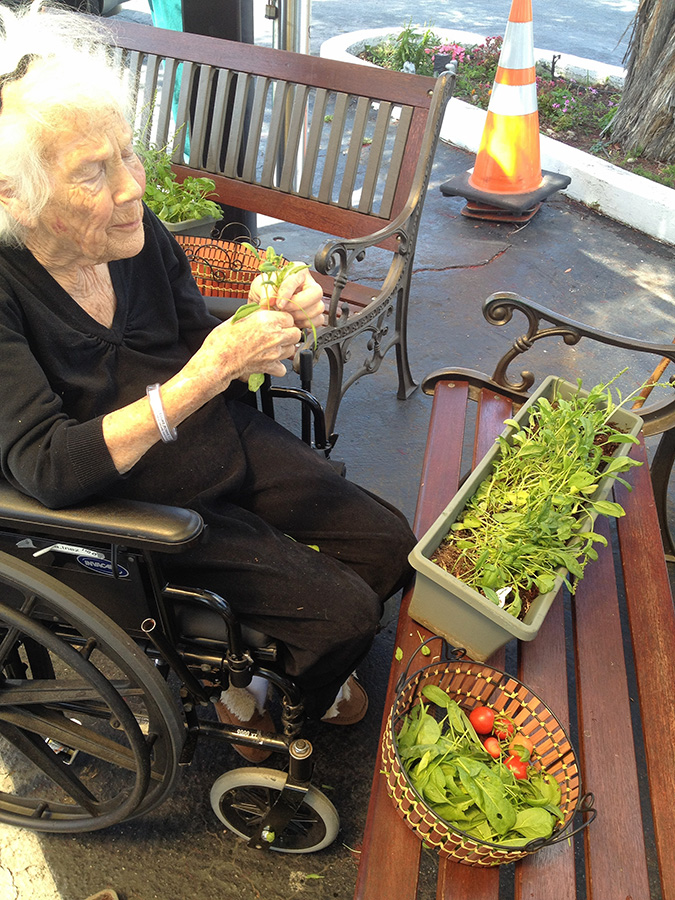
  • The therapists didn’t let their inner-city location limit implementing a gardening program. They made use of a small space near the parking lot to help residents plant strawberries, tomatoes, jalapenos and bell peppers in different level gardening boxes.
  • They found out there were some artistic abilities among the residents and the team developed an art class.
  • The Brookfield Medical Director, Dr. Nguyen, helped to lead a kick-boxing class for facility staff to keep everyone healthy and active.
  • The therapy team partnered with activities to start a computer literacy class for residents.
  • The therapists got together and completed a “graduation kit” comprised of a safety education booklet, Physiotools exercises, a therapy group picture, and a graduation cap signed by the therapists with personal messages about their progress.
  • The team partnered with Activities to start a pet-therapy program.
  • The Therapy Team partnered with Activities once again to bring Tai Chi Qigong to the residents. A chiropractor student (Lito’s bother!) taught the class, and the residents learned how to integrate breathing, physical activity, and mental/spiritual health.

The Brookfield Therapy Program continues to inspire all of us. The ideas are simple. What is not simple is the magic that happens when this group of professionals comes together to love one another, to love their coworkers, and to love their patients so they can make a difference in lives day after day.

Transforming Care at Brookfield Rehab with Gardening

Gardening

The therapists didn’t let their inner-city location limit implementing a gardening program. They made use of a small space near the parking lot to help residents plant strawberries, tomatoes, jalapenos and bell peppers in different level gardening boxes.

Reaching Out to the Community

Val Montoya is a PTA at Southland Care Center in Norwalk, Ca, with a B.S. in Exercise Physiology, and a dream to teach and train mobility and wellness in the elderly population. When Southland’s CEO, Jim Morrison, met with a nearby Assisted Living Facility to see how we could be a part of health and wellness in their facility, it was a perfect way for Val to pursue her dreams while educating and helping within the Norwalk community.

Val teaches an exercise class at Vintage Cerritos every Wednesday morning; the class changes monthly based on the needs and desires of the residents. Her first class started with a handful of curious folks, and within weeks they were up to over 30 residents and needed to expand the class to the library. Fall prevention and safety is a big part of her class, and the residents have given feedback that they feel more confident and stronger since taking Val’s class and implementing safety techniques back in their apartments.

This partnership is a wonderful example of how being best FOR the community can help our staff members grow while developing partnerships with those in the continuum of care for our elderly.

If ALF employees are potential Medicare / Medicaid patient referral sources, then it is not appropriate to provide a class at no cost to the ALF as that would potentially violate the Anti-Kickback Statute. Best practice is to charge the ALF a fair market fee for the classes in order to protect yourself and the ALF. Remember, Anti-Kickback violations implicate both the giver and receiver of a kickback.

Where Does that Tube Connect?

Teamwork is the Key to Success in Sub Acute Care

By Elyse Matson, MA, CCC-SLP, Carmel Mountain Rehab & Healthcare Center, San Diego, CA

As we all gathered Monday morning for our weekly rounds to our patients, it occurred to me that we really are a TEAM. Although we hear that word so much in our work, this was starting to look more like the Webster’s definition: “cooperative or coordinated effort on the part of a group of persons acting together as a team or in the interests of a common cause.”

A few years back when we were first launching our Sub-Acute unit, there was some apprehension in rehab as we were unsure of our role on this new unit. How would our skills fit into this new set of patients? Even questions as simple as, “How do we move these patients?” were being asked. As training began and the unit took shape, it was clear that rehab could take its place on the team along with many other disciplines.

I remember when we received orders to see our first patient—he was on a tracheostomy tube and ventilator. The first time we placed a Passy-Muir Valve on this patient, and he spoke clearly to the staff and family, it was one of those a-ha moments. As the nursing and respiratory staff began to see how speech therapy might be utilized with these patients, we knew we could create something special. Less than a week later, physical and occupational therapy assisted that same patient out of bed and walked with him down the hall. Everyone saw we were not just going to sit idly by and care for bedbound patients. We were here to do what we always do—rehabilitate the patient to their highest potential, whatever that is.

Over the last two years of working with these incredible patients, we have worked together as a team to develop protocols, policies and procedures, and, in the process, helped many patients. We have even seen a few of our patients who were on ventilators return to visit by walking in the door unassisted.

When we review each patient with the team every week, we address issues involving their medical care, psychosocial needs, nutrition and, of course rehab. Our Director of the Sub Acute Unit and lead Pulmonologist facilitates our meeting.

Because he is there, we can make changes to the patient plan of care with ease. For example, if a patient is starting to eat, we can change the tube feeding schedule right then. If we want to evaluate a patient for tolerance of the Passy-Muir Valve, we can discuss the parameters and schedule a time to evaluate this with respiratory therapy and/or nursing. Everyone is then aware of the plan.

Monkeys on Your Back?

So… I am on the I-5 yesterday and I see what appears to be some sort of animal hanging from the back of this semi truck. Of course, I was immediately concerned that this truck driver had an animal hanging from the back of his truck and didn’t know it.

As I got closer I realized that this was nothing less than a stuffed monkey on his back. Phew, I was relieved . . . but this was a reminder to myself that I need to keep working on getting these crazy monkeys off my back. Have you been working toward this? Creating a Never again list, and moving those items that you’re most passionate about into your “To Do List”? If not, let this serve as a friendly reminder…

Submitted by Jon Anderson, Therapy Resource

If I Could Speak …

As Therapists, we get into this field with aspirations of helping others. Inevitably, we come to learn that the people we are helping also touch our lives. Wellington Place had the opportunity to significantly impact the life of a new resident by providing him with a way to communicate, which he has not had the ability to do in 10 years.

Upon admission, the Wellington team learned that Clint was in an MVA 10 years prior, leaving him with quadriplegia. He had been residing in a local living center since the accident, unable to communicate his needs and wants. Medical records indicated an inability to assess him neurologically and cognitively due to the extent of his deficits. We were not satisfied with this assessment, so we attempted communication with eye blinks. He was 100% successful for 10/10 questions. We could tell from the look in his eyes that he had more to say; so we pressed on, determined to find an augmentative communication device. I brought in an alphabet communication board, and the OT made a splint for his right wrist allowing him to hold an object for pointing.

Over the next several days, the therapy team learned a lot about Clint, including his favorite sports teams. Sadly, we also learned that Clint had also been in a lot of pain over the years. In furtherance of our communication efforts, the nurse asked, “Are you in any pain?” He communicated, “y.e.s. a.r.m.” As tears rolled down his cheek, he spelled “t.h.a.n.k.y.o.u.” We fought tears as well.

His sister was overjoyed with the news that her brother could communicate and sincerely appreciated our efforts. It has been difficult for her to accept that her brother had been alone and unable to communicate for so many years. She shared that he also had a 4-year- old daughter at the time of the accident; she is now 14 years old, and has never been able to communicate with her father.

We were determined to find an augmentative communication device that would allow him to be more independent with use and reduce the amount of physical effort required to use effectively. The support and feedback from our Therapy Resources and Therapists regarding devices available on the market were overwhelming, and very much appreciated.

Ultimately, the communication word boards and the Dynavox EyeMax machine worked best for Clint. This device calibrates his eyes and allows him to find the words he wants to say. As he stares at the words, the machine speaks them.

While waiting anxiously for the new device to arrive, we spent the next eight weeks working on improving oral motor skills for saliva management, as well as speech skills. He was highly motivated and appreciative of the time spent with him. Finally, his “voice” could be heard.

From the day the EyeMax arrived, Clint worked hard with us. He showed us that he was eager to interact and had a lot to say! Clint asked about seeing his daughter, and wanted to tell his sister he loved her. He told the Dynavox Representative she was pretty, and he shared that he missed dancing, among other things. He told his SLP he loved her too.

We videotaped treatments to show his sister and physician; both were elated to see the progress made by Clint. The decision was made to allow him to reside at Wellington Place where he can continue to prosper with his newfound freedom.

It took an Ensign village to make a difference in this person’s life; Wellington’s team is thankful for the support provided by so many people. Clint tells us we changed his life for the better; and we tell him he has touched our hearts forever.

Therapy Can Be a Walk in the Garden

by Jill Schuette, OT –

It’s a hodgepodge of plant life: petunias, tomatoes, squash, rosemary, ferns. To the casual observer, it may seem like landscaping with a lack of direction. But to the therapy team at Pocatello Care and Rehab, it is a garden with a clear sense of purpose. In the facility’s small courtyard, a very special program is in full bloom. This is where patients practice therapeutic gardening as part of an interdisciplinary array of therapy techniques.

Working with plants is helpful to patients with emotional and physical challenges. For example, stroke victims can work on upper extremity function as they turn soil in a planter or water flowers. Gardening helps strengthen muscles, improve fine motor skills, increase endurance and enhance dexterity. Patients with depression or other mood disorders can increase their activity level and self-esteem.

The courtyard garden has a wide path for patients to practice safe maneuvering with walkers or wheelchairs, and features sitting and standing-height planters. Future plans for expansion include benches and conversational seating areas for therapeutic rest breaks and socialization.

Our Simple Garden Recipe:

1) Cement blocks: we stacked ours at different heights to allow both standing and seated therapy

2) Sturdy wood frames with bottom supports

3) Garden box inserts: ours are heavy black plastic, but we would recommend you choose something deep enough to allow for root expansion. We are limited to shallow root plants such as strawberries and culinary herbs

4) Wine casks or whiskey barrels: we bought ours from the local nursery. Be sure to drill holes in the bottoms to allow for proper drainage of soil.

5) Gourds: we selected these because they allow for a longer cultivating/harvesting season

6) Sensory plants: herbs are great for the senses –touch, smell and taste

7) Multi-pick plants: strawberries and tomatoes allow multiple harvests for patients

8) Visual stimulation: low maintenance flowers like petunias and sunflowers pack a visual punch

9) Water: Be sure to include watering your garden when doing daily planning. Patients manage our watering six days a week, nursing staff handles the seventh day.

Your garden project doesn’t need to be expensive or fancy. Sometimes simple really is best. Our garden setup changes each season, based on what works and what doesn’t.

Be sure to get the most out of your therapy garden by choosing plants that have multiple uses. Have your patients harvest fresh herbs for cooking activities, cut flowers for a dining table arrangement,and paint gourds for fall and winter table decorations. Use your imagination to get your patients actively involved in their garden. Give them ownership and see what blooms!

Draper Rehab Cooking Group by Mary Egbert, PT

Draper Rehab needed a fun activity for our skilled patients, and a cooking group fit the bill. Our first cooking group consisted of a patient’s secret family recipe for whole wheat waffles along with a fresh fruit salad. Not only was it delicious, but it provided eye hand coordination, upper extremity strengthening, standing balance while stirring and doing dishes, and cognition through the ability to follow a written recipe. We recruited one of our high level patients to do the cooking.

Our rehab cooking group is now a highlight of the building and looked forward to by all. Most of our Part A’s participate because they love to be there. Sometimes our activity person, Pam, joins in on the fun and the CNA’s can be found coming and going lured by the smell of wonderful food. Pam also was kind enough to embroider bib aprons with a cute little design for each participant. Along with hairnets and rubber gloves they all remind me of “lunch ladies”. Every seat is filled at our big rehab table on cooking day, usually 8-10 patients and residents. We discuss the next week’s menu with the patients and encourage them to provide their favorite recipes.

Some of the other cooking group menus have included:

  • Ruth’s amazing potato salad
  • Potato bar
  • Chef salad
  • Pancakes w/watermelon
  • Cinnamon rolls with frosting
  • Tacos with handmade tortillas
  • Scones with homemade fresh strawberry freezer jam

The kitchen provides some of the ingredients and we buy the rest. We have compiled all the recipes from the past groups, took pictures and will publish a “Draper Rehab Cookbook” sometime early next year with hopes to use it as a fund raiser.

Who said rehab isn’t fun…and tasty.