Helping others progress through the aging process with comfort and dignity


“It is a career that will tug at your heart strings. Your days will be filled with a wide range of emotions and hard work, but at the end of the day, your heart will be full.”

Patty Fantauzzo
Therapy Program Manager
Julia Temple Health Care Center

Congratulations, Jane!

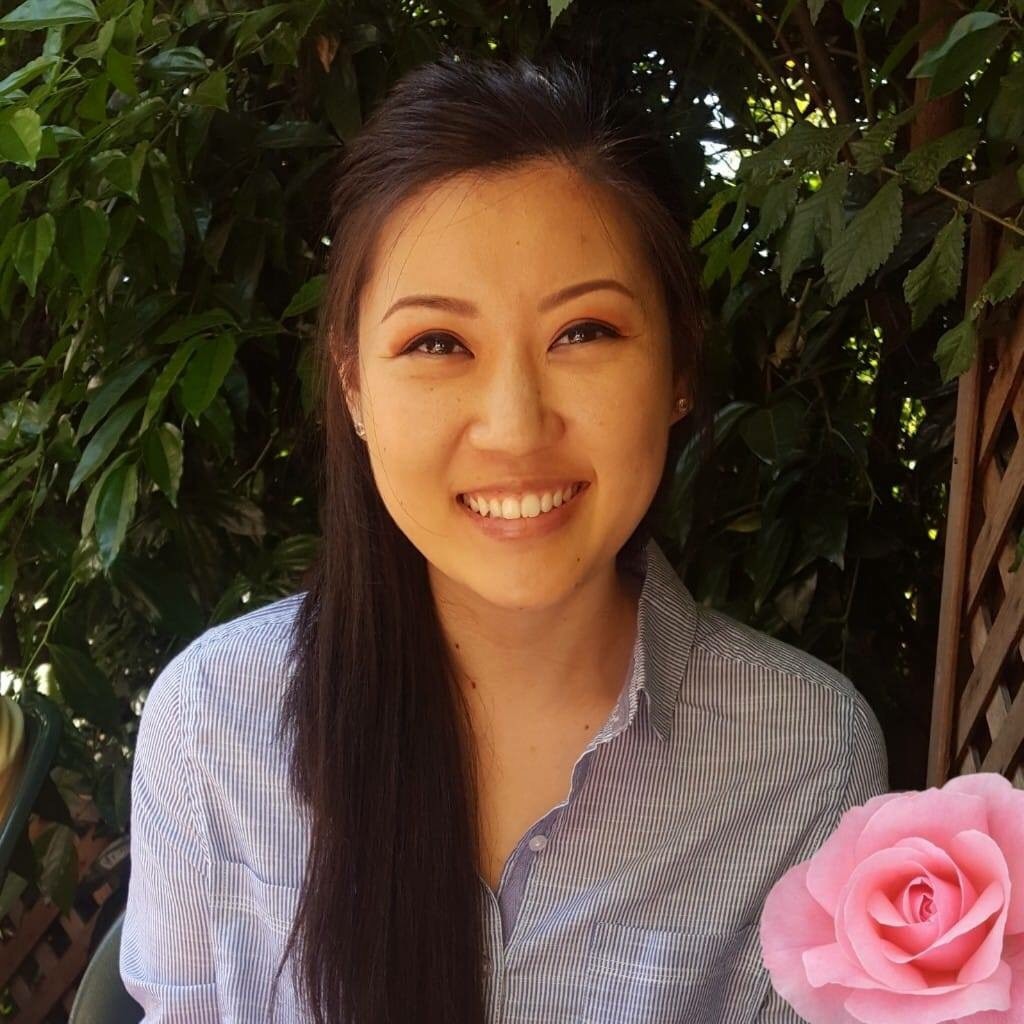
Congratulations to our newest SPARC Award Winner, Jane Song! She is an Occupational Therapy student at Dominican University of California, and plans to graduate in May 2019.

Read her winning essay below:

In late 2012, I watched my father be nursed back to health after a serious automobile collision left him barely able to move on his own. Though the accident was difficult to deal with, the positive experience with his medical team thereafter led me to believe in the value of occupational therapy. Watching him regain the ability to engage in the functional activities that were important to him was an emotional experience. I still remember the proud look on my father’s face after he used the bathroom independently for the first time since the accident. I, too, felt extremely proud of his accomplishments. This experience led me to pursue a career in occupational therapy. The experiences I’ve had since then continue to validate my decision and reinforce my passion for this profession.

Initially, I had a desire to work in pediatrics. I first-handedly witnessed the benefits of early intervention when I worked as a volunteer with a young girl who was born with an orthopedic disorder that disallowed for fluid movements of her extremities. After several months of therapy, she was able to independently perform various functional tasks such as taking off her jacket. Her progress was remarkable to watch, but seeing her become more confident in herself was what left a lasting impression of this entire experience. This was the first time I had played a role in facilitating progress as a healthcare provider, and I felt the same, incredibly proud feeling I had felt with my father for this young girl and her accomplishments.

As my clinical knowledge and skills continued to develop throughout graduate school, the want to help individuals discover their potentials and feel more confident remained the same. This desire was especially strong during my recent level two fieldwork experience in an inpatient acute mental health setting. An experience I had with a patient not only reinforced this passion but also enabled me to gain real-life experience of the importance of engagement in functional activities. This patient spent all day in his room and refused to speak with the staff for the first three days of his stay. On the fourth day, I briefly made his acquaintance in the hallway when he momentarily stepped out of his room. I introduced myself and welcomed him to find me in the occupational therapy office if he needed anything. The next day, I invited him to group therapy. A full week nearly passed before he took his first steps into the occupational therapy room to join us for art group. With much encouragement, he picked up a paintbrush and painted his first picture. He, then, painted everyday until he was discharged. Not only did he start coming out of his room more often, but he also began to open up to the staff, making jokes and laughing. The positive changes in his behavior when he discovered this leisure activity was an eye-opening experience that demonstrated the effectiveness of occupational therapy. I, again, found myself feeling proud of this individual and the progress he had made.

Throughout the pursuit of my professional career, I am constantly reminded of the incredible potential that people have to achieve their goals. My experiences continue to solidify the notion that I am undoubtedly in a field that not only enables me to meet my professional goals but also incorporates values that I hold most dear: serving others and making a difference.

First ENspire Grants Awarded

Congratulations to the first two recipients of the ENspire grant program! Inaugural projects receiving ENspire funds include “Focused Occupational Therapy Interventions for Clients with Heart Failure in Skilled Nursing Facilities” and “Translating Evidence Based Mental Health interventions in a Skilled Nursing Facility Environment.”

ENspire is a seed money grant program designed to support therapy graduate students who want to elevate evidence-based therapy practice in post-acute rehabilitation and dignify long term care in the eyes of the world. More information and an application form can be found on the ENspire page.


Focused Occupational Therapy Interventions for Clients with Heart Failure in Skilled Nursing Facilities
The ultimate goal of the SNF is to help clients stabilize their medical conditions and attain their therapy goals so that they can return home (Orr, Boxer, Dolansky, Allen, & Forman, 2016). However, approximately 27% of heart failure (HF) clients are readmitted to the hospital after being discharged from the SNF (Allen et al., 2011). High readmission rates may be due to the cognitive, psychosocial, and lifestyle barriers HF clients face. However, interventions in the SNF tend to be emphasized on activities of daily living (ADLs) and therapeutic exercise (Rafeedie, Metzler, & Lamb, 2018). This project aims to create and implement a clinical pathway for occupational therapists (OT) within SNFs, in order to address patient barriers and improve the quality of care. To create the clinical pathway, needs assessments in the form of interviews and Likert surveys will be conducted at Ensign SNFs. The project team will create a clinical pathway addressing the identified gaps in OT practice with evidence-based research. The project team will present the clinical pathway to Ensign OTs in northern California. A survey will collect feedback from the OTs on strengths of the pathways, areas to improve, gaps to be addressed, areas of concern, and the likeliness that the pathway could be used effectively in a SNF. In addition, online modules and surveys will be created for Ensign OTs who cannot be at the presentation. The project team will incorporate the feedback into the clinical pathway and present the finished product to Ensign Facility Services.

Principal Contact: Elena Vaccaro
Study Collaborators: In Hwa Chae and Camille Schilling

Translating Evidence Based Mental Health interventions in a Skilled Nursing Facility Environment
The purpose of this project is to develop and implement a workshop and toolkit to enhance occupational therapists’ (OTs) skills in providing evidence based mental health interventions in a skilled nursing facility (SNF). Based on the literature physical and social environmental factors are barriers limiting residents in achieving their highest occupational performance. Within a SNF, OTs are currently not practicing mental health interventions rather they are focusing on therapeutic exercise and therapeutic activities. OTs are expressing concerns in their scope of practice regarding being client-centered in a SNF due to the inability to engage residents in preferred occupations. Within the scope of practice, OTs are trained in mental health interventions and are skilled in analyzing environment and contextual factors that impact occupational performance. OTs are in a strong position to implement mental health interventions into a SNF. Due to the gap in service delivery, a workshop and a clinical toolkit will translate evidencebased mental health interventions for residents with a serious mental illness (SMI) in a SNF. This will equip OTs in the SNF to better serve the needs of residents with a SMI. The OTs participating in the workshop and receiving the toolkit are working in an Ensign affiliated SNF within the United States. The outcome measures of the project will come from surveys.

Principal Contact: Cecelia Ly-Peh
Study Collaborators: Jan Martha Conducto and Natalie Barrales

Parkinson Disease Programming

The Emerald Market has been focusing on building a partnership with the Heartland PD Foundation in an effort to enhance and grow our facility programs. Initially we met with the Foundation’s Community Program Manager, Kim Nitz, to inquire if they had any unmet needs and to discuss how we could possibly meet those needs. Her first response was sponsorship of their fundraising and awareness events like The Moving Day PD Walk and secondly providing meals after their weekly exercise class to both participants and their caregivers.

As a Market, we became a Bronze Sponsor — as shared in a previous FlagPOST. Beginning in May, the Healthcare Resort of Kansas City, Riverbend PARC, the Healthcare Resort of Leawood, and the Healthcare Resort of Olathe started providing lunch for 25 participants and their caregivers on a monthly basis. The focus was more on building relationships rather than heavily marketing our programs/facilities per the request of the Foundation.

We had great dialog at the initial meet-and-greet lunch and were able to provide educational pieces based on their feedback at the subsequent lunches. We discussed safe transfer training techniques, how to cope with “freezing” during transfers, car transfers, balance deficits and balance exercises. The initial four months were such a success that the Foundation has invited us to continue to hold lunch and learns until the end of the year. I strongly believe our partnership has been so successful because the participants see and feel our sincere compassion for the PD community.

As a Market, our goal is to establish and offer a PD Support Group by the first of the year in the northern part of the city at the Healthcare Resort of Kansas City and the southern part of the city at the Healthcare Resort of Olathe. We are diligently working to increase our relationships with Movement Disorder Physicians and vendors to have as possible guest speakers at our support groups.

I look forward to sharing the next chapter in our PD program development successes after the first of the year.

By Madeana Galler, Therapy Resource – Emerald Market, Kansas

HCR OLATHE IS ROCK STEADY EXCITED!!!!

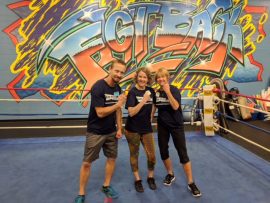
Pictured L to R: Jill Casey Weyer – COTA, Valerie Briggs – OT, Nik Kalinichenko – PTA

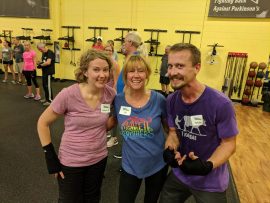
I wanted to officially introduce our newest Kansas Rock Steady Boxing Coaches (see photos)! They have had their new titles for one week and had 5 calls for patients ready to start the program. We are super excited for what’s to come! Pictured: Jill Casey Weyer – COTA, Valerie Briggs – OT, Nik Kalinichenko – PTA

Rock Steady Boxing (RSB), a 501(c)3 nonprofit organization founded in 2006, gives people with Parkinson’s disease (PD) hope by improving their quality of life through a non-contact, boxing-inspired fitness curriculum. RSB’s mission is to empower people to “fight back” against Parkinson’s disease and enriches both individuals and the community by improving the wellness of older adults.

RSB is the only organization in the world well-positioned with an effective, replicable model to address the quality of life needs of men and women dealing with Parkinson’s disease today. Bring RSB and hope to your community by becoming an affiliate of Rock Steady Boxing.

As an affiliate of Rock Steady Boxing you will have the benefit of brand marketing, training support, website presence, startup materials and online certification training. Read More…RSB Benefits of Affiliation

By Jordynn Knipp, DOR, The Healthcare Resort of Olathe, Olathe, KS

C

Compliance Corner

Updates! A Look Back, What’s Happening Now and a Look into the Immediate Future

Compliance Corner

By Brian del Poso, Associate Compliance Partner

With just about three-fourths of the year completed, it’s a good time to provide an update on where we stand compliance-wise and what’s on the horizon for the rest of the year. Therapy documentation and technical accuracy has come a long way, so kudos to all of you. There are still a few areas, however, that we can pay closer attention to. These items will sound familiar as they have been identified in years past and have improved, but we definitely still need to consistently get better at:

  1. Physical agent modalities documentation
  2. Co-tx documentation
  3. Personalized clinical assessment in Progress Reports
  4. Documentation and justification for billing patient education, especially when residents are difficult and/or refusing treatment

Again, there has been improvement in these areas, but there’s definitely a high ceiling for growth. I encourage you all to seek further education and training in these documentation areas. The easy way out would be to look at some of these things and just say, “Well, we just won’t do co-tx anymore,” or “We don’t use physical agent modalities often, so…,” but the easy way out isn’t who we are. Let’s invest in each other and in the spirit of our core value of PASSION FOR LEARNING, and utilize the therapy resources, POSTettes, and compliance partners we have at our disposal to move ourselves forward.

Part A MSCAs were on a bit of a hiatus as the IRO summer season began, but they are starting up again as we speak. With that said, here’s a YTD look at some of our top-performing facilities from the MSCAs. Congrats and keep it up!


2018 MSCA Overall Scores 2018 MSCA Therapy Dept. Scores
Facility Top 5 Facility Top 5
Timberwood (Keystone) 99.27% The Grove (Signum) 100.00%
Panorama Gardens (Signum) 99.11% Golden Acres (Keystone) 99.53%
Brookside (Signum) 99.04% Northbrook (Signum) 99.53%
Claremont (Signum) 98.45% Atlantic (Signum) 99.43%
Sea Cliff (Signum) 98.39% Brookside (Signum) 99.40%

If you’d like to know where you rank within your company, please reach out to your local compliance partner, and we will get that information out to you.

Coming up in Q4, we’ll be wrapping up any leftover MSCAs, and similar to recent years, we will also be starting up Part B MSCAs. As a reminder, not all facilities will receive a Part B audit this year. Facilities chosen for Part B audits will be dependent on the size of your Part B program. Essentially, if your YTD Part B revenue hits a certain threshold, you’ll be in the pool for a Part B audit. We’re currently working on the threshold to see how much revenue makes sense for a cutoff point, so more to come from your local compliance partners.

Lastly, I’m sure you all have heard or seen the emails about our Independent Review Organization (IRO) audits. We’re not out of the woods yet and still have the remote portion coming up, but we wanted to give a shoutout to this year’s on-site facilities (Legend Oaks Kyle, Golden Acres, Rehab Center of Des Moines, Grand Oak, Redmond, HCR CO Springs, Heritage Park, Brookfield) for doing such an awesome job in our very last CIA and IRO year!

Ownership!

The land swelled below the wing of the plane in gentle shades of green and brown, revealing ample squares defining crops, and the perimeter of a small community where various creeks meander through town before combining to become the Walla Walla River, which drains into the Columbia River about 30 miles west of town. Park Manor Rehabilitation Center is nestled in the farmlands of eastern Washington.

One sweltering hot morning, Sonya, DOR and Zewdi, DON and the IDT team calmly evacuated over two dozen residents to the dining area to preempt any issues with dehydration in a seamless flow of activity. The team identified that the temperature in one wing was too high for the medical well-being of their residents and made the decision as a group during the morning Standup Meeting. Within minutes, people self-organized to provide a pleasant alternative to the overheated area of the building for the patients in the affected wing. Soon the residents were seated comfortably in the dining room, offered beverages and provided with activities to engage them for the morning. Being a part of this particular morning left me with a powerful experience of Ownership, a core value for us at Ensign.

In practice, ownership takes many forms, reflecting the composition of the people who form those teams. As I reflected on why this team seemed so special, I realized that while their location set them apart in very practical terms, the quality of their interactions were definitively harmonious, often uplifting and consistently grounded in sound clinical and operational practice. These lovely people had figured out how to keep the fire lit and love one another through the usual travails of long-term care. I was struck by the balance of utter focus and levity during the morning meetings. This created the critical element of mutual understanding for each patient’s current medical and functional status for a better quality of patient care.

I was particularly struck by the level of individualized attention to ensure that each patient was situated well and individual or family needs were considered. The objective aspects of patient care were navigated skillfully while the personal needs of each patient were also thoroughly respected.

Over the course of a few days, there were many opportunities to get to know this team, and I found myself pondering how to describe what I was experiencing. There were eight factors that seemed to play a part in this team’s capacity to work so well together.

  • Relationships — These folks had healthy working relationships. They worked out their differences, held each other accountable and genuinely enjoyed working together. They even went to the movies together after work.
  • Finances — While any facility has opportunities for improvement, and the external market factors play a role in that, the basic metrics were in place and well- Census was above average and key metrics were in good shape.
  • Calm — There was a quality of calm. While the challenges were quite real, with case mix index, productivity and/or admissions, overall, this was not an anxious group. If tension arose in an interaction, there was a tendency to deal with it directly or let it go altogether. Trust played a huge role in this.
  • Creativity — On more than one occasion, I heard the IDT team generate multiple solutions to various patient issues, and then choose one, together, to solve it. This was most notable when a vociferous member of the residential community requested space that was scarcely available, yet a solution was provided that worked for everyone involved.
  • Health — If we’re looking at the collective level of function of a team or teams, the overall health of the Interdisciplinary team partners and the therapy department partners was remarkable. While any one of these folks would admit that their work could be challenging, on the whole, they knew that they had each other’s backs and found ways to express that easily and frequently, often in simple ways. For example, they’d share food to create a group lunch, or bring tea or coffee for all to enjoy; express words of appreciation and silent exchanges of support; clean a certain mug for a friend; or draw a picture for each other when documentation was completed.
  • Intelligence — In and of itself, the sheer experience of simplicity was part of the intelligence of the way that ownership was enacted within Park Manor. I felt as if the common courtesy and willingness that these partners extended for their work and for each other possessed a quality of coherence that was palpable and easily observed in patient/therapist interactions.
  • Flow — The innate intelligence of the team could be seen in the way they addressed the temperature in the south wing being too high on the morning that I visited the building. There was calm but decisive decision-making happening with a seamless flow of activity and an unflustered interdisciplinary team swiftly evacuating two dozen residents to a cooler area. That’s flow.
  • Generosity — The consistency of the integrity, accountability and genuinely generous performance that these leaders modeled, coupled with their mutual respect for each other as functional counterparts created a very visible absence. There was no silo. Each leader understood and acted as though they comprised the whole well-being of the facility. They fully supported each other within the scope of their roles, and they took every action possible to ensure continual success to whatever degree they could actuate, one day at a time.

This generosity was the spirit of ownership. It was so seamlessly implicit in the functional performance of this team that I almost missed it. The word “ownership” in our secular culture has come to mean possession, yet here, the opposite is true. When we consciously choose to open up and own more, to bring awareness and act as if our collective results are actually our own, new possibilities open up. New perspective. New hope.

By Willow Dea, Leadership Development

Evaluation vs Treatment Notes

By Lori O’Hara, MA, CCC-SLP – Therapy Resource, ADR/Appeals/Clinical Review

CMS doesn’t define a lot of requirements for what needs to be in a daily note, understanding that it’s what happens during the session that drives the content. But one of the places where they do define a requirement is on the day of the evaluation. Because evaluation minutes don’t count towards the calculation of a RUG score, but treatment minutes do count, they want to be able to see easily that those things were different when they occur on the same day. That means a narrative entry is always required when treatment occurs on the day of the evaluation.

What needs to be in the note? Content that describes how activity billed to the treatment codes was clearly not activity that should have been billed to the evaluation code. So the content in the therapy CPT boxes should describe skilled activity associated with the specific treatment code being billed.

Content that is providing detail on the evaluation findings, interpreting scores or risks associated with testing performance with the patient or family, or describing goal setting is evaluation related. So this cannot be billed towards a therapy code and should not be documented in therapy CPT boxes.

Education about the patient’s conditions or limitations, trialing devices or attempting environmental adaptations, and specific therapeutic interventions are treatment related and should be billed to and recorded as their corresponding CPT codes. Content should be detailed enough that it’s evident to anyone reading that those activities were clearly distinct from the evaluation activity.

Reviewers are starting to look for this – managed care organizations too! So, protect your minutes on your evaluation day content that is just as amazing as the services you provide.

Our Newest SPARC Award Winner!

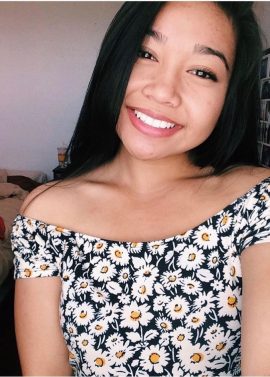
Congratulations to our newest SPARC Award Winner, Hannah Ruth Downing, SLP Student at Sacramento State University, Grad Date 5/19/2019

Read her Winning Essay Here:

“What do you want to be when you grow up?” is the question I was continually asked as a child. Being raised in the Filipino culture, one is expected to become a nurse, doctor, or have almost any job relating to the medical field, but this did not seem like something I wanted to do. From a young age I enjoyed the idea of becoming a teacher. As I grew older I tutored elementary students at a local middle school, and there my ardor for helping kids increased. The thought of becoming a teacher continued to linger in my mind, but the voices of others encouraged me to choose otherwise. Going into college, I chose to pursue occupational therapy due to the fact that it was in the medical field, and I could specialize in pediatrics. However, I quickly realized that occupational therapy was not the career choice that suited me best. I then stumbled upon speech pathology. This career field had both aspects that I was looking for, teaching kids while being in the medical field. The classes I began to take and the volunteer work that coincided, sparked my interest.

Having finished my first two semesters in the communication sciences and disorders major, I was taught the basics such as the anatomy that is used for speech and swallow, language disorders in children, how effects to the brain can disrupt the language process, and various other topics. I soaked up the majority of the information given to me by my professors and I enjoyed learning everything, but by putting the knowledge I had obtained, over the two semesters into practice, I was enabled to truly comprehend the things that were taught to me.

During the first two years in college I was a childcare attendant at California Fitness. I was able to observe and interact with typically developing children, and with the knowledge I held at the time, I was able to distinguish kids that incorrectly produce sounds that were typical for their age and others who could not. This was the first encounter where I was able to practice what I had learned. This aroused my desire to learn more in order to implement the information I was attaining, so I decided that I needed more exposure to the field that I was working towards. During my third year, I got hired at Genesis Behavior Center as a behavioral therapist working with children with autism. This job has allowed me to apply a lot of the information about autism that was taught by my professors because a lot of the clients on an SLPs case load are on the spectrum. The most impactful thing that I have obtained, as well as what has driven me to learn more from being a behavioral therapist, is the struggle of communication that someone with autism faces. As a behavioral therapist, I have to train my clients how to communicate their emotions in the most effective way. In training a child with autism, how to do this can be complicated and it can take weeks, months, or even years to accomplish. However, when the child finally understands that when they are mad the inappropriate thing to do is throw a chair across the room, and instead they can simply state that they are mad and take some deep breaths to calm down, this is the moment that brings me so much joy. I have learned that communication is extremely important, and when communication is hindered, by a developmental disorder like autism or aphasia from a stroke, it can cause a copious amount of stress on the person with a disability as well as the people around them.

Working at Genesis reaffirmed my love for working with children, and although my passion for helping kids had increased, I still needed to gain experience by working with adults. I began getting involved with several organizations such as Elk Grove Adult Community Training (EGACT) and Training Toward Self Reliance (TTSR) where they both work with adults with developmental disabilities such as Down’s Syndrome, cerebral palsy, or autism, Head Trauma Support Program (HTSP) where they work with clients who have had a traumatic brain injury, and lastly stroke support group. Volunteering at these organizations was an immense revelation that left me heartbroken. There were two paramount concepts that I gained from my experience, first was the fact that kids grow up. I knew that kids obviously grow up, but I forgot that even though they get older their disabilities do not disappear. There is so much focus on early intervention, which is not a bad thing, but people often forget that adults with disabilities still need guidance and assistance. I was so happy to see day centers like EGACT and TTSR assist adults with disabilities go to and interact with each other as well as guide them so that they can continue to be a part of society regardless of their condition.

The second concept was the fact that before the patients had a stroke or TBI, they lived functionally. When going to HTSP meetings I noticed that a lot of the clients had tattoos. In order to get those tattoos they had to have the ability to make the executive decision to get something that would be permanently on their body, however, when you see them now they cannot even form a sentence, let alone a word. I realized that a lot people that encounter patients with TBIs or strokes were treating them as a person with a disability, and not just as a person. We often forget they used to have normal lives and were capable of accomplishing daily tasks themselves, and that they are just working to get back to what they remember as normal. One of the patients at the stroke support group meeting stated that, “It was like tracing out your ABC on the wide rule paper like you were in kindergarten again, but in kindergarten I probably did it better. I have to learn everything over like I’m a child.” This statement impacted the way I saw patients that had gone through a stroke or TBI. It made me realize how frustrating ever day must be for them, and going to school to potentially become someone that could help them try to get back to living functionally really encouraged me. Even though my passion is working with children, volunteering at these organizations has not only opened my eyes to many misunderstood concepts, but it has also driven me to want to understand and learn more about working with adults.

Overall, the classes I have taken for communication sciences and disorders, have aided me when I am volunteering. It allowed me to understand the absence of pragmatic skills in kids with autism, and the many different aphasias one can experience after enduring a stroke. I can easily see and pinpoint things I am learning in class to what I experience as I work and volunteer. I am aware that I still have so much to learn because even though with all the knowledge I have obtained, I continuously ask myself questions when I encounter certain situations. These questions can only be answered as I learn more, which has driven me to want to continue in my education. This scholarship money will allow me to further this desire of learning in order to gain more experience, enabling me to treat my future clients with the utmost excellent care they deserve.