SPARC Therapy Scholarship

Congratulations to SPARC Winners Corinne McGownd and Colleen Fitzgerald!

Congratulations to our SPARC winners (Corinne McGownd) and runner-up (Colleen Fitzgerald)! The judges felt their awesome essays below demonstrated they were both very special people.
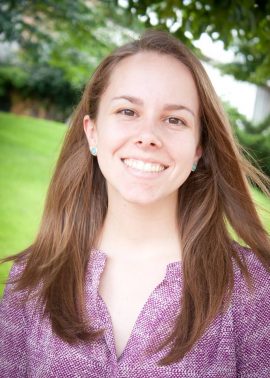
Corrine McGownd, SLP, Saint Louis University, Grad Date: 05/18/2018

My grandparents are in their late 80s and every day I am able to witness them show their love to each other as well as to others. Over the years, my grandparents have taught me compassion, putting others first, and being able to laugh even when things aren’t going my way. Everyone has something to teach no matter their age, cognition level, or disability. It is important to create an environment that provides people the ability to show their strengths while maintaining a positive attitude in order to increase their quality of life. When I am able to start practicing speech pathology, I plan on using my passion for helping others and learning to aid in increasing patient’s well-being in all aspects of their lives.

The most important thing I have learned from my academic coursework is to assess and treat patients with regards to their whole person and not to the disability. Speech therapists are treating the whole person during therapy, not just the disability; therefore, that is how assessment and treatment should be set up. I have seen this action while at my clinical practicum sites over the past year. I am currently at a specialty school for children on the autism spectrum. Although this is not a skilled nursing facility, I believe that these concepts can be transferred to any setting. At the school I am working in, the interdisciplinary care meetings about the each student are done on a regular basis. As a representative of speech therapy, I do not just discuss the student’s speech therapy goals within the meeting, but how the student is doing overall when I see him or her: transitions, overall attitudes, the conversations we have that don’t revolve around speech, and the generalization of what we are working on to other areas of the student’s schooling. The main goal of those meetings are to assess where the student is and how the team can best fit the needs of the student to improve his or her overall school experience.

Now translating this to a skilled nursing facility, I hope to be able to take an interdisciplinary approach by focusing on how the team can best increase the patient’s quality of life in all areas. Instead of simply working on word finding with the patient only in the context of their room, for example, speech therapy could focus on word finding in everyday activities: dining hall, getting dressed, communicating with nurses and family, or participating in desired activities. By working with other therapies and professionals, I will be able to assist the others on the team to provide best care for the patient that extends beyond the therapy room. Working on an interdisciplinary team also requires learning. I am eager to learn from my colleagues about best practice in their specialties and individualized patient care in regards to a specific patient in order to treat the whole person. Interdisciplinary care meetings would not be beneficial for the patient if there was no learning involved between the professionals. By learning from others, all professionals will be on the same page as well being able to provide the best care for the patient as possible.

In addition to learning from professionals, I envision myself learning from the patient themselves in order to contribute to their well-being. In order to provide patient centered care, it is important to learn what the patient wants to accomplish, what their abilities are, and what they are interested in. For example, my grandmother really enjoys playing golf. If I were to do speech and language therapy, I would want to learn from her about the difficulties she may be having when golfing in relation to her communication. By working on those things to increase her golf experience, whether that be socializing with the other players or being able to keep score, her quality of life in regards to her activities will increase because I spent the time to listen and learn from my patient. In addition to learning from others, I envision myself being a life-long learner. Through my schooling, I have always been curious and gone the extra step to understand the why behind doing something. By understanding why a therapy technique works and who it best works for, I would ultimately be increasing the patient’s therapy successes because I would be able to use evidence based practice when designing therapy plans.

I was fortunate to attend the American Speech-Language-Hearing Association annual convention this past November. While there I witnesses professionals of all levels of experience learning from others. They all had the same goal in mind: to learn and take back the new evidence to incorporate into their therapies with their patients. What a wonderful experience to witness! People from all over the country with the same passion! By keeping up with the research and the new therapies, I will be able to provide the most updated evidence based practice to my patients.

Learning is a passion of mine. Throughout my childhood, my grandfather taught me how to play basketball and the dedication it took to develop a skill. My grandmother taught me how to play cards and the patience it takes to play with others. Throughout my academic career, my professors have taught me how to look at the whole patient and how to critically assess evidence. Throughout my clinical placements, my supervisors have taught me how to use compassion with every patient. My patients have taught me how to really listen and look at the big picture. I hope that I can take all of these life lessons over the years and apply them while working with my patients. Every opportunity presents with a learning experience. Whether that opportunity involves working with a patient, sitting in an interdisciplinary care meeting, or independent learning about a specific treatment technique. Being able to recognize what that experience is teaching me is the first step. Then being able to take that experience and apply it to future experiences is the important next step. Without applying what is learned, then no one benefits. Ultimately, the end goal is to enhance the well-being of every patient. With that goal in mind, learning is a must in order to assist that patient in what they need to contribute to their quality of life. I want to make a difference in every patient I work with. In order to do that, I need to listen and learn from the team members and their expertise, the patient and their desires, and the others in my field and the ever growing knowledge base they present with.
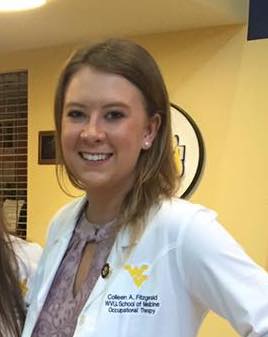
Colleen Fitzgerald, OT, West Virginia University, Grad Date: 05/13/18


E.D. Nixon once wrote, “Your spark can become a flame and change everything.” As an occupational therapy student, I feel that this quote is important because as OT’s we enable our patients to light their spark in order to bring back meaning to their lives. Once we light that spark for our patients it opens many doors for them. This may give them the motivation to work towards their goals and get back to their normal lives. Throughout the therapy process we collaborate, using our knowledge and our patients needs and interests, to get them back to where they want to be in life.

For example, this past summer I was treating a patient during my fieldwork that was very down. She was not allowed to bear weight on her left leg because of a surgery that she just had. She was not motivated to get dressed in the morning or shower. I began to ask her about herself and what was important to her. She stated that she felt uncomfortable being in the therapy gym without makeup and did not feel like herself. I had her family bring in some of her makeup and scheduled her therapy in the morning. I would have her practice transferring to the sink and keeping weight on only her right leg as she applied her makeup. This was a more meaningful way of increasing her balance, strength, and endurance that she needed to complete her daily occupations. Incorporating something that she loved to do enabled her to recover.

Along with this experience, I had many more this past summer while on my first level II fieldwork at Health South Rehabilitation Hospital. I was able to see how I will be using my knowledge and education in the future to better patients and allow them to become independent. Really listening to patients and using your therapeutic use of self is a great way to get to know your patients when you first start to work with them. There were many cases that if I hadn’t taken my time to get to know the patient I would have never figured out what some of their barriers were to a safe and independent discharge. I feel that with my education and my upcoming fieldwork, that I will be able to understand patients and work with them to meet their goals in the future.

I feel that I was very fortunate to go away to good school, better my education, and get into a great OT program. These past few years, I have taken every opportunity that is placed in my path to improve upon myself and the care that I will be giving to my patients. Throughout my time as an OT student and my fieldwork experiences, I have learned that the most important thing is to be patient and create good rapport between you and your patients. Once you have a good relationship with the patient, they will trust you and open up about other troubles or barriers that may be preventing them from reaching their goals. When working with patients, I feel that the three most important traits to have in order to become close with them and really understand what is going on in their lives is compassion, empathy, and patience. This will allow for your interventions to be holistic; meaning the physical, mental, and emotional aspects of the person are all taken into consideration.

One specific setting that I recently found interest in is the mental health and homeless population. This is considered non-traditional OT, but still views each patient holistically. I was fortunate enough to have one of my level one fieldwork’s at a mental health/homeless drop in facility in West Virginia. This experience really opened my eyes to the stigma that individuals with a mental health illness face. Every day we would complete some sort of art activity or have a music group to relax and then have a discussion group. Getting to know these individuals and help them work toward or reach their goals was something that really interested me. During my time at the facility, I was able to work with many individuals and figure out what I could leave them with that would best help them. I was able to put together a portfolio to assist them in getting a job, including things such as how to make a resume, what to bring to an interview, mock interview questions, how to manage money once getting a job, etc.

I am glad that I am already beginning to see the impact that I have made on some of the patients that I have worked with. I realized this almost immediately at each of my fieldworks. Seeing such amazing results before I even graduated was a great feeling. Knowing that I am able to help and possibly change someone’s life is very rewarding. Every day my passion for OT is growing and allowing me to learning new things. Along with my love for working with patients, I am very interested in reading articles regarding OT practice. Every night I try to research some of the newest information for evidence based practice. I try to do this because no matter what setting I am in I am going to get thrown in situations. Even if I am not an expert at something, having some knowledge about the situation can help. Finding this information and using it with my patients will allow me to give them the best care possible. Getting in a habit of doing this will increase my knowledge and quality of care for my patients.

As I watch each patient that I work with grow, I always think back to where my passion for OT started. When my younger cousin was born she was diagnosed with Down’s syndrome. She eventually began to receive OT and I would sit in on some of her sessions. I had to opportunity to watch how OT changed my cousin’s life and this was very inspiring. Her OT was extremely knowledgeable and humble throughout the entire process. I immediately aspired to be just like her. I began shadowing in multiple settings to see if I really did love OT. I continued to shadow for a few years and my love grew. I eventually got into WVU’s OT program and have continued to gain knowledge on how to help our patients. I can only hope that one day someone’s family has the same feelings towards me just like my family did for my cousin’s OT.
Tuning In to the Intelligence of the Heart to Change Lives

Did you know that there is a simple way to measure and reduce the stress response in our bodies? The variability in the heartbeat from beat to beat is called heart rate variability (HRV), and HRV is a powerful indicator of overall health. HRV essentially measures the stress response in our bodies, and through the use of biofeedback, we can actually train our stress response and improve our health! Dozens of our therapy programs across the country are using sophisticated biofeedback devices developed by our partners at HeartMath® in order to reduce personal stress, and to help our patients improve function and reduce anxiety. Here are a few examples of our success stories!

Angela Anderson at Gateway in Pocatello, Idaho, used the power of HeartMath technology to help a patient who was experiencing anxiety that would lead to cardiac arrhythmias resulting in multiple hospital readmission. Angela began biofeedback training using the HeartMath app and Bluetooth device, and the patient responded immediately with reduced anxiety. Angela set up the patient in her room with a portable device for her to use anytime she felt the anxiety and panic starting to occur. The results have been life-changing for the patient. She is now able to manage her anxiety and no longer is discharged to the hospital with panic attacks. The physicians and staff have been amazed!

Matt Zweig, Occupational Therapist at Park View Post-Acute Care, utilized HeartMath with a patient who came to the facility following a CABG. Even though the patient had just undergone extensive cardiac surgery, he had limited understanding of blood pressure and the anatomy and function of the heart. Matt used HRV training as an opportunity to educate the patient about the overall function of the heart. Matt hooked up the biofeedback device and instructed the patient on the techniques to regulate his autonomic nervous system. The patient was fascinated with the ability to see the results of the techniques through biofeedback and reported greatly reduced anxiety as a result of being able to regulate his heart.

Tyler Johnson, DOR at Northbrook, utilized the HeartMath biofeedback device with a patient with pneumonia, atrial fibrillation and anxiety. The patient was struggling to complete therapy sessions and quickly becoming short of breath (SOB). When the patient became SOB, he became more anxious and O2 saturations would quickly decrease. He was unable to complete functional mobility or ADLs due to SOB and O2 sat decline was also sent to the ER three times in a one-week period with these symptoms. HRV training was implemented with the use of the HeartMath emWave Pro to decrease anxiety, control rate of breathing and improve functional performance. The patient was able to maintain O2 saturations above 90 percent following HRV training and able to participate in training for functional transfers and ADLs with SBA.

Stephanie Winkler is a DOR at Wellington Rehab in Temple, Texas. Stephanie and her staff have multiple personal and patient success stories.

Mrs. T’s story:

Mrs. T had a variety of tests run as she was presenting with LE and UE weakness, but without any diagnosis to support the weakness. She was discharged from the hospital and was initially not making progress with therapy. We introduced the HRV training using HeartMath to see if we could help with focus and reduce her anxiety and depression. After only two sessions, she was able to focus better, participating in therapy and improving each day. She didn’t initially understand that she had underlying anxiety and fear, but with the use of HeartMath, she was able to control her anxiety and ambulate over 300 feet on even and uneven surfaces as well as shower and dress independently, and she was discharged home independently.

Mrs. S’s story:

Mrs. S came to us following a total knee replacement. She was exhibiting high anxiety and fear during her therapy. On the third day, we introduced the HRV training using HeartMath. Through the use of this program, she was able to begin to help with bed mobility and begin her rehabilitation with fewer episodes of yelling. She also was able to overcome her fear of standing and ambulate over 300 feet independently with the use of an assistive device, and she achieved excellent knee range of motion. The use of HRV biofeedback training allowed her to participate with therapy so that she quickly achieved independence with a short length of stay.

Mrs. B’s story:

Mrs. B came to us due to a hip fracture. She had a tremendous amount of fear and anxiety that was limiting her ability to participate in therapy. HRV training using HeartMath was introduced, and she was then able to fully participate in her therapy session, was following one-step commands, and was able to perform functional transfers and gait training with the assistance of therapy within the first week of HeartMath implementation.

Jon Anderson, Texas therapy resource, utilizes HRV and HeartMath both in trainings with therapy staff and also for his own health. One of the most profound changes that Jon has seen personally is his ability to sleep at night. He also has noticed an improved ability to focus and listen to others, reduced muscle tension, and overall reduced pain and fatigue after implementing the biofeedback techniques. Jon has also introduced the technology to his mother to help her with her anxiety and health challenges.

North Mountain Medical and Rehab Introduces “The SPOT”

The North Mountain Therapy Department specializes in Pulmonary Rehab, encouraging a multi-disciplinary approach to meet our respiratory patients’ goals of being decannulated, which typically is dependent upon the patient’s ability to return to a regular diet. In an effort to contribute to the greater independence of our patients, the Therapy Department created the SPOT (Speech Pathology Occupational Therapy), a holistic approach to a specialized dining experience to facilitate independence with safe swallow techniques and self-feeding.
The SPOT is a private, home-like, therapeutic dining room that allows our speech therapists and occupational therapists to provide a specialized treatment to our respiratory patients. The SPOT provides a quiet area to concentrate on safe swallow techniques, facilitate functional positioning, assess for any adaptive equipment needs to enhance the ability of our patients to regain their independence and return to the community.

The SPOT includes a small ADL kitchen and is stocked with adaptive equipment for the patients to trial during meals including a deltoid aid, weighted/built-up utensils, specialized drinking cups, and divided plates/plate guards. Additionally, ST has a quiet environment to perform vital stim or cognitive treatments.

The SPOT dining: helping North Mountain serve up independence!

Submitted by Kelly Schwarz, DOR
North Mountain Nursing & Rehabilitation, Phoenix, AZ


An IDT Approach to Contracture Management

We hosted the CE at our Legend West Houston facility. Nursing and rehab must be cohesive to a have a strong contracture management program. I sent an email out to our DONs and they welcomed the idea of including our RNAs. John even provided them with certificates. They loved it.

Thank you to those who were able to make it to the Contracture Management Course on Saturday. We had a great turnout from several of your therapists/assistants as well as your RNAs. The course speakers had an opportunity to visit the Katy and West Houston facilities, the day before the course, and provide face-to-face assistance. Tawaine and Brittany gave very positive reviews and stated that several patients were identified for therapy services that were previously overlooked.

Below, you will find the names and contact information of the speakers. Both are available to provide telemedicine support. What does that mean to you? If you have a patient you are considering for an orthotic and/or you need recommendations on the best splints, they are available by phone or FaceTime to provide guidance. They are also available to assist with verification of orthotics (especially for our managed care part B residents). All you need to do is send them the patient’s face sheet, and they will take care of the rest. Please take advantage of this available resource. We have several patients within our facilities with contractures, and our obligation is to provide the best quality of care available. Special Ensign pricing is available to us.

OCSI: Ongoing Care Solutions, Inc.

John Kenney: 949-702-2828 neuroflexjk@gmail.com

Regan Ponto: 970-978-1284 regancap@msn.com

Submitted by Kai Williams, Therapy Resource, Texas

Student Resource Manual for the Clinical Instructor

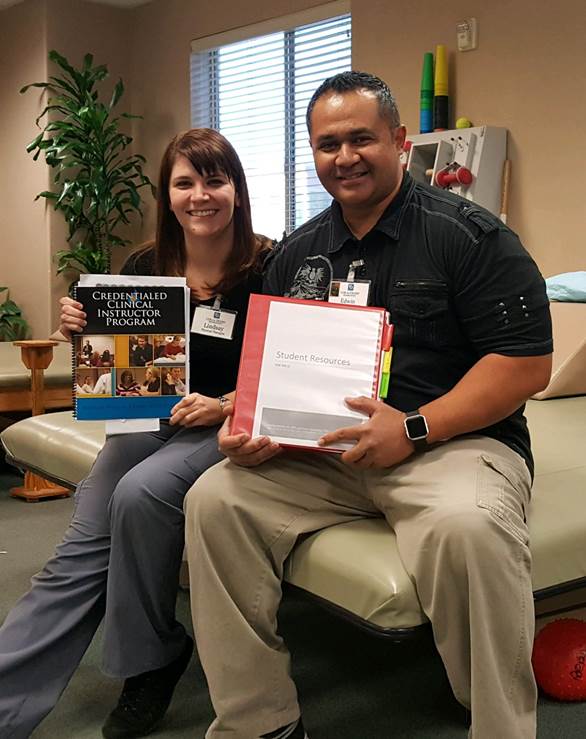
What was initially simply a continuing education experience for two therapists has inspired a brand-new program here at Coral Desert Rehabilitation. Recently, a Coral Desert physical therapist, Lindsay Rankin, and a physical therapist assistant, Edwin Stevenson, attended a course to become credentialed clinical instructors. They both enjoy having students, so they were excited to go. After attending the course, they came back with a desire not only to improve their own abilities, but also to help revamp the student program at Coral Desert.
The program was loosely managed before and not standardized from one therapist to the next, so the students often had varied experiences and subjective learning/feedback depending on the therapist. Lindsay and Edwin decided to set a BHAG together to create and implement a better student program based on the principles and recommendations of the course they attended.

With a lot of after-hours work and trial and error with a current student, Lindsay and Edwin were able to create a student resource manual for the clinical instructor. This manual is specific to our building, patient population, etc. and loaded from A to Z with information on how to properly supervise a student of any discipline. They didn’t stop there. They also created a manual for each incoming student, both a PDF file to have prior to arriving and a hard copy for when they get here for reference.

Once both manuals were completed, after many rough drafts, it was presented to our therapy team during an in-service to give an in-depth look at how to use this information and apply it when a student is assigned to a therapist. This has already proved to be valuable with our current students and should continue to be a great resource for students and therapists for a long time to come. Because we have seen a steady increase in the number of students coming to CDR in the past two-plus years, it is just what we have needed since our therapists are at varying levels of experience with having students. We already have seven students committed to CDR from now until November of next year! We are crazy excited about the Passion for learning combined with Ownership shown by our own therapy team, which saw the need and responded in a big way.

Submitted by Asa Gardine, DOR, Coral Desert Rehabilitation, St. George, Utah

The Power of Creativity: One OT’s take on the Dementia Care Program

Beth Brewer, OTR/ADOR at Legend Oaks Katy, is known to most of us by her acquired moniker, MacGyver. What she creates with “a little bit” of duct tape, PVC pipe and pool noodles is magical! So when we decided to make dementia care one of our focal clinical programs, it came as no surprise that she would create something great.

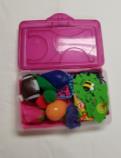
This is when the Dementia Care Activity Box was born. Using guidelines from Teepa Snow’s The Gems®: Brain Change Model, Beth created Dementia Care Activity Boxes based on various dementia characteristics (gems). All facility staff have received an initial in-service/training on the purpose and use of the activity boxes, which are accompanied by a matching resource binder with descriptors for each gem; dialogue cheat sheets to engage residents in eating, bathing and dressing tasks; as well as general information about dementia. In addition to the activity boxes, Beth also recently piloted a four-resident Dementia Feeding Program using red plates and bowls to increase self-feeding and po intake. So far, we’ve seen a 10 percent to 25 percent increase in po intake depending on the resident’s level of dementia.

Our Dementia Care Program is in its infancy stages; however, with “MacGyver” Beth at the helm, I know that our residents are destined for greatness!

Submitted by Tawaine Vigers, DOR, Legend Oaks of Katy, TX

What’s Up in Walla Walla

Check out some of the latest snapshots and video from the field, featuring the Therapy Team at Park Manor Rehab Center in Walla Walla, Washington. Thank you for sharing your accomplishments, Sonya Taylor, OTR/L, Director of Rehab!

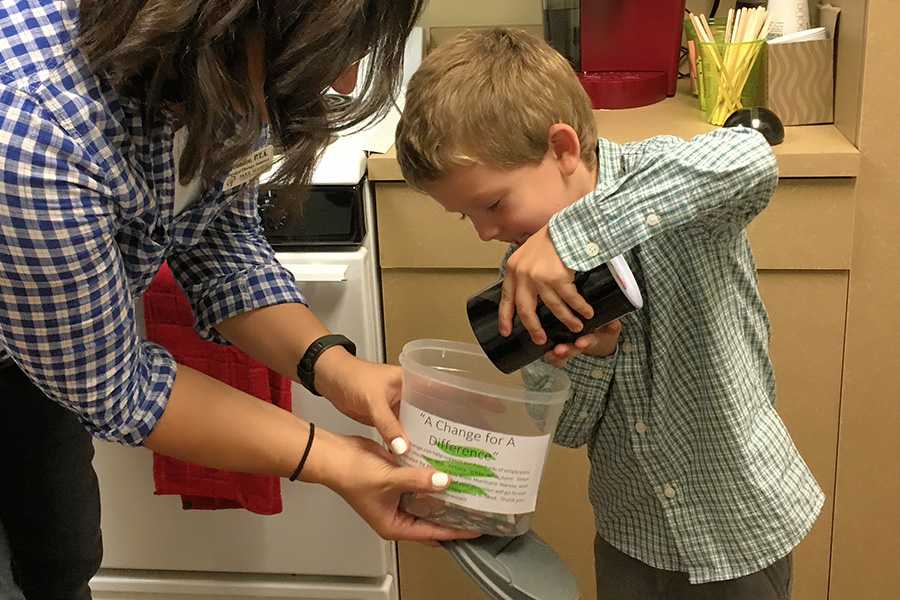
Park Manor raised over $3,500 for the EEF (Ensign Emergency Fund) to help those affected by Hurricane Harvey. The son of a PTA brought his piggy bank to pour into the EEF collection jar that was eventually filled with $240 in loose change!
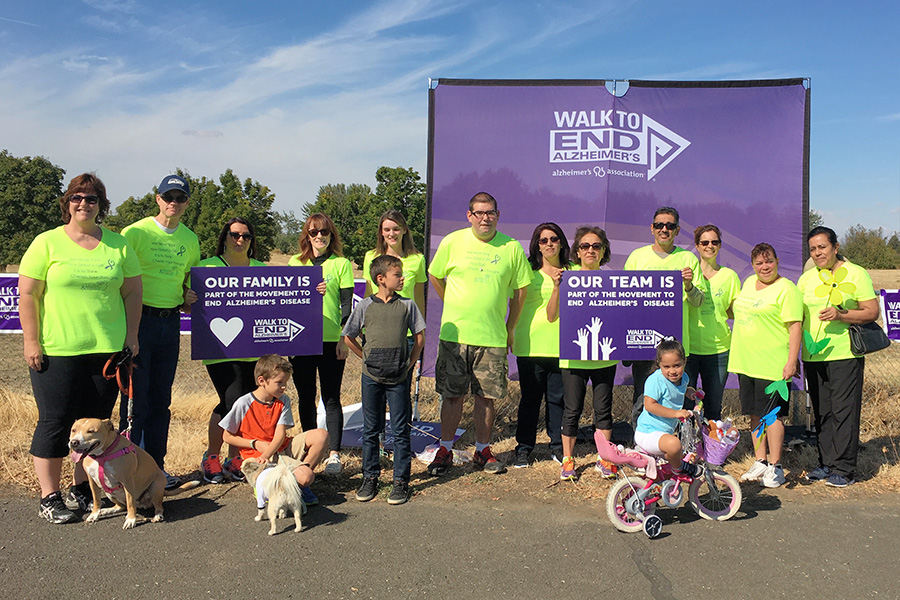
Park Manor Therapy Team was represented in the Walk to End Alzheimer’s. Lots of bright colors and smiles to share!
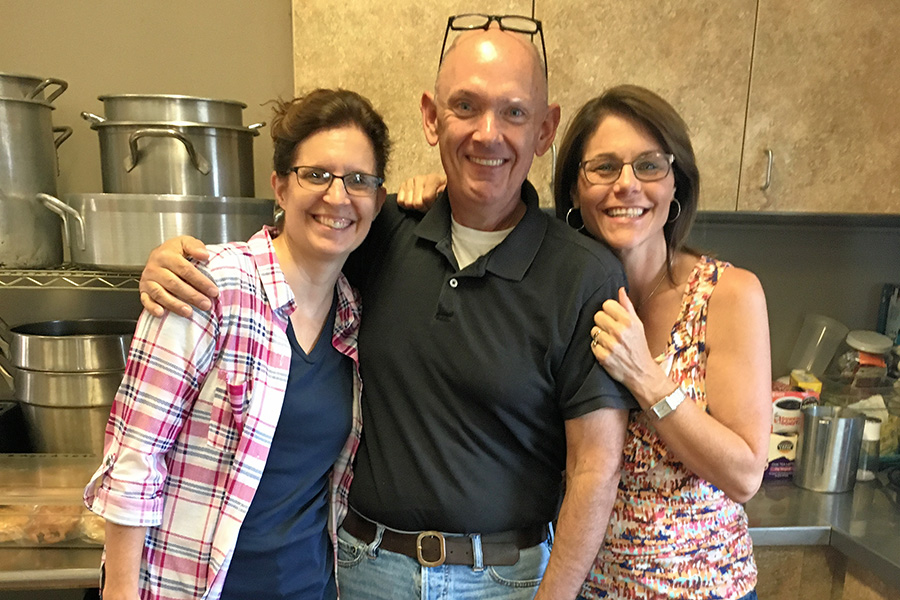
Preparing a meal with the Park Manor team at the Christian Aide Center. PT and ST and her family helped with the cooking and OT and his family helped with the serving along with other Park Manor staff.

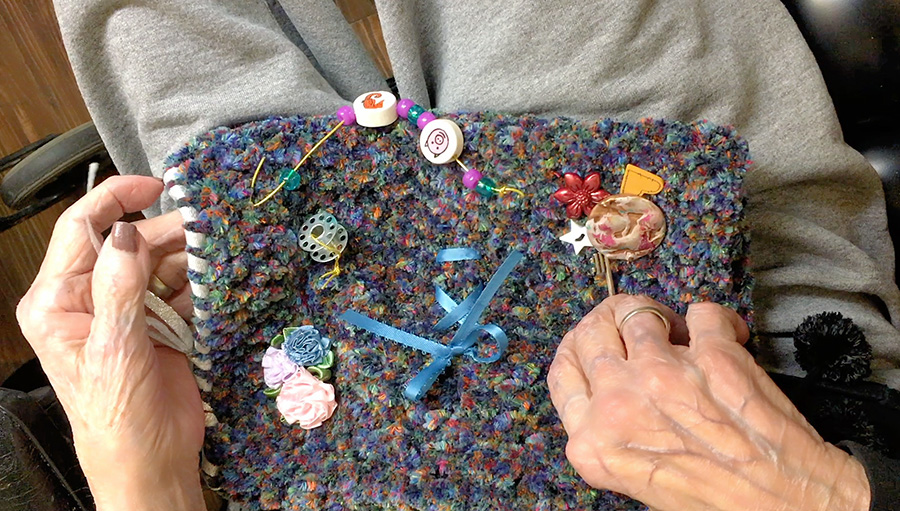
Fiddle Mitt Fiddle Mitt – For our lower level dementia patients to utilize when restless.

Congratulations to Our Newest SPARC Winner!

Congratulations Kristi Crozier, our Newest SPARC Winner!
Kristi is an OT student at Midwestern University in Glendale, AZ and will graduate in November 2017.

Read her awesome essay here:

As a wilderness therapy guide, I camped in the high desert with at-risk teenage students and taught outdoor survival skills. The most difficult and rewarding skill I taught was making matchless fires using bow drills. The process began by helping students search for the tools needed to create a spark: a straight stick and string for a bow drill, a flawless log for a fire board, dry grass for tinder, and a notched rock for a socket. Using these tools, the students learned the techniques to create fire and began to practice. The process was extremely challenging and weeks of bow drill practice typically yielded only bruised fingers and tears of frustration. However, the students’ frustration melted away when they were able to properly align their tools, find a rhythm, and persevere until they created heat, then smoke, and finally a tiny, glowing ember. Even the most reserved students celebrated and proudly proclaimed their accomplishment to the world when they created a spark. The creation of this spark was significant event and marked the first major step in each student’s journey of transformation and healing.

The creation of a spark, whether physical or metaphorical is a difficult process which yields great rewards. As an occupational therapist, I want to help my clients by creating sparks inside them that can generate blazing fires of achievement and wellness. I will use my knowledge and training from a rich variety of life experiences to help my clients by providing tools, knowledge, and support to ignite sparks of independence, understanding, and hope. Helping others has always been rewarding for me and I relish the satisfaction that comes from doing something for a person that they cannot do for themselves. However, I have learned through my training that the true purpose of therapy is not to help others by doing things for them, rather, it is to provide individuals with the tools they need to spark their own successes. I recently achieved this with a client during a clinical rotation. My client had a goal to live independently in her home but was challenged by a lack of active finger flexion which prevented her from grasping items. Using my training in orthotics and assistive devices, I fabricated a glove with a fastening system that could be strapped to tool handles. This glove enabled her to use both hands to complete cherished gardening and yardwork activities. When my client used this glove to hold a broom and sweep the floor of the therapy room, her eyes glowed with pride. The use of this simple tool allowed her to independently participate in an activity that she was unable to accomplish before and she was elated by her increased independence.

Using this physical tool generated a spark of independence and pride in my client. However, it was not the most effective tool I provided. The most important tool I provided was knowledge. As I worked with this client exploring ways to use the glove, we problem-solved modifications to overcome barriers to many of her occupations. Using basic principles of activity modification and assistive equipment, we identified ways to increase participation in various tasks. As we worked, I helped her to understand principles that she could employ in a variety of situations to facilitate her independence. She was a willing student and soon reported using her new knowledge to create adaptations at home. This knowledge created sparks of innovation and which will fuel her independence for the rest of her life.

The example above shows the power of a spark of knowledge, but before that spark can be used, it must first be acquired. To ignite sparks of knowledge in future clients, I plan to use a model I learned as a PATH therapeutic horseback riding instructor: the “what, why, how” model. First, clients must know “what” they are supposed to learn. This involves using language appropriate to the client’s understanding to explain an overview of the concept. Next, a client must be told “why” this concept is important. This step is imperative to ignite a client’s motivation and gain their trust. The final step is to teach “how”, which is to teach the actual concept in an organized, stepwise manner. This process is meant to shed light on the motivational and practical aspects surrounding a concept in order to help clients be more accepting of new knowledge and facilitate a deeper understanding.
This method of teaching was crucial when I taught a horseback riding class for students with high-functioning multiple sclerosis. I taught clients to perform physically and emotionally demanding tasks by explaining the task and providing a “big picture” of what was expected. Then I gained their trust and “buy in” by teaching them why the task was important and why it would improve their performance. And finally, I taught them the specific steps needed to achieve success. Using this method, I saw greater motivation for change in my students. When they understood what they needed to do, why they should do it, and how they could accomplish the task, they were more willing to listen and follow my recommendations. As a result, my students received sparks of understanding which erupted into success both in the riding arena and in their daily lives. I plan to continue using this method to generate sparks of understanding in my future clients and help them on their path to success.

Before I can ignite sparks of knowledge and understanding in my clients, I must first ensure that my own fires are fueled by actively seeking opportunities for professional development. This spring, I was a co-presenter at both the national American Occupational Therapy Association conference and the Assistive Technology Industry Association. These experiences fanned my flames of knowledge and fueled my enthusiasm for professional growth as an occupational therapist. At these conferences, I shared knowledge with other professionals and learned a great deal from them in turn. My mind was expanded by new ideas, innovative products, and novel research. This knowledge was indispensable during my clinical rotations and I was able to use the ember set aglow by my experiences to enlighten the minds of clients and therapists with whom I worked.

While knowledge and understanding are key elements of change, they are of little use without the spark of hope, a belief that something good can come from one’s efforts. Rehabilitation is a difficult process that takes great toll on clients. The physical and emotional strain can reduce a client’s spark of hope to smoldering embers. As a therapist, it is important to possess genuine concern and use therapeutic interactions to bolster the spirits of clients and rejuvenate their hopes. I witnessed the importance of rejuvenating a client’s sense of hope during my medical mission to Guatemala. The patients I saw struggled with injury and degeneration resulting from years of manual labor. These good people were in great physical pain and were weary of fighting their conditions. With limited resources and a limited knowledge of the Spanish language, it was difficult to find ways to ease their pain. However, I found that I could perform a great service by simply lending emotional support. Through listening and demonstrating concern, I bridged the communication barrier to connect with my patients and renew their sputtering flames of hope. Watching the darkness of despair dissipate as clients perceived my genuine concern and accepted my meager assistance was a powerful experience. I hope to continue that same level of concern and therapeutic connection to spark hope in my future clients. Armed with knowledge, training, and a genuine concern for my clients, I will be a catalyst for change in the lives of my future clients. Just as I helped my students in wilderness therapy create physical sparks, I will use my knowledge and training to ignite metaphorical sparks of independence, knowledge, and hope for my future clients. By providing tools, knowledge, and support I will set the therapy world ablaze.