Behind the Scenes Superstar: Lori Whitman

This month, we are pleased to spotlight an amazing resource and friend, Lori Whitman. Lori is our accounts payable resource and provides incredible support to our therapy department.

Lori just celebrated her 9th anniversary with Ensign Services in May and lives our culture to its fullest. You can see her expressions of culture and focuses during simple interactions over e-mail with a nugget typically added to her signature line, which she changes up to recognize the seasons and the holidays, as well.

Lori is a true California native and grew up in Huntington Beach, CA. She is one of three with an older sister and younger brother. She has been living in Aliso Viejo, CA for 29 years, where she enjoys her weekends hiking with girlfriends and exploring new places, spending time with friends and family and an occasional off-roading jeep adventure with her husband! These off-roading adventures have taken them to beautiful places that they may not have seen otherwise and it has sparked an interest in buying an RV to take them to other areas throughout the United States, which they hope to do next year.

Lori has two sons and her younger son, Austin is 27 and getting married to Kayla in October this year up in Lake Arrowhead. Austin is pursuing his Masters of Family Therapy at Cal State Long Beach, which is Lori’s alma mater. Her older son, Ryan, is 36 and lives in Panama City, Florida. Lori’s mom lives in an IL/AL in Huntington Beach and she also spends time helping her mom and enjoying moments together.

When asked about what she loves most about her job, Lori shared that she loves the interactions with her co-workers and all the people she supports at her WA facilities as well as the Service Center departments and field. She then shot some therapy love our way by saying, “My favorite, of course, is the AP support for our Therapy Department. It puts a smile on my face knowing I am helping in some small way by paying invoices for Seminars/Educational materials for our nurses and therapy resources who bring new innovations to our facilities to help the residents.”

For those who attended this year’s Therapy Leadership Experience in April, you may have had the opportunity to interact with Lori a little bit during the Lip Sync contest. Lori was one of our judges and expressed that it warms her heart to see how much fun everyone was having. If you had the chance to meet her, you’ll notice that she is fit and healthy, which she attributes to the hiking on local trails, hiking on the beach, and working out in the gym. She has also finished many 10Ks and a few half-marathons over the years. Lori is such a positive person and expresses gratitude for her many blessings, which surely contributes to her well-being.

We are all truly blessed to have Lori Whitman a part of our lives as our AP resource and our friend. We are so grateful for everything she does for us. Lori makes US better.

Clarifying Skilled Nursing and Therapy

By Lori O’Hara, CCC-SLP, Skilled Reimbursement Resource
IDRS (Interdisciplinary Documentation and Reimbursement Systems)

From CMS:

  • Skilled nursing/therapy services are those services that are so complex they can only be safely and effectively provided by a nurse or under the supervision of a nurse/therapist.
  • Coverage does not turn on the presence or absence of an individual’s potential for improvement from nursing/therapy care, but rather on the beneficiary’s need for skilled care.
  • A condition that would not ordinarily require skilled nursing/therapy services may nevertheless require them under certain circumstances: the patient’s medical complications require the skills of a registered nurse/therapist to perform a type of service that would otherwise be considered non-skilled; or (b) the needed services are of such complexity that the skills of a nurse/therapist are required to furnish the services.

Frequency:

  • To support a Part A episode, nursing services must be provided (and documented) 7x/week; to support a Part A episode, therapy must provide (and document) services at least 5x/week.
  • Please note: The importance of a particular service to an individual patient, or the frequency with which it must be performed, does not, by itself, make it a skilled service.

Defining Skilled Nursing Services
These nursing services automatically support a Part A episode when provided (and documented). They include but are not limited to:

  • Intravenous or intramuscular injections and intravenous feeding
  • Enteral feeding that comprises at least 26 percent of daily calorie requirements and provides at least 501 milliliters of fluid per day
  • Naso-pharyngeal and tracheotomy aspiration
  • Insertion, sterile irrigation, and replacement of suprapubic catheters
  • Treatment of decubitus ulcers, of a severity rated at Stage 3 or worse, or a widespread skin disorder until/unless the wound is deemed chronic
  • Heat treatments that have been specifically ordered by a physician as part of active treatment and that require observation by skilled nursing personnel to evaluate the patient’s progress adequately

Other interventions are considered skilled nursing in their initial phases but would be considered unskilled once the patient is stable and the regimen well-established:

  • Application of dressings involving prescription medications and aseptic techniques
  • Rehabilitation nursing procedures, including the related teaching and adaptive aspects of nursing, that are part of active treatment and require the presence of skilled nursing personnel, e.g., the institution and supervision of bowel and bladder training programs
  • Initial phases of a regimen involving administration of medical gasses such as bronchodilator therapy
  • Care of a colostomy during the early post-operative period in the presence of associated complications; the need for skilled nursing care during this period must be justified and documented in the patient’s medical record
  • Initial care-planning and comprehensive assessments

Many other things might be skilled, if the documentation supported that they were complex enough that they required the skills of a licensed nurse:

  • Assessment of medical presentation
  • Observation and monitoring of new or potentially unstable conditions
  • Some skin treatments
  • Some respiratory treatments
  • Implementation of physician’s orders

Other things to consider:

  • There are often state regulations that limit a patient’s ability to keep or self-administer medications. But even so, administration of routine medications is not considered a skilled service by CMS.
  • Wound-vac treatments are administered to heal very complex wounds, but because they are not a daily service. they will never, by themselves, be enough to support a Part A episode.
  • Trachs are intimidating apparatus that are generally present only in vulnerable patients. But the presence of a trach is not enough to sustain a Part A episode (although treatments or suction provided through the trach often are).
  • Likewise, just having a PEG tube is not enough to sustain a Part A episode — the patient must be meeting a minimum caloric/fluid amount as it’s the complexity of administering the feeds and assessing for residuals that requires the skills of a nurse.
  • A service that is ordinarily considered nonskilled could be considered a skilled service in cases in which, because of special medical complications, skilled nursing or skilled rehabilitation personnel are required to perform or supervise it or to observe the patient. The key in these situations is great documentation to capture and clarify the “special medical complications.”

Documentation:
It is expected that the documentation in the patient’s medical record will reflect the need for the skilled services provided. The patient’s medical record is also expected to provide important communication among all members of the care team regarding the development, course, and outcomes of the skilled observations, assessments, treatment, and training performed. Taken as a whole, then, the documentation in the patient’s medical record should illustrate the degree to which the patient is accomplishing the goals as outlined in the care plan. In this way, the documentation will serve to demonstrate why a skilled service is needed.

The patient’s medical record must have documentation as appropriate that captures:

  • The history and physical exam pertinent to the patient’s care, including the response or changes in behavior to previously administered skilled services
  • The skilled services provided
  • The patient’s response to the skilled services provided during the current visit
  • The plan for future care based on the rationale of prior results
  • A detailed rationale that explains the need for the skilled service in light of the patient’s overall medical condition and experiences
  • The complexity of the service to be performed
  • Any other pertinent characteristics of the beneficiary

References:
https://www.hhs.gov/guidance/document/benefit-policy-manual-chapter-8-extended-care-coverage

Fall Prevention Program

By Angela Anderson, PT, DOR, Gateway Transitional Care, Pocatello, Idaho
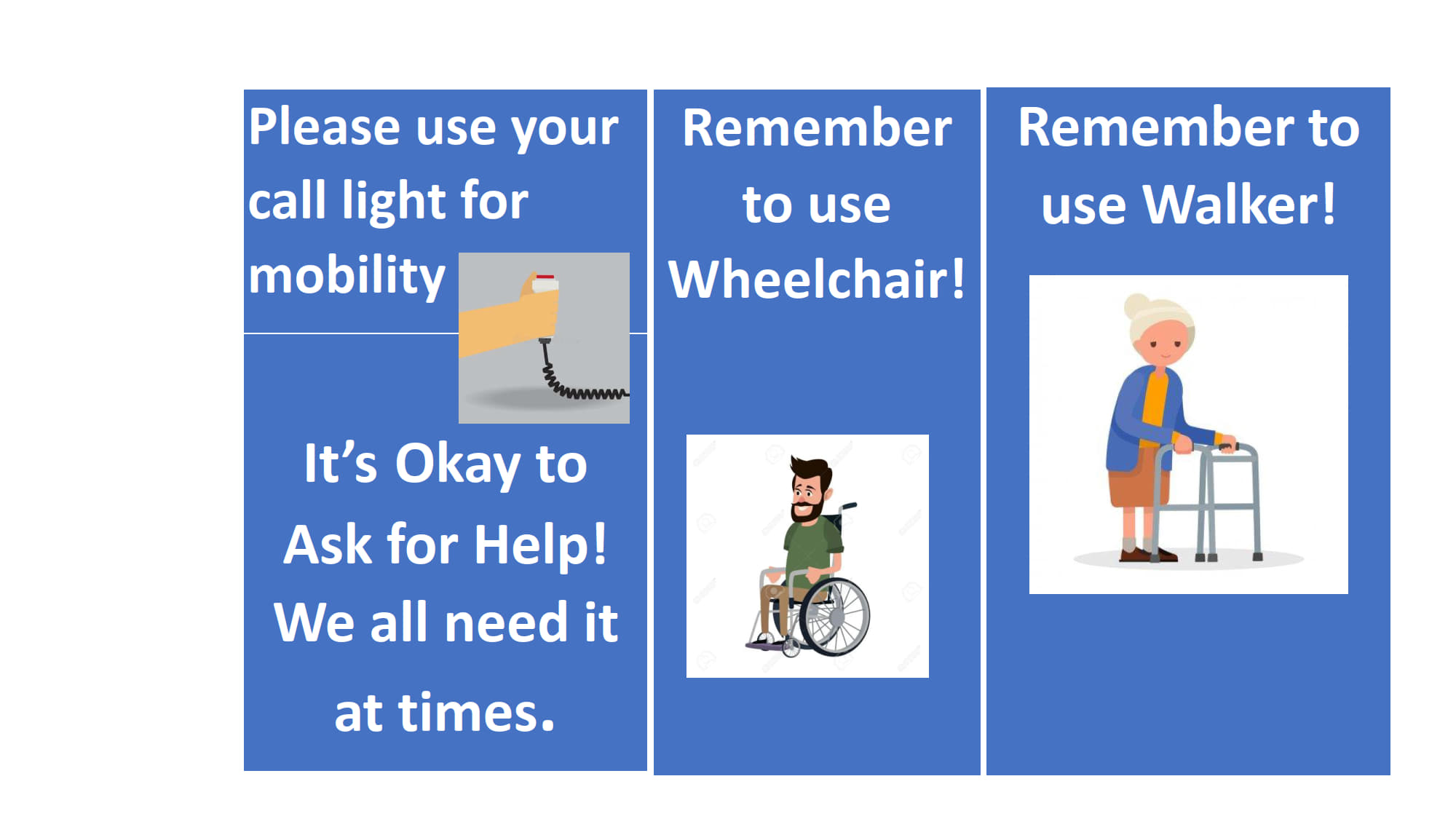
Therapy at Gateway has been honing in on fall prevention for several months now and has implemented many therapy interventions that are fairly standard in fall prevention. We have the therapists focusing on fall risk and fall prevention during the evaluations and recommending assistive equipment or strategies to prevent falls at that time. We had found that many of the falls were happening in the first day or two and that the therapy POCs weren’t having time to affect the outcomes. So, Therapy and Nursing developed some tools to help implement interventions as preventative measures when the admission nurse does the intake.

The admission nurses are already doing a fall risk assessment on intake. Our PT, David Cox, helped develop a 48-hour falls checklist that gives the admission nurse a list of areas to focus on and questions to ask that may help decrease the likelihood of fall, such as, “Have they been trained to use the call light and remote?” and “Is the clutter put away?” He also developed potential interventions for low-, medium- and high-fall-risk patients, depending on the result of the falls risk assessment tool. These lists give the admission nurse more interventions to choose from that may be applicable based on why the patients are triggering for higher falls risk.

This also helps demonstrate that we are proactively looking at fall precautions and putting interventions into place, checking them off and signing the form that can be scanned into PCC. The therapists can then reinforce the interventions that are put into place, modify if necessary, and focus CNAs on these interventions in addition to the traditional Therapy fall preventions.

David and Brooke (ADON) came up with some notification magnets for the doorways of patient rooms that identify high-fall-risk patients (for frequent checks), for patients with unstable vitals and orthostatic hypotension, to identify risks that help alert CNAs and staff to issues that need increased attention. Admissions is reporting that the program has potential to help and she can see the efficacy.

What Is Dysphagia? (Taken from the Dysphagia Research Society)


By Elyse Matson, MA CCC-SLP, SLP Resource/Ensign Services
Swallowing is one of the most complex actions we perform, involving more than 30 muscles and nerves. The average person swallows approximately 600 times per day — about 350 times while awake, 200 times while eating, and around 50 times while asleep.

Dysphagia indicates any difficulty or problem with swallowing normally. A swallowing disorder not only affects safety but also quality of life. Dysphagia is a serious medical condition that affects between 300,000 and 600,000 individuals in the United States each year.

Common signs and symptoms of dysphagia include: difficulty with weight gain (in children), unintentional weight loss (in adults), coughing during eating/drinking, recurrent aspiration pneumonia, food/liquid coming out of the nose/mouth, and a feeling of food remaining “stuck” in the throat/upper chest, to name a few.

Dysphagia is associated with a wide variety of conditions, including congenital and developmental disorders (e.g., cleft lip/palate, Down’s syndrome), head and neck cancers, pulmonary conditions (e.g., chronic obstructive pulmonary disease), and a variety of neurologic conditions such as stroke, dementia, amyotrophic lateral sclerosis (Lou Gehrig’s disease), Parkinson’s disease, muscular dystrophy, cerebral palsy, and many more. Since it is a common symptom in many of these diseases, it often goes unnoticed and is often under-reported, despite having significant consequences.

Complications and consequences of dysphagia include pulmonary aspiration, malnutrition, dehydration, pneumonia and even death. In hospitalized patients, dysphagia has been shown to significantly lengthen the hospital length of stay and is a negative prognostic indicator. In addition, those with dysphagia often report a feeling of isolation and depression, as many are no longer able to take part in social gatherings that so often revolve around eating and drinking. It is estimated that dysphagia is responsible for between $4.3 to $7.1 billion in additional hospital costs per year. Despite the significant detrimental impact dysphagia has on health and quality of life, only a third of those afflicted seek medical treatment.

Assessment of dysphagia frequently includes a clinical assessment and instrumental assessment. A clinical bedside swallow assessment is typically completed by a speech-language pathologist (SLP) and is used to describe the characteristics of the individual’s swallow function, determine the presence/absence and characteristics of a swallowing disorder, determine the safest route of nutrition/hydration, and help provide additional recommendations for an instrumental assessment and appropriate treatment. The two most common instrumental assessments are fiberoptic endoscopic evaluation of swallowing (FEES) and modified barium swallow study (MBSS).

Once a diagnosis of dysphagia has been made, the healthcare team determines the most appropriate plan for treatment. Management of dysphagia may involve medical/surgical intervention by a physician and/or behavioral intervention by an SLP. The focus of any dysphagia intervention is to optimize the swallow to be as safe and efficient as possible, as well as to maximize the patient’s quality of life.

#APEXStrong

By Amber Thompson, Market Leader, Keystone – Texas
Reaching the Highest Peak Is What Drives Us, But Reaching It Together Is What Matters
We would like to cordially invite you to be a part of the APEX challenge. Our focus over the past year has been on building leaders and transforming the way we serve our staff and residents. How do we create strong relationships within our IDT that are built on trust, accountability and love for one another? Performing physical challenges together as a team will create bonds between people that last a lifetime. The post COVID world has been a struggle for a lot of our operations. Employees are tired, some feel hopeless and some are lost in a spiral and can’t find their footing.

As a market, the team decided to change our name in January 2022 to APEX. The context behind this was…how will we inspire our teams to get to the top of the mountain even when we are tired and feel as if we have no more to give? We are struggling with agency usage, retention, lower reimbursement rates and the cluster rigor. The market has refocused and recommitted to growing leaders and inspiring their teams to turn their visions into reality.

On April 22, 2022 a team of our leaders rented a passenger van and drove 8hrs to Guadalupe Peak National Park. Guadalupe Peak is a rewarding, although strenuous, 8.5 mile round trip hike with a 3,000 foot elevation gain. It took a total of 8 hours to complete and was much more difficult than we anticipated. The following day we piled back up into the van and drove 8 hours back to New Braunfels. Squeezing into a passenger van after completing a grueling hike seems like it would be horrible but it was one of the best rides ever! We had fun blasting music, reminiscing about the death march we completed and just bonding in general.

This trip was one of the most amazing and transformational experiences I have ever had. Each of us came with a set of strengths and weaknesses and a varying ability to hike the course. We had some that could have run up the mountain (well, maybe just one clinical resource), some who walked at decent pace and some who had a very difficult time making it to the summit. The part that inspired me the most was how everyone helped each other out. We had stronger hikers in the back helping the ones who were struggling a bit. We had hikers leading the pack to encourage everyone to keep going and letting them know it was possible to make it to the top. Not one team member was left behind. The bonds and true friendships that were built that day are irreplaceable.

This experience can be tied to all of our goals as a market. The stronger operations help the struggling operations. The struggling operations are not scared to admit they are struggling and reach out to ask others for help. They are able to do this because they have relationships with each other that are built on trust. Every leader knows they will not be left behind. An activity we have decided to do as a market involves climbing peaks/hiking trails in Texas as a team. In essence, each climb is designed to challenge personal growth and ultimately help transform the way we serve our staff and residents.

Our question to you is…. What will your market’s challenge be? What “mountain” will you climb? If you come to TX and hike Guadalupe Peak, we will send you a medal. If you would like, we will come hike it with you!

If every market creates a challenge and a medal for those who complete it, we can motivate the clusters and teams to seek the medals together. Every adventure trip is priceless time with your team members having fun and hyper-focused to accomplish something extremely difficult. When they come back they are never the same again—what could this do for your buildings? Unity, loyalty, humility, perseverance, sacrifice…the list is endless in applications. Remember…the joy is in the journey!

APEX CHALLENGE:

  1. Pick your challenge (it has to be physical) and create excitement around it
  2. Create a medal
  3. Send pics of your challenge
  4. Update us on how your team responded (did this strengthen relationships? Etc)
    Move those mountains!! Conquer your challenges!! Build your teams!!
    CONTEST: Teams who submit a picture and a summary of how this impacted your team will be put into a raffle to win a prize!!

New Hire Coffee Connection

By Denny Davis, Therapy Resource – Bandera – Arizona
Bandera East had its first New Hire Coffee Connection Meeting to help with retention, education, communication and culture. DOR Kathleen “Katie” Deichert, OT from Mission Palms, started this on the east side on April 29. We had three new hires (all new grads) and two current students (hopefully new hires in the future!) who attended, and it was a great success! They were very excited to meet other therapists and form relationships and connections with others within the organization.

We made it fun by playing two games to get to know each other, such as Left, Right, Center (which had a $15 grand prize!) and a Kahootz quiz covering a little bit of everything, including some background on Bandera, CAPLICO, billing, documentation and some general PDPM information to help introduce some different topics. The things they love about our company are the culture, the support and the feeling of belonging! We are doing a great job loving on our new staff and students!

I am very excited to be a part of the growth these new hires (and hopefully the students if they come back to us after they graduate) will go thru and see the great things they will bring to the company in the future as they learn, continue to develop their skill set, and become more confident therapists and leaders! I see great things coming!

Our next meeting in May will be with Matt Pecora at Chandler Post-Acute. 😊

Educational Nugget: Association Physical Activity and Risk of Depression

Submitted by Jessica Foster, Therapy Resource, Bandera, Arizona
What are they saying? (**Definition of PA – Physical Activity)
The Message
The connection between physical activity and a lower risk of depression is well-known, but less is understood about the extent to which higher amounts of PA result in lower risks for depression. Researchers who analyzed the results of 15 studies involving more than 190,000 participants believe they’ve come closer to an answer: Yes, there is a dose-response relationship, they write, but it’s most significant (and predictable) at the lower end of the PA spectrum. Overall, they assert, if less-active adults in the studies had met current PA recommendations, one in nine cases of depression could’ve been prevented.

Why It Matters
Authors believe that establishing the dose-response relationship between PA and depression could be an important tool for health care providers and others in sharing the benefits of even modest amounts of PA, “especially to inactive individuals who may perceive the current recommended target as unrealistic,” they write.

More from the Study
Pinpointing the reasons for PA’s effects on depression were outside the scope of the study, but authors speculate that they could include neuro-endocrine and inflammatory responses, improved physical self-perceptions and more social interactions, and the effects of greater time spent in green spaces. The interplay of these factors needs more study, they add, particularly when considering how individuals with less access to green spaces and greater exposure to noise pollution may experience reduced mental health benefits.

Keep in Mind …
The study is not without its limitations, according to authors. Among them: PA levels were self-reported, data was limited at higher levels of PA, and data was lacking for analysis of demographic subgroups, including those from lower- and middle-income countries.

Giving Purpose to Life

Submitted by Ryan Hough, Therapy Resource, Nebraska
Staci Slater, OT at Omaha Nursing & Rehabilitation, shared this great story about giving purpose to life and her support to further her patients’ education.

JG is a 27-year-old male who sustained a C3-4 SCI when he was 24 years old secondary to a MVA. This patient has a high school degree and enlisted in the U.S. Navy for three years following high school. He is residing in LTC following acute rehab. His goal is to return to his mother’s home following home modifications.

JG has a power TNS wheelchair that he is able to maneuver using head control. He enjoys playing X-Box using Quad Stick mouth control, and he has a head control mouse that he uses to control his phone and computer. His computer is also accessible with the use of Dragon Naturally Speaking in combination with the use of his head mouse.

When JG transferred to Omaha Nursing & Rehab, OT assisted the patient with high educational pursuit. OT assisted the patient with verifying options for financial assistance and education:
● Cleared out student loans
● Applied for FAFSA (financial assistance)
● Verified VA benefits
● Applied to the community college and was accepted
● Contacted community college accessibility department to be able to participate at a college level within the range allowed by physical limitation

JG had to take placement exams (completed online) and signed up for classes. He completed English class online and is now planning to take the math placement exam and continue with his pursuit of education. Through furthering his education, JG hopes to explore future career options.

Congratulations to Our New Keystone CTOs!

Submitted by Jon Anderson, Senior Therapy Resource
Jennifer Henderson, OTR, DOR, Parklane West, San Antonio, TX
Jennifer Henderson, OTR, DOR at Parklane West, has been with our organization since 2016. Jennifer started out her career as a high school math teacher and then later decided to become an OT because she felt a calling to help older adults. During the Legend acquisition, she came over as a DOR from Sonterra Healthcare Center in San Antonio, Texas, and later decided to take a short break and become a full-time treating OT who helped several of our facilities in the San Antonio area. However, another opportunity landed in our laps with Parklane West, and Jennifer stepped up and once again became a DOR leading Parklane Therapy. Parklane started with a sleepy therapy program with only a few therapists, and today Jennifer has grown it to over 20 therapists/therapist assistants! Jennifer launched and trailblazed the Outpatient Therapy Program at Parklane before Outpatient was even a focus for the organization, and she has routinely mentored new DORs and helped other affiliates launch their outpatient programs. Jennifer has a passion for LTC programming and has worked with her team to launch our award-winning Abilities Care Approach dementia program with outstanding results impacting the facilities QMs and annual survey. Parklane is routinely and consistently in the top 1/3 of all therapy metrics within Keystone and has maintained a 5-star rating with QMs throughout the most recent year. Congrats, Jennifer, for reaching CTO!

Casey Murphy, PT, DOR, Healthcare Resort of Plano, TX
Casey has been with Keystone-affiliated facilities for a little over four years. He began his journey as a field therapy resource and moved into a DOR/resource hybrid role at the Healthcare Resort of Plano when an urgent need emerged. As he saw the potential and needs of the facility grow, he made the decision to solely take on the DOR role, and the results the facility has seen since he made this decision have been phenomenal. Casey’s development of systems for PDPM and Managed Care have helped the facility effectively manage their skilled short-term patients, and he frequently wears a Case Manager hat among many others. Casey’s embracement of Outpatient programming is what has really set them afire! What started out as just a few patients here and there has turned into an outpatient center that serves the entire community, and a viable line of business for HCR Plano. Casey takes the leadership development component of his role very seriously. He has started training multiple therapists in his facility on culture, financial and NetHealth basics, taking the time to help all those who express an interest in growth. He models Intelligent Risk Taking with his own professional development. Casey became certified in Geriatric Exercise, is Lymphedema certified, and is currently an NCS/EMG resident. Casey has presented on multiple market and global calls about outpatient development and leadership development. Even with his many hats, he takes the time to individually answer all questions from other therapists and DORs about outpatient and has helped many facilities in Keystone become successful. He is a true owner of his program, his team, and their results. Congratulations, Casey, for reaching CTO!

Quin Hall, SLP, DOR, Legend Oaks Healthcare, Paris, TX
Quin Hall started as a treating SLP at Legends Ennis, in Ennis, Texas, where he took their speech program to new heights in a few short months. He took the opportunity as the Director of Rehabilitation at Legend Oaks Healthcare and Rehabilitation in Paris, Texas, in November 2020. At the time he joined the team, there were only five therapists, and the department was struggling with culture, programming, and metrics. Now they are 13 strong and growing while being fiercely competitive in metrics and mentoring other buildings in how to recreate some of their programs. The culture that Quin has created in the Therapy department has spread throughout the entire facility. Therapy has truly become the heart of the building. He embraces CAPLICO by celebrating his team daily, loving them well, and pushing them to become the best versions of themselves. He also is the first to step up and take ownership when there are growth opportunities for himself. Quin has reached out to many of his cluster and market partners to share his secrets to the magic they have created with thriving group programs, a phenomenal long-term programming menu, and an incredibly strong speech program. You may have also seen him on the FlagPOST sharing speech group ideas, featured in the speech newsletter, or on the Long-Term Care Think Tank sharing about groups. Quin has taken on students and interns to both feed his staffing needs and pour back into his profession. He has an infectious spirit that keeps his team and facility motivated and excited to work. Congratulations, Quin, for reaching CTO!

Monica Sharp, PTA, TPM, Mesa Springs, Abilene, TX
Monica Sharp joined Wisteria Place in Abilene, Texas in October 2015 following a role in Fort Worth with pediatrics. She returned to Abilene to be near family and has been a part of our Keystone family in Abilene ever since. She jumped right in as a treating therapist assistant and embodied the culture at Wisteria to make a difference in the lives of our residents there. When the opportunity for a therapy program manager opened up at nearby Mesa Springs, Monica seized the moment and has been the TPM there since August 2018. When she took the helm of the team, there were seven therapists in the department. She has grown the team to 12 therapists and has led them to the top in the state for many therapy metrics. Under her leadership, they have significantly improved their long-term care programming, and the positive culture is apparent. Monica has worked closely with the ED and DON to lead Mesa Springs with zero-deficiency surveys, significant upswings in culture and care, and an overall sense of love throughout the building. Monica has demonstrated significant self-growth this year as well, looking inward to improve metrics and take ownership during difficult times. She helped the facility when the ice storm of 2021 left the building without power and water and has worked in Housekeeping and Nursing when COVID outbreaks threatened care. Monica has recently joined the managed care committee and has reached out to assist with education with her cluster and market partners. She has become a true owner of her department and their metrics while leading others to do the same. Congratulations, Monica, for reaching CTO!

Megan Wickliff, OTR, DOR, The Phoenix Post Acute Care, Texas City, TX
Allow me to introduce you to Megan Wickliff. There is no way to truly capture the true greatness of Megan within this paragraph, but I hope to provide a level of insight into the caliber of leadership she possesses. Megan has been the DOR of the Phoenix Healthcare and Rehab facility for over five years. This facility has come through many challenges, and Megan has stoically remained the pillar of strength for so many. She has made it her mission to make sure Therapy is never a contributor to the effects of having a silo. She crosses the invisible lines of duties and is always readily available to lend a hand in the Nursing, Social Services, Marketing, and Activities departments. There have been long periods of time that the facility may have been without an IDT, so Megan would take charge of leading meetings and carrying out any level of follow-up that was needed. To know Megan is to know a woman who does not have to say many words nor stand under the spotlight for her impact to be noticed. Her sheer level of humility and actionable service is beyond admirable. Megan is currently working on her Ph.D., as she has such a strong passion for learning and sharpening her level of leadership. I would be remiss to not mention that even though Megan leads the charge for several duties within her facility, she still has metrics worth bragging about. Congratulations, Megan, on receiving CTO; you are more than deserving of such a high honor!

Shayla Goode, SLP, DOR, Copperfield Healthcare & Rehabilitation, Houston, TX
Shayla Goode has been at the Copperfield facility for over four years. She first began her role as a staff SLP, shortly after she transitioned into the role of ADOR. Shayla would playfully say that she didn’t think she could ever be ready to fill a role as the DOR. The time came, and with a gentle push, Shayla accepted the position of DOR at the Copperfield facility. For those not familiar with this facility, I must share that they have been the facility to watch when it comes to managed care penetration in the Keystone East market. They have been the drivers for navigating efficient ways to manage the needs of those patients. Shayla has played a pivotal role in building such a strong foundational relationship with each of her case managers. She has led the charge of educating not only her Rehab team, but also the IDT about how to be quality partners with our case managers. I want to make sure I don’t diminish her other incredible accomplishments such as being a ranked department in lowest CPM, highest PNSD, highest productivity and consistently finishing in the top 4 for Keystone East Outpatient revenue. What speaks even louder than the metrics that I shared is the level of tenure she has with her Rehab team. Her team has continued to grow, and with great pride she shares that her turnover rate is incredibly low. Shayla knows the positive effects of leadership development, and that was a major goal of hers in 2021. She truly took the time to grow her ADOR, and she has redesigned the role to reflect the vision that she has for the future of the department. This is only the beginning of Shayla’s journey, and becoming CTO is an honor that is very well-deserved.

Congratulations to Our Newest SPARC Winner!

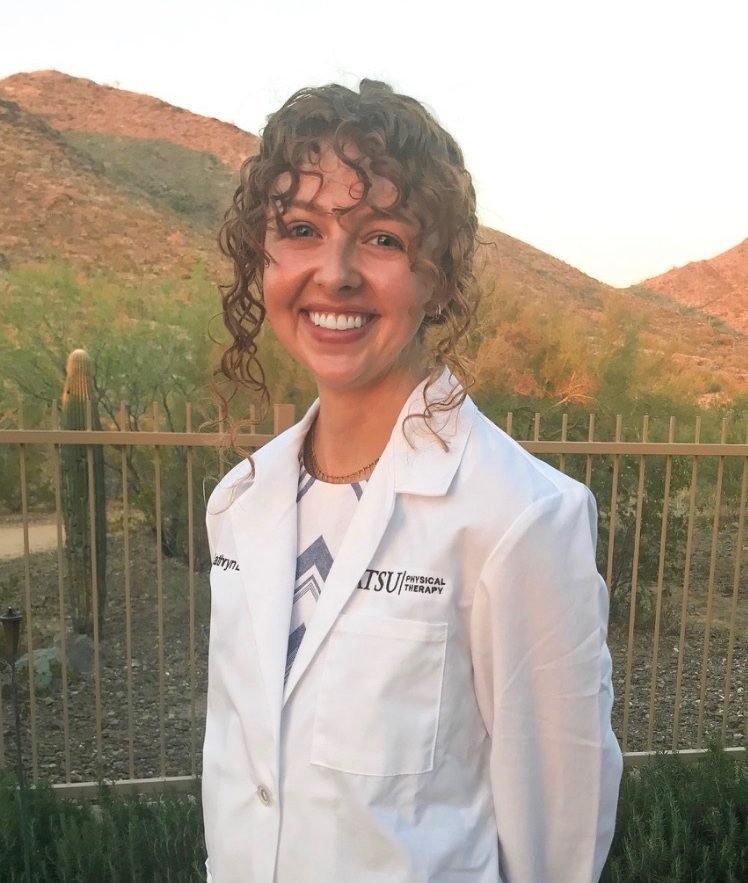
Kathryn Russell, PT Student, AT Still University, Mesa, AZ — Grad Date: June 2022
Read Her Awesome Essay Below:
A spark in the lives of my patients — a metaphor appreciably open to interpretation. I guess I have asked myself a parallel question but framed in a different way: how will I make a meaningful positive impact on my patients that endures beyond their physical therapy encounter? Now, my education and training, while both instrumental in driving the principles I want to implement in my practice, do not act entirely to answer the question to its fullest, nor should they. My personal objectives that were not taught are the ones I believe make me stand out to patients, and maybe make me a spark in their lives, but it seems selfish to aim to be the spark in someone’s life. That implies that I chose physical therapy for me, rather than for others.

This is why I’ve included my own version of the question, slightly reframed. I don’t seek to be the sole reason someone improves, heals, or has less pain. My goal is instead that each patient discovers the value of taking on that responsibility for themselves even after they are discharged from my care. I’ll acknowledge that’s a cliché goal, and a lofty one at that. If there’s anything my education and training have taught me, though, it’s that the values of our profession have to be intricately weaved into the patient’s existing lifestyle for meaningful and persevering change to take place.

Making those connections with the patient to increase the likelihood of them assuming the responsibility for their own health should always start with education, combines movement, and finally always considers extraneous factors of healing.

I was taught in PT school the value of providing education to the patient, but I’ve always had the most passion about this piece anyway. This is the component I am most excited to write about to share with you, and the one I am always eager to incorporate in the clinic with patients. I’m good at being a student — I guess that’s why I’ve been in school for the last two decades without a break. Only recently, though, did I consider how often I am also offered the opportunity to be the teacher, as well. I take pride in being able to take full advantage of the opportunity to incorporate a dose of education about a patient’s injury/condition and about the body’s role in healing. The thing that makes it stick, and actually drives a patient to assume their health responsibility, is to limit medical jargon, and capitalize on the body’s resilience. This strategy makes it an accessible and positive experience, thus empowering them to want to learn more.

My goal is to act as the constant reminder that knowledge is power, the body is strong, and there is more than one correct way to journey through recovery. I do think this is an area that we have the opportunity to improve upon as a profession due to the current disappointingly standard practice to scare our patients into compliance and use outdated diagnostic terminology that actually enables kinesiophobia.

That brings me to my next key component of influencing an individual’s health responsibility: mixing in movement, and truly using it as medicine (not just because it sounds catchy). My guiding principles for this are nothing new; I did not reinvent the wheel. I aim to find activities the patient already likes to do, combine exercises into daily activities, and remind the patient how the exercise is relevant to them. They’re simple, and they are effective for serving the purpose of creating lasting change.

Education and movement are the two leading values in the profession of physical therapy that most practicing clinicians are aware of and using to some extent. However, if we do not consider the extraneous factors in people’s lives that guide not only their micro-level decision-making but also their healing experience as a whole, then we will fail our patients. Again, I think this is an area where I see room for improvement within our profession, and that I aim to change by at least incorporating it into my practice first. Essentially, I aim to seek out what else can we offer to patients to facilitate their healing. We must consider all the senses that are stimulated when a patient comes into the practice. What is the surrounding, what is the simplicity of accessing the clinic, what is the language that is used by the front office staff? Do these things create an atmosphere of healing? We cannot expect patients to heal in a vacuum of reality. If a patient doesn’t feel at ease, if they had difficulty finding the area or dealing with technology, or if they feel rushed or patronized, it will lend to their perception of their physical therapy experience. Whether we like it or not, we all subconsciously contribute to the narrative that drives our healing, positive or negative. So, it is a responsibility to consider everything that adds to that narrative.

The healing experience is different for everyone and I believe it is my responsibility as a physical therapist to adapt my treatment strategy to serve each patient best using these three core pillars. Understanding this at an individual level is the most effective way to create that spark that instills the health responsibility that contributes to lasting change. The physical therapist is a pawn in leading the patient to understand their healing, not the individual who cures them. All I am doing as their physical therapist is providing them the knowledge and direction to make informed decisions regarding their movement and self-care, and providing the space that facilitates their healing. I want my patients to see their whole physical therapy experience as the spark that ignited a passion for being the expert of their body — healing it, learning it, listening to it.