LTC Programming: Rise and Dine

Our long-term care population is now fully vaccinated, and it seems as if we are entering, dare I say it, a post-pandemic environment. We made it, but now what?

During the pandemic, we have seen our residents’ version of normalcy altered. Those who used to spend most of their day in the dining room, in activities or the therapy gym, and visiting with their friends and family now are found sleeping in more, not eating as much or as healthy as before, and no longer have the desire to engage in social activities. When they do feel like getting out of their room, seeing them use a wheelchair is more common. Some of them are COVID-recovered and have never fully bounced back after fighting the virus.

Our therapists opened their minds to different therapy approaches and gained the skills that it takes to truly dignify the lives of long-term care residents. We knew these effects of illness and quarantine isolation would take a toll on our vulnerable population, and we did everything we could to combat them in real time with preventative therapeutic approaches. In a pre-COVID world, our building was predominantly a rehab-to-home facility, and it was uncomfortable at times for our therapists to develop long-term care treatment plans. The pandemic highlighted the necessity for our services, and now it is hard to imagine not being this involved with them.

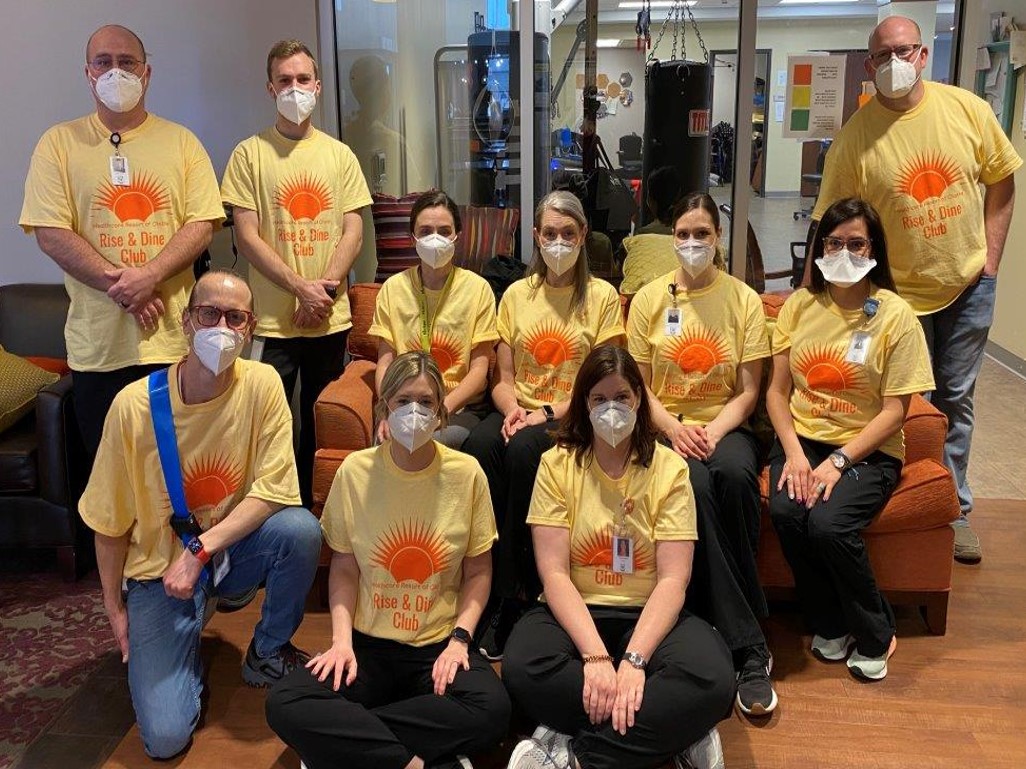
Our Speech Therapists, with multidisciplinary collaboration, hosted a new program this month called “Rise and Dine.” This program began as a nutrition and hydration-based club that requires participants to get out of bed and engage cognitive and communication skills in choosing meal preferences for the event. “We are all very passionate about our residents’ quality of lives and saw this as an opportunity to meet our residents’ nutritional and social needs. The excitement and feedback of our residents really fueled the idea and brought our entire dietary and therapy staff together to make this such a successful event!” — Breean Ludwig, HCRO Speech Therapist
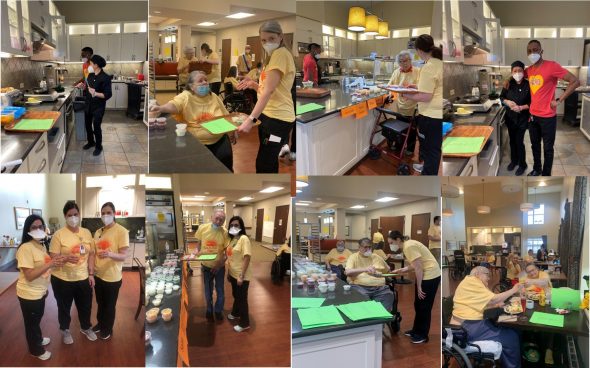
As excitement grew, we realized this program could address almost all the abilities we have seen deteriorate. We ordered T-shirts to encourage dressing and hygiene before the event, and all our therapists came in to facilitate transfers, self-care routines, and mobility to and from the dining room. We also were able to treat goals related to self-feeding, dynamic standing, and sitting tolerance and positioning.

“We saw such a negative impact after so many in-room isolations during the COVID pandemic. Our Residents were discouraged, losing weight, not socializing, showed physical and cognitive changes, and did not want to come out of their rooms. We wanted to do something to bring excitement back into their lives while still being able to target our goals in therapy. This program offers an opportunity for all disciplines (PT/OT/ST) to participate.” — Ke’ren Grimaldo, HCRO Speech Therapist.

Although we are striving to return our residents back to “normal,” I am proud to say our Therapy team has established a new norm as well, and we are not looking back. Just as preventative interventions were important during the pandemic, how we move forward now is just as crucial. 85% of our long-term care residents got out of their rooms to participate in this program. We owe a big thank-you to our dietary manager and her team for being as excited for this program as we were. Our team has a seasonal themed event planned for the rest of the year, and we can hardly wait!
Remember, every county and state Department of Health has specific guidelines for re-opening, so always consult with your DNS with your “back to normal” plan.

Submitted by Elizabeth Munford, PTA/TPM, The Healthcare Resort of Olathe, KS

Wound Care: A Case Study in Pueblo Springs, Tucson, AZ

Resident K is a 52-year-old man who was referred to Physical Therapy for chronic, non-healing pressure ulcers of the coccyx and ischial tuberosity and severe pain.

  • PMH: Spina Bifida, B AKA, HTN, colostomy; wounds have been present approximately 10 years. Patient underwent flap surgery five years ago; wound vac has been unsuccessful in promoting healing
  • PLOF: Modified Independent in transfers and wheelchair mobility; has resided in nursing homes for 10 years; history of being non-compliant with pressure relief and positioning

Evaluation status (4/2020):

  • Mobility: Modified I transfers and wheelchair mobility; tilt in space motorized chair with ROHO cushion
  • Strength or ROM deficits: No
  • Wound 1: Coccyx: Stage 4 pressure ulcer: 1.5L x.7W x.6D; necrotic <25%
  • Wound 2: Ischial Tuberosity: Stage 4 pressure ulcer: 3.5L x 3.0W x 3.0D
  • Pain: 7/10 with any movement, related to wounds

Wound care: Dakins solution

Patient reluctantly agrees to PT POC to initiate in-wound electrical stimulation (HVPC) five times a week to facilitate increased wound bed granulation, decrease necrotic tissue, decrease pain and facilitate wound healing. Patient states, “These wounds won’t heal; they’ve been there forever and I’ve tried it all.”
D/C plan: reside in skilled nursing facility

Discharge status (10/2020):

  • Wound 1: Coccyx: Resolved
  • Wound 2: Ischial Tuberosity: .3L x .3W x .2D
  • Pain: 0/10
  • Patient is discharging to an Assisted Living Facility

As the wounds began to improve, patient K began to be compliant with positioning and pressure relief. During the course of treatment, estim protocol changed from negative to positive polarity in wound, and then finally peri-wound as wounds became too small for in-wound electrode placement. Dressing changes occurred through IDT wound team consultation. Treatment included patient/caregiver education throughout.

Kudos to the Pueblo team for being willing to tackle the “impossible” wounds and having the perseverance to hang in there! They understood that chronic healing takes time. Meeting requirements of documenting progress every 30 days, changing protocols when healing began to plateau, and using skilled assessment allowed them to continue the POC to closure/near closure of the wounds.

Submitted by Shelby Donahoo, M.S., OTR/L, Therapy Resource, Bandera

Motivating Employees—Meet the M.E. Committee at Copperfield

The strength of a team can truly be powerful when everyone sees and feels the vision. Employee culture and retention has been at the top of the initiative list. How can we improve this area and create an environment that truly embodies Customer Second? Well let me introduce you to the M.E. committee. I spent time with one of the M.E. committee members, Loretta Johnson, PTA, to get a better understanding of what this committee has to offer.

As explained by Loretta, the Copperfield Healthcare and Rehab facility created the M.E. Committee (Motivating Employees), with a purpose to engage, support and reward their fellow coworkers. They have designed and cultivated strategies to build interpersonal skills, through exciting team-building exercises. This level of cultural promotion encourages open communication, challenges employees with friendly competition, and assists with facilitating a healthy work-life balance.

The M.E. committee has put together a calendar of events that caters to employee engagement. As Loretta put it, “An employee who enjoys coming to work is a worthy investment, and a good day at work fuels the desire to be better the next day. This feeling of happiness at work will spill over into the love and care that we provide to our patients.”

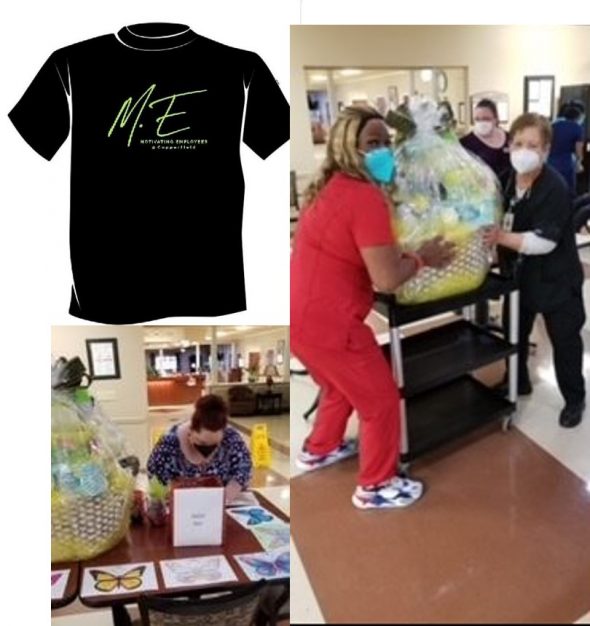
Most recently, the M.E. committee hosted a Coloring Contest. All employees were asked to color a picture of a butterfly. Each butterfly was judged by the panel of patients, employees and visitors. The grand prize winner received a beautiful, laundry-themed gift basket. Other events included: Chili Cook-Off, World Water Day, and National Laugh Day. The time spent together is intentional, and it has allowed new-hires to comfortably blend in with the team.

The Copperfield Healthcare and Rehabilitation facility leadership team includes:
Noni Gill, ED; Unnati Patel, DON; Shayla Goode, M.Ed CCC-SLP

Submitted by Kai Williams, Therapy Resource, Keystone-East

Outpatient/Inpatient Synergy at McCall Rehab and Care Center

The Rehab team at McCall Rehab and Care Center in McCall, Idaho, has had a vision of providing community-based outpatient therapy in people’s homes since the facility became part of the Pennant-ID/NV market in 2018.

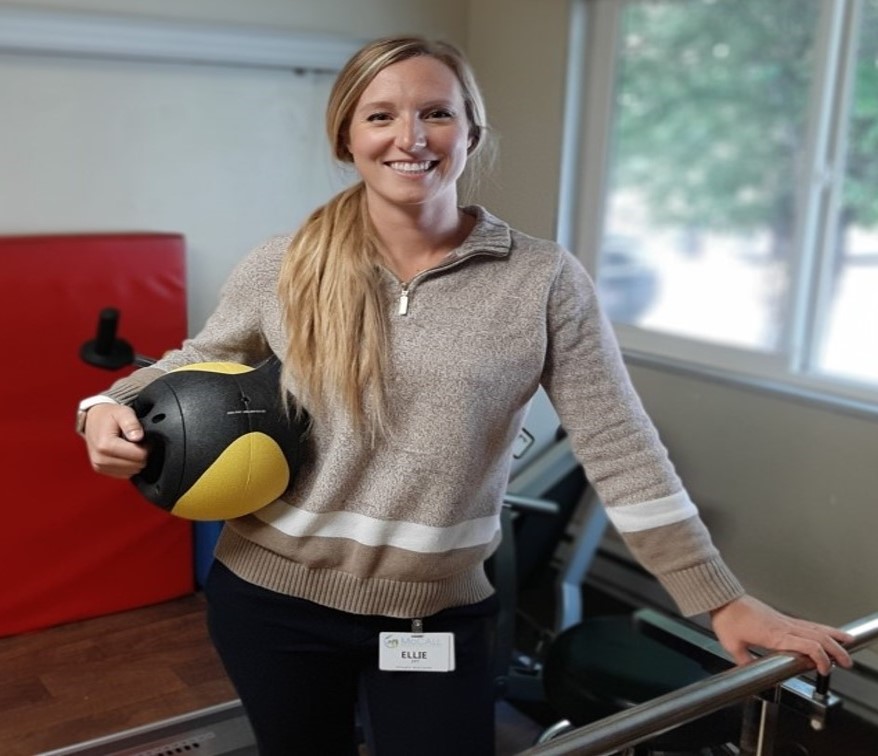
McCall’s DOR, Jenny Sowers, DPT, couldn’t ever seem to find the consistent time to grow an outpatient program, so she decided she should find a therapist willing to take on that challenge. In September of 2020, Jenny hired Ellie Toscan, DPT, with the goal of Ellie building their Community-Based Outpatient program.

Ellie has shown tremendous ownership of the program, from marketing to clinical to financial. She independently tracks the financials weekly and monthly to ensure the program is financially viable. Executive Director Kurt Holm’s main goal for the program is to build relationships and reputation in the community. A recent admission gives clear indication that Kurt’s goal is being realized. Ellie was working with a patient in her home. She had a change of condition, went to the hospital, and was referred to McCall Rehab. Because of the relationship that Ellie built with this patient, she readily agreed to the discharge plan. The patient is now receiving skilled therapy and nursing services in our facility. Thanks Ellie for this great example of the power of our core value of ownership!

If you are looking to grow your community based outpatient program, please consult your therapy resource or Deb Bielek for regulatory help specific to your state.

Submitted by Dominic DeLaquil, Therapy Resource, Idaho/Nevada

How to Build a Successful Outpatient Program

With our focus on meeting all the needs of our communities, we wanted to provide some information about our Colonial Manor of Randolph outpatient program. Randolph, Nebraska, is a town with a population of 894. Despite that, they have found a way to operate as one of the largest outpatient programs as an Ensign Affiliate. Here is what Eric Feilmeier, OT, CLT, DOR, has to say about why they have been able to have success!

When working to build a successful outpatient clinic, it is important to begin with Core Values. Here are few values that we have found to be important:

  1. Deliver WOW through service.
  2. Embrace and drive change.
  3. Create fun.
  4. Be adventurous, creative and open-minded.
  5. Pursue growth and learning.
  6. Build open and honest relationships with communication.
  7. Build a positive team and family spirit.
  8. Do more with less.
  9. Be passionate and determined.
  10. Be humble.

We have had success in our Nebraska market due to a number of reasons. First and foremost, be supportive of your therapists. Provide clinically centered CEU opportunities that focus on problems in your area. Here at Colonial Manor, we are LSVT certified and are going through power moves certification, urinary incontinence certification and Lymphedema Certification. Provide programming around the skills of your Therapists so they can get to the bottom of each patient’s problems. It’s important to educate on HEP for patients, but then leave that to them and focus on the true needs, utilize the specialty equipment in our gyms and provide proper intensity of treatment.

  • Make sure the patient feels that they got a lot out of each session.
  • Provide proper frequency. MAKE IT COUNT IN THE GYM! Remember, the patient won’t typically do as much at home. Modalities: We work closely with ACP rep to provide the best adjunct treatment options to assist with improving care. Patient’s Love modalities- modalities provide physical and psychosomatic results.

When working with your outpatient, always assess additional problems and needs that the patient may not realize themselves. Ask questions, because there might be a higher need for another discipline to step in. We are always looking out for one another’s skill sets and the potential benefit to collaborate our services to further meet the needs of our client.

Cancellation Management is the biggest obstacle of our Outpatient business. We do our best to stop cancellations, but that is not always easy. Some tips to reduce cancellations include:

Evaluations:

  • Provide a message. Ask the patient why they are in your clinic, what they expect and what they want to gain.
  • Hold their answers against them (In a positive way). Always have a conversation during the evaluation about the frequency and the importance of coming to therapy when they are scheduled, expressing to them that we can help them but they must come to scheduled appointments to make a difference (hold them accountable).Call ins: Problem-solve
  • When you get the patient on the phone and they want to cancel, ask, Why? What are you experiencing? Many times, the reason for the cancelation is exactly why they should be coming into their appointment. Be adamant and convince them to come in, if you believe you can help them.
  • When a patient leaves a message, call them and ask them the same questions. They may just need to be convinced that you can help them!
  • Move treatment times to another time of day or to a whole other day. Flexibility in your clinic is the key!

Last but not least, build and maintain relationships with your Physicians and Nursing. Frequent updates to communicate patient results to Physicians is always appreciated. Send notes or small updates with the patient to their next doctor appointments, even if the doctor doesn’t request it. These notes can be a quick word Doc, a progress note that is timed with an appointment, or even a nicely handwritten note.

All in all, have goals to grow your Outpatient clinics. Focus on the patient, and you will see excellent results. I even encourage devising a patient satisfaction survey to monitor your success and areas of opportunity. Good luck!

By Eric Feilmeier, OT, CLT, DOR, Colonial Manor, Randolph, NE, and Ryan Hough, Therapy Resource, Gateway, NE

“Brain Fog”-The Lingering Effects of COVID and the Importance of Therapy Intervention for Cognition

According to a recent article in The Wall Street Journal, “Cognitive problems are among the most persistent and common lasting effects of COVID.” Many of these cognitive issues are becoming long-term symptoms months after an active COVID dx.

It’s important that we understand Post-COVID-19 syndrome, which is signs and symptoms that develop during or after an infection consistent with COVID-19, continue for more than 12 weeks, and are not explained by an alternative diagnosis. Post-COVID-19 syndrome may be considered before 12 weeks while the possibility of an alternative underlying disease is also being assessed. These patients are also commonly referred to as “long-haulers.”

Therapy teams need to take an active role in the ongoing assessment and intervention of cognition. It’s especially important to know the patient’s PLOF and not discontinue services too soon, knowing that cognitive impairments with this population will continue long after the active diagnosis. Cognitive intervention is also important for our outpatient population in both ALFs and in the community. Physicians need to know that we are available to partner with post-COVID patients who have lingering cognitive issues.

Starting with a brief assessment such as the St. Louis University Mental Status Exam (SLUMS); Clock Drawing Test; Addenbrooke’s Cognitive Exam (ACE); or MINI-COG will provide initial information on the level of cognitive impairment (none, mild, Dementia level).

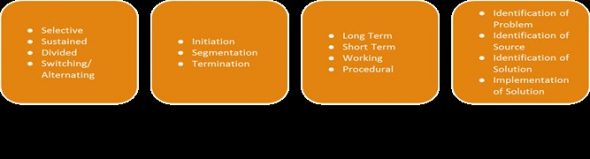
Once determined, it is clinically recommended to complete a formal standardized assessment and log Cognitive Performance Assessment 96125. Examples include: Ross Information Processing Assessment-Geriatric Edition (RIPA-G); Cognitive Linguistic Quick Test (CLQT); Functional Linguistic Communication Inventory (FLCI); The Scales of Cognitive and Communicative Ability for Neurorehabilitation (SCCAN); and Functional Assessment of Verbal Reasoning and Executive Strategies (FAVRES). Utilize assessments that at minimum can address: memory (i.e., list learning task; paragraph recall task; digit repetition, etc.); working memory/executive function; executive function (problem solving; planning; inhibition/initiation); and processing speed.

Once the assessments are completed, clinicians will know which areas of cognition to target with skilled intervention. Please refer to the various POSTettes (Post COVID; Cognitive Performance Assessment; SLP Cognitive Impairments) and the Cognitive Impairments Clinical Guide for additional information.

https://www.wsj.com/amp/articles/new-long-covid-treatments-borrow-from-brain-rehab-tactics-11617652800

By Tamala Sammons, M.A., CCC-SLP, Therapy Resource

The Power of Therapy and Nursing Partnerships

By Kelly Alvord, Therapy Resource, Sunstone UT
The Sunstone DONs and DORs recently participated in a combined meeting. This meeting of minds was designed to make sure we understand the challenges and initiatives of each other’s departments and to really collaborate where we could to help each other meet goals and obtain great clinical results.

Key partnership topics discussed:

  • We first pulled the “Rehab Screen Consultation F TAGs” POSTette from the portal. Each DOR presented on an F-tag from the POSTette and how the Therapy team will support and take the ownership of these tags for survey. For example, F Tags F684, F676, F677, and F810 all have to do with Activities of Daily Living (ADLs). The teams addressed their strategies for therapy partnership with ADLs for this group of F Tags. We discussed specific actions and roles Therapy has to support the DONs to prepare for survey. The DONs learned how their DORs are truly their clinical partners. This discussion was very interactive. The DONs were excited to know we “have their back” when it comes to involvement with patients to prevent decline and help with survey results.
  • Deb Bielek introduced our Excellence in Programming and Clinical Care (EPIC) Programs. EPIC programs. The DONs and DORs all committed to collaborating and establishing an EPIC program for each of their facilities based on clinical needs and trends.
  • Clay Christensen presented on the 5 Dysfunctions of a Team, which focused on establishing trust, being vulnerable, and not fearing conflict. This information was further validation of power of a strong DON and DOR partnership.
  • We also had fun together and had cluster competitions with an offsite activity.

With these dynamic partnerships with DONs and DORs, Sunstone is unstoppable!

Do Your Patients Need Better Grooming and Hygiene?


I think most of us would answer yes to this question!

I wanted to share a cool program that Adina Gray, SLP/DOR, and her team at Lake Village have started to meet the needs of their residents and see great improvements in this area:

At Lake Village in Lewisville, Texas, the therapy department saw a need for residents who either: didn’t enjoy showers, refused showers, had a decline in personal hygiene, and/or could benefit from some modifications and adaptations to their daily wash routine.

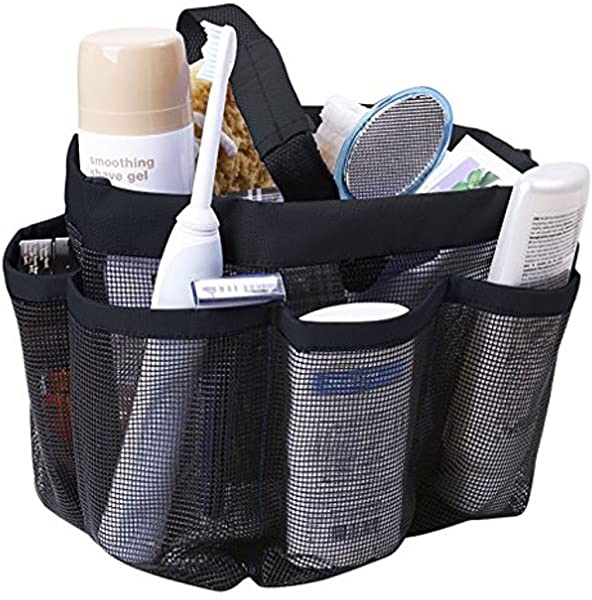
The OTs started by identifying the residents, and then we went about finding inexpensive but functional shower caddies (the Target College Essentials ones were perfect). They then talked to the residents and their families, and obtained the items that the patients would utilize and enjoy specific to them. For example, some families brought nice-smelling body wash, specific hair products for different hair textures,, good shavers and shaving cream for the men, etc. Items were labeled as necessary to help with carryover and ease of use.

We also established grooming and hygiene routines with laminated visual schedules for those who could follow them for doing things such as daily teeth brushing, washing their face and combing hair. And when OTs have established the routines and a patient is demonstrating good independence with the program, we then refer to ST in order to continue with carryover and use of visual aids and daily schedule to complete tasks as independently as possible.

Feel free to reach out to Adina (adhill@ensignservices.net) or your therapy resource with any questions!

Submitted by Barbara Mohrle, OTR, Therapy Resource, Keystone North

St. Joseph Villa OT Discharge Planning Group

Submitted by Stephanie Argyle, COTA and Kyle Fairchild, OTR, ADOR

Whether a patient comes to St. Joseph Villa for a rehab stay due to a fall, a recent injury, a surgical procedure or other medical conditions, we aim to include each individual in our discharge planning group as they approach discharge. Our goal is to educate our patients in ways to improve safety, improve energy conservation and improve self-awareness as they prepare to return home. Each group member is given a packet of written information, which includes a home safety checklist, pictures of adaptive equipment and links for ordering, and home exercises. We change our handouts based on the needs of our patients at the time.

Our DC Planning Group objectives are as follows:

  • To identify barriers to discharge with a focus on current functional barriers
  • Education in home safety, home modifications, DME needed for safety in the home
  • Education in community resources for home safety
  • Education in self-awareness and techniques to facilitate relaxation and awareness of your body at rest
  • Education in the purpose of home health services and benefits of continuing therapy at home and as an outpatient

So many of our patients have expressed gratitude and appreciation as they learn from one of our OTs or COTAs AND from one another about adaptive equipment, techniques and strategies to improve their lives. One patient commented after attending the group, “I was so worried about falling in my bathroom. What you’ve taught me will make things much safer and easier — it will change my life!” We have allowed family members to attend our group, which has helped them learn how to better care for and support their loved ones. Overall, this education group has been a valuable addition and rewarding experience for both our patients and therapists!

Low Vision Strategies and Partnering with Commission on the Blind, Wayne NE

By Ryan Hough, Therapy Resource – Gateway NE
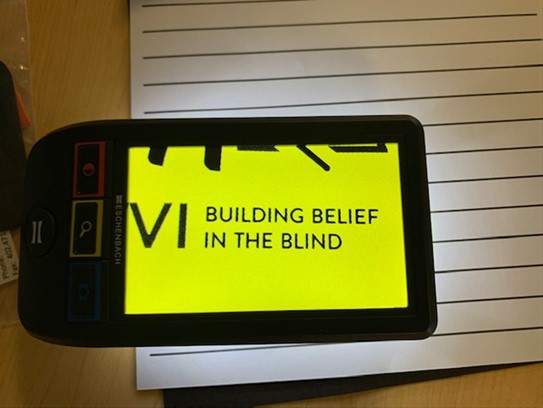
Kim cooper, our lead OT at Wayne Countryview Care and Rehab in Wayne NE, is a very clinically driven therapist who is always creatively implementing programming to address the needs of the residents. Kim recently identified several patients with low vision, and immediately went to work to strategize ways to improve their lives. She pursued a partnership with The Nebraska Commission for the Blind and Visually Impaired, and with their help and generous donations, they now have products for these residents to enhance their ability to participate and do day-to-day tasks. Some examples of the products donated are large bingo cards, large playing cards, writing templates, glare reducing sunglasses, dice with raised numbers, and an Eschenbach magnifier that works like a smart phone that you can move with fingers. When implementing any of these strategic interventions, remember to work with nursing to care plan the findings and the interventions provided.

Case Scenarios

Kim has a resident with severe macular degeneration. She has been staying in her room for meals because she was constantly spilling at meal time. Kim initiated therapy and worked closely with Nebraska Commission for the Blind. Kim designed a placement (picture attached) that lays out where the meal is all located so that she can find all of her utensils, foods and liquids. The placement is laminated and fits into the tray based on her vision loss. Patient was educated on the design of the placement along with the caregivers so that the lay out is always the same. This has resulted increased independence and self-esteem, as she now doesn’t need to stay in her room to eat meals. In part because of this success, they are exploring a discharge to an ALF that otherwise may not be possible.

Resident number 2 has severe glaucoma. This resulted in not being able to read the lunch menu, read the clock, read the activities schedule, and she stopped playing bingo because she couldn’t see the cards. They worked with Commission for Blind to get a talking clock, a magnifier similar to IPad size/Eschenbach magnifier that gives her color contrast, up to 12x the magnification, and camera to take a picture. Resident is much more engaged in daily activities within the facility and even resumed doing her cross-word puzzles.

Do you have similar commissions in your market? Take a look for a great partnership opportunity!