Introducing LSVT eLOUD Speech Therapy Program

Submitted by Elyse Matson, MA CCC-SLP, SLP Resource
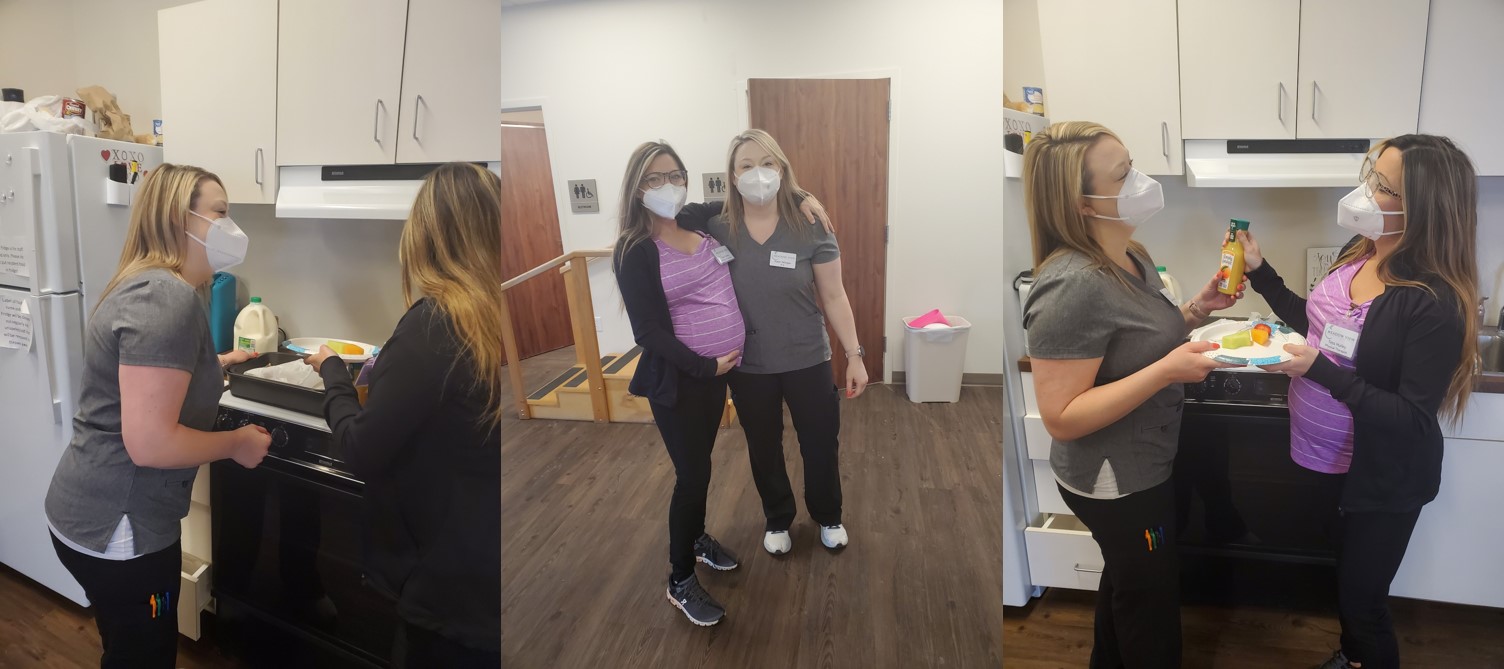
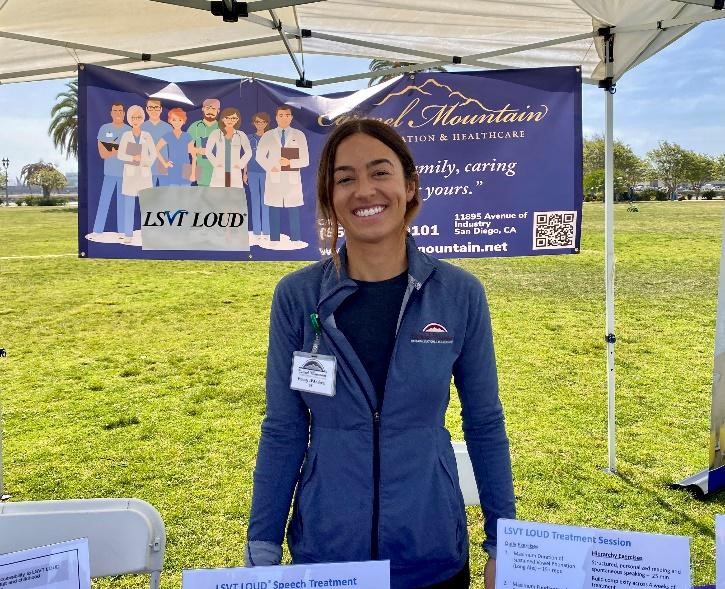
Carmel Mountain Rehabilitation and Healthcare Center in San Diego, CA, announces the launch of their new LSVT eLOUD outpatient speech therapy program via telepractice! (have photo)

On Saturday, April 9, the Parkinson’s Association of San Diego (PASD) hosted their 20th annual Step-by-Step 5K Walk. This event funds PASD to provide thousands of critical resources to individuals with Parkinson’s locally. Including over 1,000 participants and 40 exhibitors and sponsors, this event was an incredible testament to the strength and dedication of the Parkinson’s community here in San Diego.

Carmel Mountain Rehabilitation and Healthcare Center had the opportunity to sponsor this event through promotion of their new LSVT eLOUD telehealth outpatient program pioneered by Speech-Language Pathologist Emory D’Andrea.

LSVT eLOUD is clinically proven to be as effective in improving vocal loudness and overall speech intelligibility in individuals with Parkinson’s as when the program is provided in person. The difference? eLOUD is provided via zoom.com.

Throughout the pandemic, our skilled nursing facilities have phased in and out of outbreaks and “red zones.” This has not only made it challenging for therapists to provide outpatient therapy, but more importantly, has deterred individuals with comorbidities from traveling to a clinic due to the risk of exposure. The goal of LSVT eLOUD via telepractice is to break these barriers by increasing accessibility, enhance feasibility (intense dodge 16 one-hour sessions in one month), increase frequency of long-term follow-up, and diminish the physical and mental burden of traveling to clinics.

Through LSVT eLOUD, we are excited to empower more people with Parkinson’s disease to live LOUDER and BETTER lives! Contact: THINKeLOUD@gmail.com

Falls Team at Rosewood

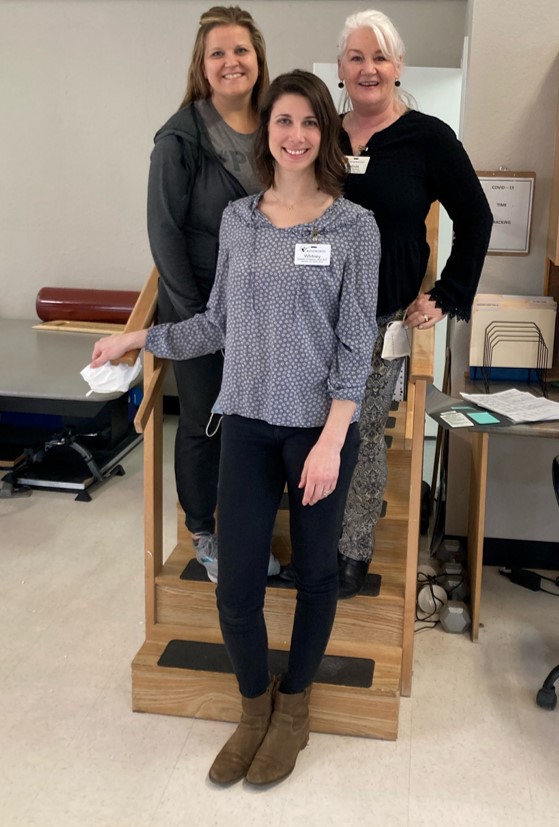
By Whitney Wilding, DOR Rosewood Rehabilitation, Reno, NV
We have started a Falls Team at Rosewood that includes two of my PTs and I meeting monthly to discuss issues and trends. We do our meeting following the monthly QA meeting and look at trend data as well as personal experience from those on the floor regarding issues, patterns, etc. I feel it has been very successful at this point! Here are a few of the things we have put together:

We started a screen form specific to falls as we felt the UDA in PCC did not gather the information we really needed to intervene properly after a fall. This screener is filled out by a therapist and includes time-of-day information, fall predictor information such as patient’s history of falls, and qualitative information such as fear of falling to complete our analysis. This also includes what Nursing interventions are currently in place and any referrals to Therapy following the incident. I have attached a copy of that for your perusal. After implementing this form, we began to take note of some patterns that were happening with falls that we could address. After implementing some additional safety measures to address the patterns we noted, our falls declined 18% month over month.

Next, Melinda — who is one of my all star PTs — put together a list of falls predictors that increase someone’s likelihood for falls. These include dementia/cognitive impairment, polypharmacy, DM/neuropathy, incontinence, prior falls, assist with ADLs, ambulation with an assistive device, and fear of falls per self-report. Next, we rolled this out to the entire Therapy team, who are including it and a rating score (i.e., 3/8) on their initial evaluations. This allowed us to prospectively look at those who are at risk for falls prior to the incident for our skilled patients. The idea is to see how we can support them by adding interventions aimed at decreasing fall risk within our treatments to prevent falls. We have just started rolling this part out, but l am very excited about the prospect of having this focus on our initial evaluations for all disciplines. Eventually, all disciplines will be included in a monthly falls meeting, and we are getting them thinking about this now.

We noted that quite a few falls were happening due to the patient’s need to toilet. The PTs again jumped on board and decided to start a day shift toileting program whereby we scheduled time daily for the skilled patients who had the above-mentioned risk factors. One therapist would have those patients scheduled for regular therapy and then follow-up during the second half of their day to work on functional mobility and transfers in a toileting program. They were successfully able to incorporate functional training with toileting to reduce fall risk. . The two weeks we were able to run the program so far evidenced no falls on shift (and high patient satisfaction 😊). Our next step is to include all PTs and OTs on a rotating basis to perform toileting rounds on day shift and see how this impacts our falls. Lastly, this ties in nicely with PIVOT for Nursing and strengthens our Therapy and Nursing partnership.

TAG BUSTERS: FALL PREVENTION FOCUS

Partnering with Nursing: F-Tag 689

Submitted by Tamala Sammons, M.A. CCC-SLP, Sr. Therapy Resource
Federal Tags (F Tags) are the minimal Federal and State Standards of Care that are used to survey Skilled Nursing Facilities as a measure of performance. Rehab Services provides an important role in order to ensure compliance with these standards by having strong systems for IDT collaboration, patient identification, and providing skilled intervention programming.

“Assistance Device or Assistive Device” refers to any item (e.g., fixtures such as handrails, grab bars, and mechanical devices/equipment such as stand-alone or overhead transfer lifts, canes, wheelchairs, and walkers, etc.) that is used by, or in the care of a resident to promote, supplement, or enhance the resident’s function and/or safety.

  • Are Safety Assessments part of therapy evaluations? Are they completed during different times of the day with various scenarios?
  • How often does therapy engage in assessing assistance devices and providing staff education on proper use? How often does therapy assess to see if those devices are still the best option for each resident?
  • Does therapy use a gait belt on patients anytime they require more than a supervision level of assistance?
  • Is Therapy familiar with what’s on the care plan and helping to ensure it’s accurate for device usage?
  • Is Therapy familiar with the CCA audit specific to this tag?

“Fall” refers to unintentionally coming to rest on the ground, floor, or other lower level, but not as a result of an overwhelming external force (e.g., a resident pushes another resident). An episode where a resident lost his/her balance and would have fallen, if not for another person or if he or she had not caught him/herself, is considered a fall. A fall without injury is still a fall. Unless there is evidence suggesting otherwise, when a resident is found on the floor, a fall is considered to have occurred.

  • Do all disciplines get involved to determine who is a fall risk and what interventions to use?
  • The evaluative phase for fall prevention shouldn’t end with one assessment. Patient behavior over time needs to be measured to determine the best interventions.
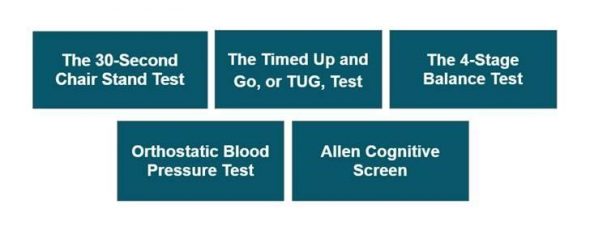
  • Are we using various standardized tests that tell us who is at increased risk for falls such as:
  • Do we assess gait velocity or just distance?
  • Does therapy take time to ensure a new admit or a resident with a room change is oriented to their new environment? Is the environment set up in the best way for this patient’s success?
  • Does Therapy use a gait belt on patients anytime they require more than a supervision level of assistance?
  • Is Therapy familiar with the CCA audit specific to this tag?
  • Does Therapy attend COC/Falls meetings?

Best Practice Ideas

  • We have Therapy representation attending and contributing ideas for Incident and Fall meetings.
  • We do ongoing therapy assessments for positioning, transfers, seating set up, etc. as fall prevention. NOTE: also ensure Care Plan is updated with the correct recommendations!
  • We provide education to Nursing on how Therapy can help with both fall reduction and post-fall support. ALL disciplines! Be sure to cover how much SLP can do around cognition. Our SLPs work on fall reduction as much as PT!
  • Therapy has increased communication to nursing in PCC in addition to various “paper forms” many facilities use.
  • We do CNA huddles to ask about their concerns or recent changes with any residents.
  • We complete a full battery of dx tests over more than one day to get a more comprehensive picture of how patients are performing.
  • We participate in facility rounds/safety committee
  • We participate in ongoing reviews of care plans for level of assist recommendations. We avoid ranges of assist (i.e., 1-2) and really dig into what each resident needs for that activity.
  • We do an IDT post-fall meeting outside of a meeting room; we go to the resident and ask them to “re-enact” what happened. We assess environment and figure out any unmet needs of the resident at the time of the fall.
  • Vital signs, vital signs, vital signs! We measure vital signs pre-, during, and post-treatment to assess for changes; we also complete orthostatic blood pressure testing on all residents and know who is at risk.
  • Environment: We assess room setup, bathroom setup (i.e., does the current position of grab bars work for the residents in that room, toilet height, etc.).
  • New admits and room changes: we assess the success of residents’ ability to function safely upon admission or after a room change (maybe they were closer to the bathroom and now they are not), as this is a new environment and it can be confusing to navigate, especially at night.
  • Our OT has helped tremendously with our low vision population, adjusting the lighting in rooms and adding colored codes to remotes/call lights.
  • We noticed a pattern of skilled patients falling within a day or two of admission. The Falls Team felt that this was due to the fact that there was no wheelchair available upon admission, as Nursing was waiting for Therapy to eval for transfers, etc. It led to patients attempting to transfer themselves because they did not have that visual reminder to wait for assistance. We attempted to solve this problem by having the rehab tech place a wheelchair in the patient rooms prior to admission so the reminder was there upon arrival. We noted a decline in subsequent falls around 18% month over month following this implementation.
  • We noticed that quite a few falls were happening due to the patient’s need to toilet. The PTs jumped on board and decided to start a day shift toileting program whereby we scheduled time daily for the skilled patients who had fall risk factors. One therapist would have those patients scheduled for regular therapy and then follow up during the second half of their day to perform the toileting for the assigned patients for the day. They were successfully able to get those patients to the toilet twice throughout the four-hour shift, while also being able to bill time for functional activities as indicated. The two weeks we were able to run the program so far evidenced no falls on shift (and high patient satisfaction 😊). Our next step is to include all PTs and OTs on a rotating basis to perform toileting rounds on day shift and see how this impacts our falls.
  • We communicate important updates and changes using the KARDEX for CNA/Nurse Easy Access.

Group and Concurrent: How the Organizational LEADER Gets It Done! (Hint: It’s About Teamwork 😉)

By Shelby Donahoo, Therapy Resource, Arizona

Month in, month out, COVID or no COVID, Sabino Canyon in Tucson, AZ, leads our organization in group and concurrent metrics. Averaging around 30% in both skilled and long-term care provision, it’s just become part of the facility culture. Executive Director Jaron Watson, DNS Quinny Mazzola, and TPM Dora Alvarez spoke to the Tucson market at an ED/DNS/DOR meeting last month to discuss.

“It’s about partnership,” they all said. “There aren’t ‘department goals’ but all-inclusive “facility goals.” Nursing is just as invested in rehab metrics as their own, and vice versa. There is an understanding of the benefit of group and concurrent for the residents and the facility from an IDT perspective, so it’s considered a group effort to achieve this metric.

Sabino Canyon runs an extremely busy skilled and long-term care program and services, so services need to be focused on function from day one. With a combination of group and one-on-one services, we get to spend more time with our patients overall, and our patients receive longer rehab services during a given day,” said Dora. This is a philosophy adapted with PT, OT and SLP.

With results creating buy-in from the Rehab team, a full understanding of more patient rehab time = better outcomes, and operational impact is discussed on all levels. Having patients up and ready for groups throughout the day becomes an expectation. Systems and flexibility are critical to this project:
● Each nurse’s station has a group schedule dry-erase board, showing time of group and patients scheduled for the group daily
● Rehab front-loads “on the unit” sessions the first few days of stay to incorporate much CNA training and sharing of individual patient goals
● Dry-erase boards with pictures of patient levels (mobility, device, etc.) are in each patient’s closet; Nursing uses a report sheet with diagnosis, precautions, etc. for quick reference as to patient concerns and assist needs
● Nursing, Therapy and Admissions consider the ability to do groups and concurrent treatment provision with roommate placement

Skilled long-term care groups have morphed into RNA groups. Self-ROM and AAROM groups are popular. Specific exercise groups are taught to Activities. One 3x/week exercise group is led by one of the residents.

Congrats, Sabino ,on your ability to “think out of the box” and amazing teamwork!

Discovering the Joy in Collaboration

Submitted by Dominic DeLaquil, Therapy Resource, ID/NV
Like all of the Summit Markets, Meadowview Nursing and Rehabilitation in Nampa, Idaho, is intently focused on building its Therapy-Nursing collaboration into something truly transformative.

Director of Rehab and CTO Kristen Bailey acknowledges that while they have only begun to scratch the surface of the various ways Therapy and Nursing can collaborate to improve quality metrics, increase staff retention throughout the facility, and improve the lives of the residents, she has already seen a significant change in the atmosphere at Meadowview.

“If you’re not in the building every day, you probably won’t see it. Our Nursing and Therapy have always gotten along, but it’s different now. I see the therapists and nurses having a different energy to their conversations in the hallways. I see them laughing with each other much more and in a way that’s different,” Kristen said. “It’s joyful! And it spreads and you can see it in the demeanor of the residents! It’s really fantastic.”

Thank you, Meadowview, for exemplifying two of our core values, Customer Second and Love One Another, as you work on your Nursing-Therapy collaboration. You are demonstrating how these two core values in action improve the day-to-day lives of your residents.

ILF “Outside These Four Walls” Partnership

By Jacqueline Eaton, TPM, The Healthcare Resort of Topeka, KS
HCR of Topeka partnered with the preferred Home Health Agency (HHA) in our community to create better clinical collaboration when patients are finishing their home health services, but continue to have outpatient therapy needs.
Many of the patients seen by the local home health agency reside in an Independent Living Facility (ILF) in our area. In an effort to ensure a smooth transition, the HHA requests outpatient therapy orders once the home health service is ending. Upon receipt of these orders, we schedule the patients for an evaluation at our therapy gym. Some patients will benefit from therapy services provided in their home and community, and we schedule the patient for the service location that will optimize their individualized treatment plan.


We also provide support to the local ILF by providing general education and training to the administration and the Thrive-at-Home representative to ensure optimal wellness programming for ILF residents and to offer our services for PT, OT, and SLP consultation when it is clinically indicated. We collaborate with the HHA, Thrive-at-Home, and the local ILF to offer Health Fairs and balance clinics on a regular basis. When patients are referred for outpatient therapy services, our Rehab Tech works with the patients and/or their caregivers to assist with the outpatient paperwork process, ensure all orders are in place, and assist with information gathering prior to scheduling their evaluations. The Rehab Tech also provides administrative support for ensuring physicians have properly certified the plans of care in accordance with policy. This support from the Rehab Tech allows for a more streamlined and efficient process for the evaluation and therapy services.


Our outpatient program is currently offering PT and OT therapy specializing in cardiac recovery training, pain management, and strengthening, and we are in the process of starting a seating and positioning clinic. Based on the needs of the patients in our community, we plan to hire an SLP to offer outpatient services for communication disorders, swallow dysfunction, as well as cognitive impairment and dementia.


These are just a few of our AMAZing therapists here at the Healthcare Resort of Topeka.

Congratulations to Our Newest SPARC Award Winner!

Aubrey Clement, OTA, Grad Date: May 2022, Salt Lake Community College, West Jordan, UT
Read her awesome essay below:

Growing up, we always had a wood stove for heat. I learned that sometimes because of different factors, the fire would go out, but by applying a spark in the right place and by bringing the fuel together with others, the spark could reignite the fire and soon a cheerful fire could be created, generating the heat to warm us all. I envision my education and training, combined with compassion, will be able to provide a spark in the lives of my patients and help them reignite the fire for life as they are able to develop independence. I can accomplish this through a passion for continued learning, accountability and applying evidence-based practice in my daily routine with patients.

As a teen, I spent several months living in the Ronald McDonald house recovering from a double organ transplant. It was the best education I could have received. While I was there I was able to learn empathy, how to communicate with individuals with a disease or disability, and to love, serve and care for others regardless of their circumstances. I experienced this unconditional compassion first hand. Although I was just a teen, this experience was extremely impactful and shaped my perspective on life. I learned the importance of including others without judgment or treating them differently. I was able to share my challenges and how I overcame them and I grew in strength, hope and courage from hearing their stories. As an occupational therapy assistant, I strive to be a practitioner who is truly there for each one of my clients. I will advocate for them and teach them how to advocate for themselves. I will encourage them to find what they are passionate about and give them hope to pursue their goals. I will hopefully be able to share my positive attitude and perspective with them, assisting them in making the most out of their circumstances.

I have had the opportunity to learn Spanish. Learning a new language is difficult. As I persevered and struggled, I received help from many and have seen how it benefits others. I hope to help those who come from a Spanish-speaking background. I hope to inspire others and be an example to them that challenges in our lives can help us help others. For a year and a half, I lived among Latinos and experienced a new culture. This too was challenging but I learned and grew a lot. One thing I learned that I will apply, to be a spark in the lives of my patients, is that everyone deserves care no matter what their background is. Each person we meet has a story that many do not know about. We cannot judge; we can only extend a helping hand and try to reignite that fire. As a practitioner, I will make each one of my clients feel that they are special, that their thoughts and feelings are valid and they are worth my time. I will give them the attention they need to meet their goals towards independence.

Having been a patient myself in several different medical settings, I was blessed to experience the patience and compassion combined with clinical knowledge of physicians and practitioners that made a huge difference in my life. I aspire to be the kind of practitioner that fosters growth, confidence and independence. Being educated on the best practices but also interprofessional interaction, interpersonal communication skills, being client-centered, holistic, empathetic, and an active listener will tremendously help me benefit my clients. I will use my therapeutic use of self to be a spark in my patients’ lives. Using motivational interviewing, it will be my goal to figure out what is the most important thing for my client and help them find their flame. I will take continuing education courses on topics that interest me, themes that I am currently seeing in practice, and things that are completely new and unfamiliar to me in order to broaden my horizons. I will do all this so I can be the best version of myself when I face clients with different needs. I will not get caught up in the mundane. I will always be looking and thinking of new creative invention ideas that are evidence-based and client-centered.

I am passionate about helping others live a meaningful life. The best way I can do that is to strive to constantly be learning and applying new things to my career. I will be accountable by following state and national guidelines, openly accepting constructive criticism and soliciting feedback from the client to tell me if I am not being client-centered. I believe that life is a gift that we need to make the most out of. I believe in having a positive attitude and making the absolute best of our lives, and doing what makes us happy no matter what. We should strive to live a fulfilling life. I want to help people find joy regardless of their circumstances. I understand what it’s like being a patient in the hospital and not being able to do what I love and have felt the negative impact of that. That is why I want to become an occupational therapy assistant. I understand the value of participating in meaningful occupations. Helping people achieve their goals towards independence is a very rewarding job. I am a caring, kind and dependable person who is honest and empathetic. I can think outside the box and don’t have to do things the traditional or conventional way. These attributes will help me succeed as an occupational therapy practitioner.

I will be a spark in the lives of my patients by utilizing my therapeutic use of self, personal experiences, clinical reasoning and applying all I have learned and been trained on in my program. I will bring my fuel closer to others to reignite the fire, help it grow bigger, stronger and hotter and encourage them to then go on and share the flame with others.
When the Going gets Tough, Keystone Gets Tougher

Submitted by Kari Rhodes, MS, CCC-SLP, Therapy Resource, Keystone West Texas
When the fog lifted from our initial COVID outbreaks in 2020, we breathed a sigh of collective relief. Vaccines were coming, cases were dropping, and visitations were resuming. We thought the worst was over. Small outbreaks here and there were managed, and PPE was easier to find.

Little did we know that the Omicron variant was going to wreak the havoc that it has on our facilities. As we ended 2021 and entered 2022, outbreaks were looming large yet again, affecting residents and more staff than ever before. As we have seen staffing shortages in nursing, we are seeing the effects of unprecedented therapist shortages. As we struggle to find a balance to avoid burnout and meet the needs of our ladies and gentlemen, the Keystone Therapy Markets have worked hard to get tougher!

At a small gathering of Keystone Therapy Resources in San Antonio in December, we talked openly about how we can best support each other in times of need. There were honest conversations about asking for help, text threads with motivating statements, and a lot of loving competition between the recently separated markets. In times of high levels of burnout, it often seems like a contraindication to challenge each other. However, the extra challenges put forth between us and a healthy amount of friendly competition work well to spur us on to do better work for each other, our teams, and our residents. Additionally, the open level of communication allows each member of the team to feel heard and supported, a necessary component of forging onward through the crises at hand. These methods of support then trickle out to our clinical resources, our market leads, and our floor staff.

As we tell the family members of our residents frequently, you cannot care for someone else if you are not caring for yourself! Taking time to rest and surrounding yourself with others who support you are essential for being essential personnel. When times in Keystone are tough, we are tougher because we are better together!

Veranda’s Fun Group Thursday

Submitted by Aaron De La Torre, Therapy Resource, Keystone Borderstone Market, TX
Providing therapy services during the COVID-19 pandemic has been more essential than ever to improve the outcomes of the residents we serve. With all the social distancing mandates that have been implemented to keep our residents safe, our interdisciplinary teams have been hard at work to ensure that therapy is provided in a safe and efficient manner. However, with social distancing also comes more time alone, which can lead to unwanted consequences.

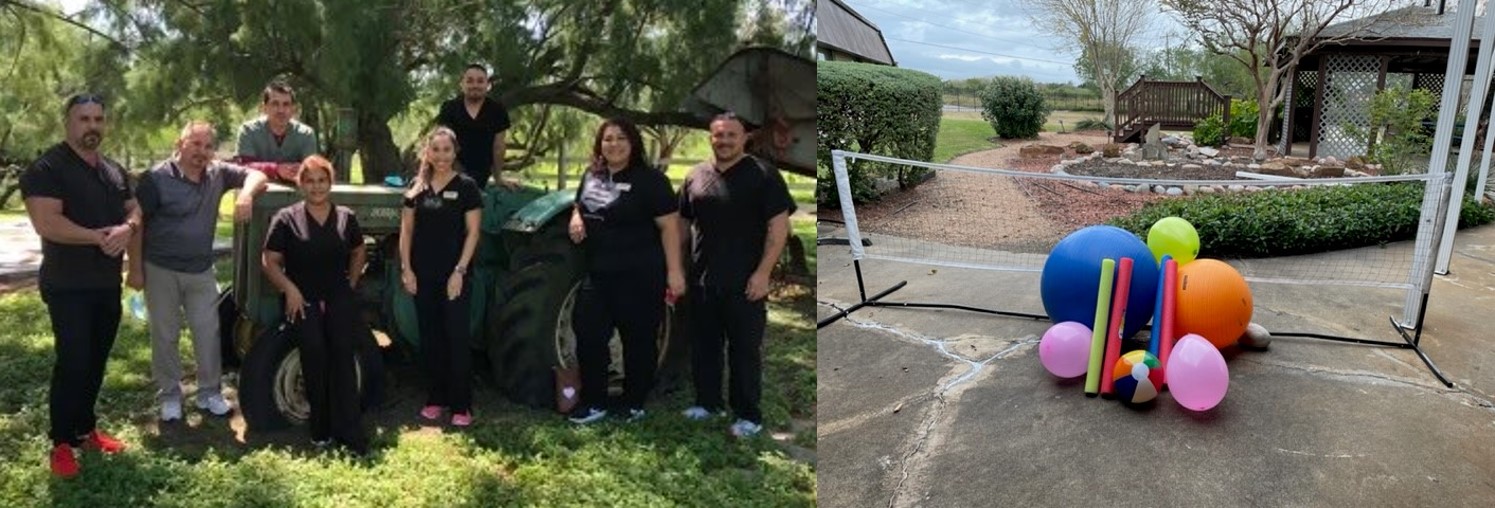
If you were to visit Veranda Rehabilitation & Healthcare in Harlingen, Texas, on Thursday morning at approximately 10 a.m., you would witness the amazing way they encourage safe socialization while improving residents’ functional skills. You would find several groups of residents playing an adapted version of volleyball, where residents are holding pool noodles and working on their dynamic reaching and core strengthening as they hit a balloon over the net. Do not be surprised if you see some friendly competition between residents and therapists! You will likely also see another group of residents with ankle weights kicking balls of different sizes and playing a makeshift version of soccer, all the while strengthening their lower extremities. Music that ranges from oldies to reggaeton will be playing as patients enjoy their group activity.

Fun group Thursday is possible thanks to a collaborative team approach. Vanessa Munoz, DOR, helps identify the patients who would benefit from group therapy and creates a master list on Wednesday. She then emails the master list to Jason Hess, ED, and the rest of the IDT team. Each team member ensures that every patient is up and ready for the fun group activities after they have had a delicious breakfast. The CNAs, nurses, Activities, and of course every therapist who is available plays a crucial role in helping fun group Thursday occur. Pictured are some of the equipment that is used and the amazing Rehab team at Veranda Rehabilitation & Healthcare.

Teamwork Makes the Dream Work

Submitted by Aaron De La Torre, Therapy Resource, Keystone Borderstone Market, TX
Having a decline in health can be an extremely challenging time for the individual and their family members. Typically, individuals who are admitted to the hospital can expect to be discharged to a skilled nursing facility, where they will receive therapy and nursing care and then be discharged home, where they will be serviced by a new set of therapists at home. At McAllen Transitional Care Center, the team has specialized in helping individuals receive an excellent continuity of care to assist them in their journey to return to their prior level of function. Jennifer Ybarra, DOR, and Ediel Barrera, ED, have worked hard to create a culture where patients are cared for from the time they are referred to McAllen Transitional Care Center until they have returned to their desired environment.

Upon admission into the facility, the evaluating therapists start discharge planning from day one. Once the patient has met all of the inpatient goals and is ready to go home, the physician and team determine the need for continued services. If outpatient services are indicated, the team starts the planning to ensure continuity of care.

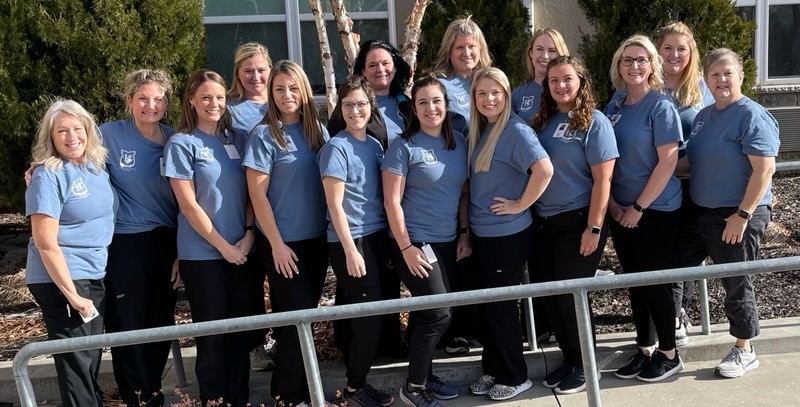
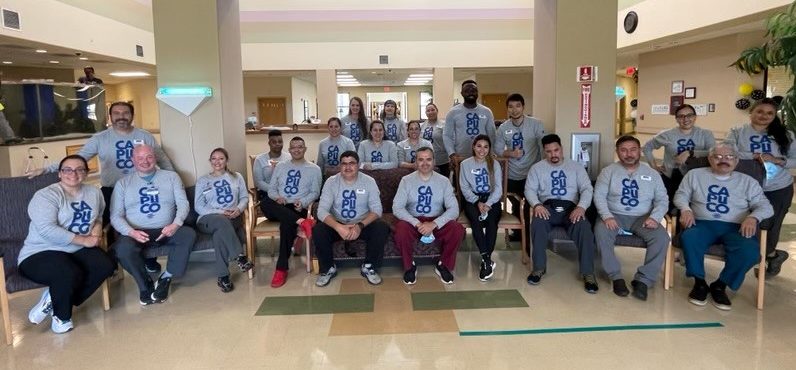
Every individual who serves the patient at the facility plays an important role in ensuring that the patient receives the highest continuity of care possible. The patients are excited to discharge home and continue services with the therapists they have made strides with to return to their prior functional level. Below are pictures of the amazing team at McAllen Transitional Care Center that goes above and beyond to make the outpatient dream work!