
Therapy to ED Leadership

By Brian del Poso, OTR/L, CHC, RAC-CT, Therapy Resource

Next up in the series of interviews of our former DORs turned ED is the one and only Amy Gutierrez! She is not only a former DOR, but served as a Therapy Resource as well. Amy is currently the ED at Treasure Hills in Keystone. She was kind enough to share some of her thoughts with us:

As a DOR/Resource, you were in a good place in your career. What kinds of things were you thinking about when the thought of being an ED came up?
Jon (Anderson) was actually the one that brought it up in October of 2018 at the Leadership Summit meeting. Prior to that, I never really wanted the responsibility lol! I suppose that was when the seed was planted. Throughout that time period I considered taking my boards to becoming an Admin, I started asking questions to the other administrators. One of the most frequent questions I had was, “Is it fulfilling?” As a therapist and a resource, I know we make a difference and felt I had a purpose. I didn’t know if I would have the same sense of fulfilment as an ED. I was naïve to think that it wouldn’t be.

How did you come to the decision to push forward into the AIT/CIT program?
To be honest, I kind of jumped in. The position was offered to me at the beginning of October with the acquisition scheduled to happen in November. At that time, I was still in my Hybrid role as a DOR and Resource. I was fortunate enough to attend an AIT boot camp, which helped to solidify the decision I made in becoming an ED. As an Administrator, we are given an opportunity to change the lives of many. And where we do that as therapists and Resources, we have the opportunity to do it on a much broader stage. All of those little changes we want to make, or we wish the Admin would do, is now on us. I learned rather quickly nothing is ever as easy as it appears. We are entrusted with so much, at times it could feel overwhelming, but it’s in those moments you begin to see growth as a leader.

What do you think is the most important characteristic of a successful leader?
This is a hard question to answer. I admire so many of our own leaders but for different reasons. One of the most common traits they all have is their openness to give and receive feedback. They surround themselves with the right people. They share what they know and want every single person around them to be just as successful.

If you were to talk to a therapist about the ED role in general, what is the most important thing you would talk to them about?
Being open and honest about the things you don’t know. Ask questions, lots of them. I find myself calling my partners and resources multiple times a day. It’s OK not to have the answers. One of my mentors shared that with me early on. And it has saved me a million times over.

Any other thoughts for a therapist who might be thinking about becoming an ED?
You have to be ready for anything. I have been in my role for eight months now, and I can honestly say, I never expected to be an Administrator under the world’s current circumstances. But you do everything in your power for the people under your leadership and those entrusted to your care. Times and positions like these are what therapists are made for.

Washington Receives Eldergrow Grant

By Mira Waszak, Therapy Resource, Washington

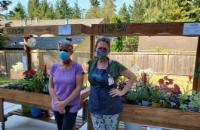
Another gift of a grant in Washington. Pictured is Lynnwood Post Acute getting their setup and initial training.

The Eldergrow G.A.R.D.E.N Project would enable each of the nine participating Washington communities to help residents cope with this difficult time of isolation and loneliness, while also providing an interactive and meaningful activity to improve their quality of life now and long into the future.

Numerous health care studies show a positive link between gardening and healing. Contact with gardens and nature can augment a resident’s medical treatment, including mental, physical and emotional needs. Therapeutic horticulture has been proven to deliver tangible wellness benefits, including improved self-esteem, improved memory, reduced depression, improved motor skills, and increased socialization. The project goals include, but are not limited to: 1) Increasing the quality of life by improving the residents’ emotional states and 2) improving the quality of care by focusing on the six therapeutic horticulture wellness goals set forth from the American Horticultural Therapy Society. Eldergrow strives to reach an 80% resident attainment rate on both goals.

The plan to accomplish this for the nine communities will be to launch the Eldergrow G.A.R.D.E.N program as soon as possible, even if on a limited basis initially. The Eldergrow program is a well-managed, supported and respected therapeutic program offered through horticultural gardening which many residents enjoyed previously. It has been successfully used to engage residents in long-term care facilities with the best outcome of enhancing their quality of life. Eldergrow Educators use engagement and a hands-on approach, and they enable everyone in the care center — residents, staff and family, regardless of experience, physical or intellectual abilities — to participate in this program. Eldergrow enhances residents’ quality of life through therapeutic gardens physically, socially, cognitively and creatively.

Making PDPM Training Fun!

Submitted by Mira Waszak, Therapy Resource, Pennant – WA

Connecting and training with our teams has been challenging in our new normal. So how do we make training effective and fun on a Zoom call? Introducing PDPM Brain Benders by Jessika Booth, MDS Resource/Pennant WA. She created a simple but effective exercise bringing the 9 Washington IDTs together on a 30-minute Zoom call.


Jessika forwarded Reference tools the day before the Zoom meeting, which included:
PDPM quick reference guide
PDPM ST comorbidity CMI guide
NTA workbook
PDPM ICD10 Mapping
PDPM Nursing quick reference guide
And a sample diagnosis list

Zoom call format
Brain Bender Rules:
• Mute your lines unless called on or when conversation is opened to the group
• First facility to type facility name in chat answers the question
• If wrong, the second facility with name in chat will get opportunity for half of the points with correct answer
• Next question picked by facility with correct answer

Teams were only given the diagnosis sheet to answer some of the sample questions below:

Question: What PT/OT Clinical Category does the current primary diagnosis of OSTEOMYELITIS Unspecified – M86.9 map to?
Answer: Other Orthopedic

Question: Based on the diagnosis list provided, are there currently any SLP CO-MORBIDITIES available?
Answer: No, none of the diagnoses listed will map to an SLP Co-morbidity 410.

Question: Based on Diagnosis review, what would the IDT need to clarify in order to get the resident into a Special Care High Category?

Answers:
● The type of Quadriplegia — as you can only code I5100 Quadriplegia if it is a result of spinal cord injury.
● Sepsis — related to osteomyelitis and or UTI
● Respiratory Therapy — Hypoventilation Syndrome
● COPD and other restrictive lung disease — Hypoventilation Syndrome

Special thanks to Jessika Booth and our MDS partners! Congratulations to team Park Manor for winning this round of PDPM Brain Benders.

Think Thin! The Path to Thin Liquids

By Tamala Sammons, M.A., CCC-SLP, Therapy Resource

A new clinical campaign for our SLPs and IDT is the “Think Thin! A Path to Thin Liquids” approach. There is so much supporting evidence that promotes thin liquids over thickened liquids. When thick liquids are needed, then we need to consider utilizing the free water protocol.


Reasons to Think Thin:

Preventing Dehydration: Dehydration can lead to a variety of negative health consequences including:
• Changes in drug effects
• Infections
• Poor wound healing
• UTI’s
• Confusion
• Constipation
• Altered cardiac function
• Declining nutritional intake

Improving Quality of Life:
Traditional thought holds that aspiration of any material into the lungs can lead to aspiration pneumonia so many patients who have difficulty swallowing are placed on diet restrictions that avoid thin liquids.
However, a confounding evidence in the literature suggests that pulmonary aspiration of differing materials may not present an equal risk for the development of aspiration pneumonia. Aspiration will result in pneumonia only if the aspirated material is pathogenic to the lungs and the host resistance to the aspirated material is compromised. Research also discovered: “The risk of developing aspiration pneumonia was significantly greater if thick liquid or more solid consistencies were aspirated.” (Holas, DePippo, & Redding, 1994)

Being able to have Thin Water: Free Water Protocol
If a patient must be on a thickened liquid for any duration of time, research using a free water protocol found that fewer residents had UTI’s and dehydration and that when paired with proper positioning and oral care, there were no incidents of aspiration. Additionally, providing patients with thin water:
• Improves quality of life
• Improves Resident satisfaction with meals and less reports of thirst (Over 35% of patients are noncompliant with thickened liquids)
• Decreases risk of dehydration, UTI’s and pneumonia

Additional training information and materials will be coming over the next few weeks as we work to Think Thin!

CODE SEPSIS: Understanding the Sepsis Pathway and COVID

Submitted by Tamala Sammons, M.A., CCC-SLP, Therapy Resource

The Mission:
Improve Sepsis identification early to improve patient outcomes.

The Why:
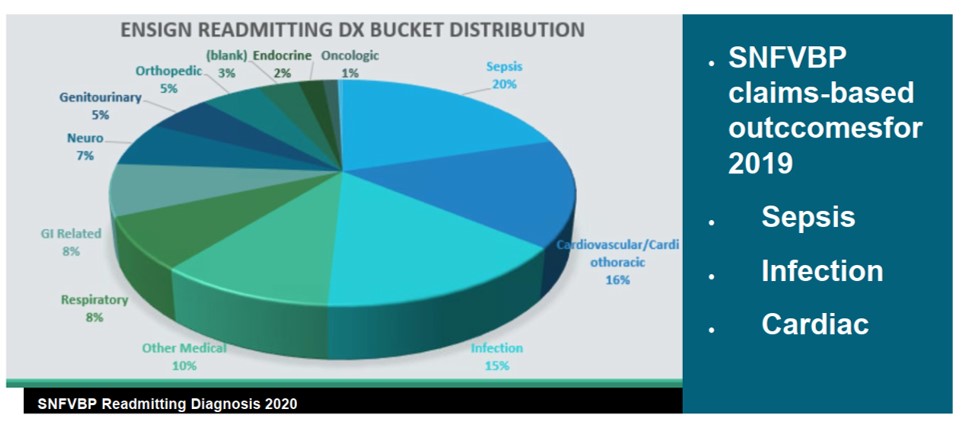
Sepsis was 20% of our Medicare Readmissions as an Organization in Calendar Year 2019.
With every hour that treatment is delayed for sepsis, the mortality rate increases by 8%. Understanding and educating our facilities on SIRS and a focused vital-sign campaign with an SBAR-specific focus will improve our care delivery and reduce readmissions, improve our patient satisfaction, and help with our change in condition process.

COVID-19 and Sepsis: A Physician’s Lens
While there is still a lot to uncover about the pathology and presentation of COVID-19, we have learned a great deal about this virus and its potential impact in our post-acute care facilities. During our experience at one of the early COVID-19 outbreak facilities, it was discovered that an early presentation of many COVID-19 patients was the presence of a fever. Unfortunately, these fevers were managed with the typical order for acetaminophen and cooling measures, effectively masking the fever and avoiding any further escalation of care until the patient reached a point of medical instability.Sepsis POSTette

As with any patient in a post-acute care facility presenting with fever, even before COVID-19, timing is absolutely critical. Other changes of condition such as chest pain or possible stroke have led to long-standing, conditioned responses to immediately send patients out via 911. Fever is often the hallmark sign signaling the beginning of a patient experiencing sepsis — a diagnosis that carries a much higher chance of mortality, especially in the post-acute care population, but up until now has not received the attention it deserves. Oftentimes a febrile episode is masked or ignored, leading to a cascade of events leading to further demise, accelerated by a virus that now has the potential to spread like wildfire.

We are now at a point where identification of fevers (and other changes of condition) should signal a “code” event, essentially alerting the clinical team to provide immediate identification, isolation, and intervention. With every hour that a fever is ignored, the mortality rate for a potential sepsis patient increases by 8%. This simple, yet widely underappreciated clinical practice can prove to be a pivotal step in reducing the mortality in not just our COVID-19 patients, but in any patient who is on the path of developing sepsis. — Dr. Pouya Afshar

For more information, click here for our Sepsis POSTette

Therapy Update from VPAC

By Dawn Thompson, DOR, Victoria Post Acute Care, El Cajon, CA
Hope everyone has been staying safe and healthy. Here is an update from the Hidden Gem of East County, Victoria Post Acute Care [Yes, that was really once a slogan of VPAC).

VPAC has continued to accept COVID + patients, and as of August 16, there had been approximately 140 COVID admissions and 95 discharges to the community (25 skilled currently). Our entire VPAC team has continued to embrace the adversity of COVID as a challenge to overcome and catalyst for learning and growth. We’ve been honored to discharge so many residents home with family members and to prior living situations. The joy on residents’ and staff’s faces when escorted out the front doors on a red carpet to waiting family members is priceless. We’re looking forward to crossing the triple digit threshold for community discharges.

Over the last few months, there have been many non-COVID-related changes within our department. Lead PT, Melissa, had a baby and has been out on maternity leave, and our wonderful SLP transitioned to a building in Texas. We’ve welcomed two new team members and are excited for their added contribution to the team. We continue to complete the LEAF form weekly for COVID-related time within the facility to have a true picture of department productivity.

Another major change within our department is the inclusion of the RNA team. The therapy team has absorbed the RNAs fully as rehab team members. The RNAs moved into the therapy gym, contribute in team meetings and participate in team building lunches/potlucks. This has allowed for greater relationship building and communication between therapists and RNAs. The increased conversation, coupled with our LTC screening process and new QM weekly meeting, have resulted in more referrals for LTC evaluations. We hope to continue developing LTC programming to better serve our VPAC residents [and increase PNSD].

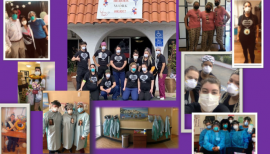
We consistently find reasons to celebrate — this summer, we have had wedding celebrations, baby showers, birthday parties, goodbye and welcome parties. It’s become part of our weekly routine to have lunch together on Tuesdays. [See attached photos of celebrations].

Last month, I was invited to lead the culture portion of the resource call. We explored the Enneagram and team dynamics. I also had the opportunity to be a part of a COVID-19 Rehab Panel for the San Diego District CPTA (thank you, Sam). I was asked to share my experience and what I’ve learned from an outbreak with the facility and accepting positive patients from the community along with staying safe in the SNF setting, IDT treatment approach and mental health of COVID and SNF residents. It was a great experience exchanging information and experiences with peers.

As we persevere through the pandemic, I am often reminded how fortunate I am to have such wonderful teammates. I continue to be the proudest team leader.

Keep staying safe, wash your hands and wear a mask.

Natalie Blasczienski Award Winner

Congratulations, Dawn Thompson, DOR, Victoria Post Acute Care — Winner of the Natalie Blasczienski Award

Submitted by Jon Anderson, Therapy Resource, Keystone

During our Annual Therapy Leadership meeting, I had the honor and privilege to announce this year’s Natalie Blasczienski Award winner. This award, established in 2019, in essence, emulates the spirit and incredible human being of Natalie Blasczienski. Natalie was a PT and DOR at Legend Euless, Texas (now known as Westpark). She was often described as a superhero for her patients, a mentor/coach for her therapy/IDT team, and a proud momma of two young boys. Natalie’s spirit and enthusiasm was palpable, and she enriched the lives of countless seniors, through her selfless dedication to helping others.

In the summer of 2019, Natalie was diagnosed with breast cancer (she was in her early 30s). During her chemo intervention, she persevered and continued to work full time, never skipping a beat, and later that year she went into intermission. We were so excited, for we thought she had beat it, but unfortunately she had a rare reaction to the chemo treatment that resulted in severe cardiac damage, and we forever lost her physical presence in March 2019. However, her spirit is still very much alive, as Natalie made so many of us feel like family. Many of us will never forget how powerful of a presence she was; she never knew a stranger. With this award, we honor Natalie and the award winner who is nominated by their therapy team.

Through a survey nomination process, therapy teams across our affiliates shared so many countless stories about how their therapy leader was deserving. It was an incredible response, and the committee had a very difficult time determining who the winner would be. Those who nominated Dawn gave the following answers to our questions.

How has your therapy leader displayed unconditional love to your team, facility, and residents?
This therapy leader often leads with “I love you all” or “I’m so proud of our team!” One staff member describes her favorite: “You have a crazy day of documentation — I’m picking you up a coffee, what kind?” Isn’t that cool? Additionally, the team notices that this therapy leader is often the last department head to leave the building and is frequently caught volunteering after hours to do games and activities for the residents.

How has your therapy leader shown unwavering dedication to bettering your therapy team? Facility? And quality of life for the residents?
This therapy leader is described as the Michael Jordan of Rehab, making an immediate impact from the start. In fact, the rehab program has grown tremendously through the tireless efforts of this leader in supporting and facilitating education and training of the many new program offerings. This explosive growth has led the facility to add a second therapy gym. Furthermore, communication between therapy and nursing has been dramatically improved by the rollout of several communications so that both know the patients individualized needs. Therapy can communicate with nursing through “Emojis of Care” while nursing can fill out a “Hey Therapy” card to let therapy know if any resident has had a change in functional level, strength, balance, etc.

How has your therapy leader stepped up in the face of adversity and shown leadership in times of turmoil?
This facility was one of the first Ensign affiliates, as well as one of the first nursing homes in her region, to have a COVID-19 outbreak. Little was known about COVID at the time, and many residents/staff were sick. This therapy leader led by example, through exhibiting unconditional strength, love and courage.

Bringing the Fair to The Pines

Submitted by Joleen Linn, Therapy Resource, Wisconsin
From August 31 to September 4, The Pines Post-Acute & Memory Care in Clintonville, Wisconsin, decided to bring the fair to our facility. During COVID-19, the residents in our building have been having a hard time not seeing family or friends, or joining the community’s fun events that have been canceled due to the pandemic. With a few good ideas and some event planning, we decided to make The Pines into a fair. Who doesn’t love games, prizes and delicious food? Each day throughout the week, we planned a special day for each and every resident and staff member to make their day a little brighter.

Bringing the fair to The Pines Post-Acute & Memory Care has given us the biggest smiles throughout the week. We are very grateful for everyone who helped us in preparing for this week. We all know this year hasn’t been easy due to COVID, but there’s always some way to make their days a little brighter.

Day 1: Polka music, sun drop slushies, cheese curds
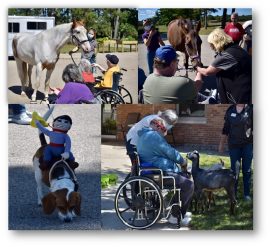
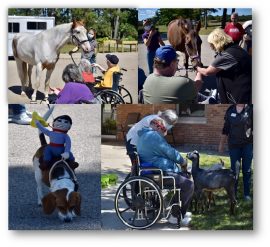
Roger Hartwig played music outside for everyone. He sang and played polka music with his accordion. Many of the residents sang along, danced and enjoyed the classic songs. Along with the music, the management team passed out sun drop slushies, cheese curds, onion rings, French fries and pickle pucks for everyone. We really wanted everyone to feel like they were at the fair.

Day 2: Bingo, bean bag toss and mini corn dogs
Today we had games spread out all over the building for residents to participate in and win prizes. One of the games the residents really enjoyed was playing bag toss. As the residents threw the bags through the holes, they got a chance to pick any prize they wanted out of the box. It consisted of calendars, candy and sweets, coloring books, stuffed animals and much more!

Day 3: Petting zoo with horses, dogs and goats
Day three was one of the most exciting days for our staff and our residents. We had horses, goats and a few dogs for everyone to see and pet. First came the horses: Prima the brown horse and Mister the white one. Then we had Luna the rodeo dog and the goats!

Day 4: Cream puffs and indoor games
Homemade cream puffs by The Pines activities director Kim! She made over 60 homemade cream puffs for all the residents and the staff. We had many games, including tip the pyramid, bag toss, plinko and pick a duck!

Day 5: Water Balloons, burger cookout and ice cream bars
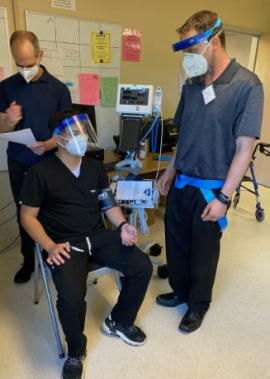
Our last day, we had a cookout outside, including burgers and ice cream bars for all the staff and residents for lunch. We also had water balloons for a little bit of fun!

Therapist Profile: Joe Pergamo, PT/DOR, Puyallup, WA

Submitted by Jamie Funk, Therapy Recruiting Resource
Meet Joe Pergamo (pictured top left), the Director of Rehabilitation at Rainier Rehabilitation in Puyallup, Washington. Joe joined our organization in March 2019 and has become a huge part of the Pennant Washington team, not only as a stand out leader in his own facility, but also as someone who pitches in for any of our Washington facilities if they need help. He has even driven five hours (one way) to Walla Walla on a repeat basis when they were short a physical therapist.

“Joe is a remarkable leader! He has been instrumental in increasing the awareness amongst the staff at Rainier’s rehab team of the benefits of providing therapy services to residents to maintain their optimal function,” says Brett Watson, the ED at Rainier Rehabilitation. “He has demonstrated through his leadership how to improve the quality of life of our residents through consistent rehab interventions and skills. Joe is patient, kind and long suffering. He is not only supportive of his therapy team, but he gets in and supports nursing, activities, and business office staff with their needs. He does this while maintaining a strong productivity percentage.”

“Joe leads with humor, kindness, and the altruistic belief that therapy changes lives for the better. He is humble and leads by example with true ownership of his program,” says Mira Waszak, the Therapy Resource for Washington.

Joe was inspired to become a therapist because he wanted to work in health care and enjoyed working out and fitness. Initially, he obtained his PTA degree but went back to school to earn his Master’s Degree in Physical Therapy. He heard about a DOR opening at Rainier from a former supervisor who put him in contact with Mira to learn more. “I had spoken to Mira several times, and she was very helpful and encouraged me to become a rehab director. She provided excellent mentoring to ease me into the role. I met Brett and Stacy (the ED and DNS at Rainier) along with several RCMs, and I believed it was an excellent opportunity for me to be a director. I was impressed with Brett and Stacy’s approach and style and the way they cared for long-term care residents,” Joe remembers.

Joe’s favorite Ensign core value is Ownership. “I believe when employees take pride and responsibility in and for their work, it elevates everyone’s quality of care. Pride and ownership are contagious. When you are around other people who have ownership, it makes the ‘work’ more rewarding. You don’t want to let yourself, your co-workers or residents down. I feel that there are many owners at Rainier in the therapy department and throughout the facility and we all feed off of that positive energy.”

This affinity for ownership is not going unnoticed by the facility administrator. “Joe is faced with multiple challenges in caring for residents that have many needs. Joe is providing care to residents who need airway support — patients who need a level of care that is unique and challenging. He has not been afraid to get in and learn how to provide services to these individuals that have benefited these folks in many ways,” says Brett Watson.

Joe loves his facility and team because the entire facility is very devoted and dedicated to their residents. They practice holistic and selfless interaction with their patients. Joe is a strong believer in co-treatments and collaborative care and he works hard to be mindful of recommendations from all disciplines. “I always try to be open to opportunities to provide therapy services to improve residents’ quality of life,” Joe says. ”I believe all residents are therapy candidates and we just have to be open to all opportunities.”

When not working, Joe is spending time with his wife, son and three dogs. He is in the midst of a home and yard renovation and also makes time to exercise. He loves living in Washington, which he feels is the perfect mix of metropolitan life and breathtaking nature, home-town charm and cultural diversity. For any of you science fiction buffs out there, Joe’s favorite movie is the “Back to the Future” series.

“I call Joe my diamond in the rough,” says Mira. “He is very introverted but he doesn’t let that impact his effectiveness as a leader. I have had the privilege to treat patients with him side by side, so I have first- hand experience of his clinical excellence! On top of everything else that has been thrown at our leaders this crazy year, Joe has gone through some serious personal challenges but continues to show up 150% every day – #belikejoe!”

The feeling is mutual. “Mira is an excellent mentor and resource,” Joe says. “She provides motivation and encouragement every time we interact. Although I have only known her for just over a year, it seems like we have been friends for many years. Mira provides hard truth, sound advice, humor and truly listens to my concerns.”

Bringing Compassion to the Team

April Trammell from Beacon Harbor in Rockwall, Texas, recently joined our Compassionate Hearts Team. She shared some ways she is bringing compassion to her team:

A personal goal of mine is to be more present for my team. This means both physically present and to develop a greater awareness of my team’s individual strengths and needs. I decided to give them all a survey with questions that captured our CAPLICO values
1. Provide an example of a teammate’s compassion
2. Provide an example of a teammate’s accountability
3. Provide an example of a teammate’s effective treatment technique/out of the box thinking
4. Is there a topic/area of interest for your personal goals?
5. Provide a characteristic/trait you value in a teammate, in a leader, in yourself
6. What are your professional goals/leadership interests?

The responses from my team were overwhelming! I am reviewing one question’s responses per week in our team meeting so that each staff can see/hear the great things they have to say about each other/see in each other. Here are the examples of Compassion shared by my team:

  • Kristen and Tibitha checking in on me while I was out for surgery. They have been extremely understanding. Receiving a very nice bag of thoughtful health products from April when returning from surgery.
  • Reggie’s ability to make the residents feel more at home /at ease.
  • Blair always goes above and beyond to make sure her patients are well taken care of and that they have everything that they need.
    Blair brought in a warm outerwear garment for a resident to wear who is cold all the time.
  • OT taking time to have a video call for patients with family members
  • Esther always has nice things to say about a patient or co-worker no matter how challenging that person’s attitude is. Even when everybody gave up on Resident SH, Esther was still attentive to her needs.
  • Being kind to patients even when they are difficult and stubborn
  • Jessica! She is always willing to help in any situation. She is very passionate about each and every patient and is willing to learn.
    Reggie is always checking on each patient and making sure they always have what they need.
  • Rhonda- always eager to help.
  • One of our therapists going above and beyond their responsibility by providing shoes to a patient to help them ambulate.
    Neeraj going the extra mile and caring about patient’s pressure sores and mental health.
  • Reggie and Neeraj going above and beyond to help our patients.
  • Kristen Erickson was very compassionate on the COVID unit. She ran around each day going out of her way to get the patients clean and anything they needed.
  • All of the current team members are compassionate and have demonstrated it during COVID times.

Needless to say, COVID was our Moment of Distinction with so many Silver linings that came out of it. We are a stronger team because of it. This survey has been a moment of distinction for me personally and professionally. This has been a great team-building activity—some squeals of delight when names were heard, giggles, heads nodding in confirmation. Hearts are filled here!