
Recognizing Tamala Sammons, SLP & Super-Resource

By Chad Long, Therapy Resource

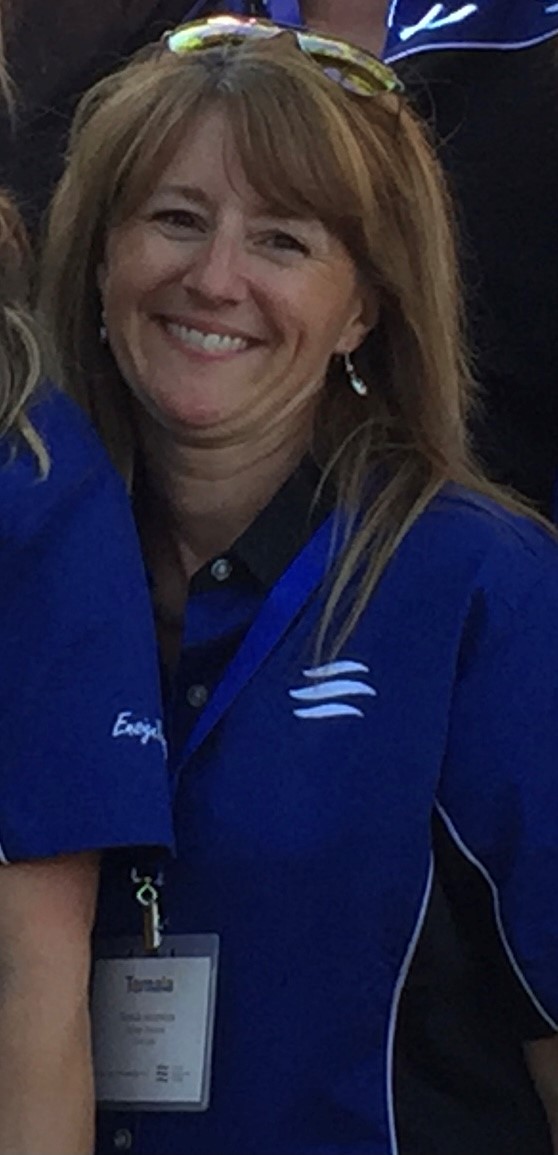
As we celebrate Better Speech and Hearing Month, I wanted to share a few comments from the field about Tamala Sammons, SLP & Super-Resource. Thank you, Tamala, for your kind heart, wicked smartness and desire to see the best in all of us!
Without Tamala, we wouldn’t have had the success that we have had. Her support and motivation means the world to me! And let’s not forget about those POSTettes — they are incredible tools and resources that make my role easier. Love yau! — Heather Bjernudd, Therapy Resource

Since day 1, I have had Tamala on speed dial when it comes to guidance on regulatory updates, POSTettes, and all things ST. She is always quick to respond and she will do her homework to make sure she is providing the most accurate information. What I love and appreciate the most is that each time I reach out for support, her response is always filled with passion and such joy. — Kai Williams, Therapy Resource

Her passion to develop programs not only in the ST realm, but also to the therapy world, is bar none. We admire her for her relentless pursuit of truly dignifying long-term care. But amidst all that, she is grounded, humble, funny and kind — a true clinician, family person, amazing colleague and a friend.
Happy ST Month, to the one and only, Tamala Sammons!
— Dennis Baloy, Therapy Resource

Tamala was an amazing support for me as a new resource. How does anyone know the answer to everything! A complete wealth of knowledge as well as being easy to talk to — I could be totally honest and vulnerable without concern, always looking forward to our conversations. And then there’s those Postettes… the depth of information in short form is amazing. I didn’t realize how good Tamala was at writing and editing these for any topic until I was on the EPIC committee and we wrote the B&B Postette. Is she sure she’s not a PT and an OT as well? — Shelby Donahoo, Therapy Resource

Tamala has done an amazing job in many areas, but I am extremely grateful for the POSTettes. She has created a library of information that is easily understood and set up to be a quick read. This has been so beneficial to the field, and the therapists use these to enhance their skills, understanding and documentation. The POSTettes have been a significant part of the success of our therapy programs! — Kelly Alvord, Therapy Resource

Tamala is my go-to for everything regulatory, billing and technical. To multiply me as a leader, she will direct me to where I can find the answers, more often than not, but I’m amazed at her bank of knowledge and how she is able to help me grow as a leader in finding and learning information. Tamala has made herself available to DORs and therapists in our market, especially our SLPs, which has added another layer of support and increased the effectiveness of these leaders and therapists. Her leadership has been so impactful. Our therapy teams would be nowhere near where they are now if it wasn’t for Tamala’s influence and support. — Gary McGiven, Therapy Resource

Tamala was my very first Divisional Rehab Director (in another company). I was a new SLP and ready to change the world; Tamala helped not only encourage my passion, but maintain it over the years (and across two companies). She has supported me in all things SLP, from attending conferences together to brainstorming over the latest coding changes. She has a fervor for SLP that can’t be matched, but I keep on trying! Also, POSTettes might just be the best thing known to mankind. — Whitney Warkentin, Therapy Resource

My name for Tamala is “Siri”! Ask her anything and she gets back to you in seconds or minutes with not only an awesome answer, but documents to back it up! She is an amazing lady with so much knowledge and kindness to go right along with it. She’s the real deal! I feel extremely fortunate to have her as a resource partner! — Candy Hardin, Therapy Resource

The last year has been challenging, stressful and dare I say character-building. I do mostly enjoy challenges, and can appreciate the sense of accomplishment after getting through, but I had a challenge I wasn’t sure I was going to make it through okay. Tamala was wholeheartedly in my corner and was so supportive. One particular day I saw trouble coming and called Tamala. She is always so responsive; she answers the phone almost every time I call. (I’m sure it’s because I’m her favorite, but I suppose there is a chance she is always this responsive 😊) She was in the middle of something, but still took the time to listen to my concern, make me feel validated in my concern, and give me confidence to address the concern. I remember thinking how grateful I was for her and the support she gave me. — Cory Robertson, Therapy Resource

Tamala is my “go to” for anything regulatory, any changes that require changes in how we document, and when I really can’t find any information… she digs for us! Tamala has been amazing all these years. Her saying “sharing is caring” really rings true! — Maryann Bowles, Therapy Resource

Tamala has been so great with updating us and keeping us current through her POSTettes! They are an absolute life saver! She is always great with explaining things and being available for questions related to SLP and general therapy questions. She is a rockstar! Woooohoooo! — Stephanie Winkler, Therapy Resource

She is always available and willing to help answer questions as we have them. — Joleen Linn, Therapy Resource
Tamala is amazing! Her energy, her spunk, her attention to detail are all things I wish we could all have. She always answers my calls, gives me a good reality check when needed, and pushes me to be better than when our conversations started. Her informational emails, POSTettes, and overall knowledge about everything amazes me. She’s also one of the best humans to hang out with. Smart, witty, entertaining, and always up for an adventure. I honestly don’t know what we would do without her.
— Aimee Bhatia, Therapy Resource

I have never worked with someone who demonstrated caring about those she supervised quite like Tamala. Tamala was often aware of, or receptive to, issues affecting those she worked with in a way that demonstrated caring. I always have felt I could bounce anything off Tamala, not just work-related issues but life issues. She strikes the perfect balance of encouraging you to care for your work and care for yourself. In a work environment, you can at times feel lost in a sea of employees, but not with Tamala. She knows her people and is a partner in every sense of the word. She wants to hear your voice and is willing to help that voice shape the organization to become better. Every baseball team needs a good utility player — someone who is good at every position and willing to step up and make things happen. Tamala is Ensign’s ultimate utility player. Thanks, Tamala, for what you do, but more importantly for who you are. — Sam Baxter, Therapy Resource
Recognizing Elyse Matson, MA CCC-SLP Clinical Resource

By Tamala Sammons, MA CCC/SLP, Therapy Resource
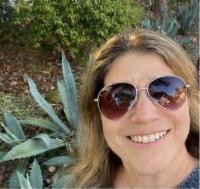
Elyse Matson, SLP has been with the organization as a treating clinician and SLP Clinical Resource. She has helped SLPs across the entire organization better understand working with dementia patients, navigating the sub-acute population, ensuring CFY supervision experiences are solid, providing education and support of the ThinkThin! initiative, ensuring SLPs are taking vital signs and providing education to ensure accuracy with coding the SLP Casemix. Thank you, Elyse, for all you do to ensure everyone has the support to ensure our patients are being taken care of. Elyse is the best!

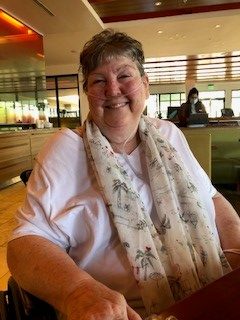
“I brought Paula home from Carmel Mountain the day before we locked down for COVID. They had done a great job with her post the brain tumor removal. About midway through the COVID lockdown it seemed like Paula was experiencing a cognitive decline. I reached out to Elyse and she took the time to find out what Paula’s cognitive scores were at discharge and walked me through doing a cognitive assessment. Since Paula was actually even better than when she discharged, she calmed my fears and reminded me of activities to do with her to keep her improving. Thank you Elyse.”—Debbie Miller, Compliance Officer (photo of Paula)

Elyse is not just an excellent clinical resource for our speech therapists, but also a great overall colleague, friend and human being. Her passion to elevate and dignify long-term care is evident with everything that she does! We love you, Elyse! May you continue to spread your knowledge and positive influence to all! — Dennis Baloy, Therapy Resource

Elyse is truly an amazing lady, SLP and resource partner. She has helped every SLP in Iowa from answering billing and coding best practices to how to treat certain conditions to educating on goal examples for someone with esophageal cancer and other conditions. She’s always available by phone and has come to do onsite education many times. She has a wealth of knowledge that she does not hesitate to share. Elyse has gone above and beyond and presented to the Heart Stone Therapy leaders to help educate them as well on how to grow their SLP programs! She is a true partner and we love and appreciate her! — Candy Hardin, Therapy Resource

She did a training for DORs/STs for Bandera West in February; the focus was for LTC programming, and we requested all of the Therapy Leaders be on the Webex as well to help them support and understand the importance of ST involvement in LTC as well. The current STs really trust her and call her, which I encourage — as we are also really trying to increase ST involvement in Section K/BIMs as we have seen a very positive benefit of this in some of our facilities. She keeps me in the loop with who is reaching out to her, which I really appreciate, and she does a great job talking them through it. — Kelly Schwarz, Therapy Resource

Elyse has been a great partner to me as a resource and to our SLPs. She is very approachable and willing to help whenever asked. Elyse has come to our market and provided group training as well as one-on-one training to help build caseload and improve interventions for our residents. Over the last few years, our speech caseload has grown tremendously, and Elyse has been a major factor in this growth. Our SLPs, our market, and our residents are better off because of the support Elyse has provided. — Gary McGiven, Therapy Resource

There has never been a time that Elyse did not follow up and follow through when I needed her support. Be it a minor question or putting her on the spot for an impromptu training with an IDT, she always comes through. Elyse is a fixture on the LTC task force and she has brought so much awareness to the SLPs’ role in serving our LTC patients. I love her direct and objective responses to questions, and I appreciate her style when it comes to teaching. The passion that she has for all things speech is easily shown through her delivery. My love for Elyse is Big! — Kai Williams, Therapy Resource

Elyse has been such a huge blessing to me as I’ve moved into a full-time resource role. She always goes out of her way to help with any projects I’m working on, and has generously shared her expertise and training tools to help me grow personally and train others. I feel like she’s been one of my biggest cheerleaders and has a wealth of knowledge. She pushes all of us speechies to be better! — Tiffany Bishop, Therapy Resource

Elyse has been such an amazing support for our SLPs in Keystone and to me! I can ask her any questions as she is a wealth of information! She is so busy, yet takes the time to get back with us and is great with follow up. She is truly a Rockstar and is such an AMAZING asset to our SLP profession!!!! ~ Stephanie Winkler, Therapy Resource

Elyse has been extremely engaged in our market with welcoming, developing, motivating and educating our SLPs. She had a market SLP meeting last Friday with focus on section K involvement, cognitive assessment and proper coding, LTC programming, and documentation. She is passionate, patient (with my EDs), and is extremely available to field questions whenever they arise. I personally have learned so much from her in my short time as a resource. I think she is pushing us all to further value, refer to, and support all of the amazing SLPs we have in Flagstone. — Aimee Bhatia, Therapy Resource

During one of my visits in the first few months as a Therapy Resource, I had a specific speech therapy question. I quickly stepped out into the hallway and called Elyse. She was so helpful, so quick to respond, and supportive. I look forward to more interactions with Elyse and am grateful to be able to reach out to her. — Cory Robertson, Therapy Resource

Elyse has been a great asset to our market, as she was able to come to NE last year pre-COVID and spent a day with each of our FT ST. This included reviewing patient caseload, offering tips on documentation, and potential caseload development. She has also continued this support with new hires as of late by scheduling telephone/Webex training. This has created an environment of support that our STs have truly appreciated. We are starting up monthly/bi-monthly ST phone calls to foster a support system for this group. During this time, Elyse has offered to be a part of these calls to help get us up and going! — Ryan Hough, Therapy Resource

Elyse has been an amazing support for us in Bandera. She is always willing to help, and her excitement for what she does is contagious to others. She has presented over Webex recently at my DOR meeting regarding how DORs can support ST programming. She also has recently provided support with individual staff members regarding appropriate coding. I only have one negative comment and it is a BIG NEGATIVE: She is not willing to relocate to AZ! — Denny Davis, Therapy Resource

Elyse came to Kansas (pre-COVID) and visited each of our facilities, meeting the SLPs individually, and hosted a live education the same week. We had plans for a follow-up visit, then the world came to a halt with COVID. We had a few new SLPs at that time, and Elyse has acted as a mentor when they had questions — they were so appreciative of her willingness to be available. I know several of them have reached out and continue to reach out as they need assistance. Elyse has a gift for teaching her colleagues, as she is able to relate to their daily schedule and the challenges they face and speak their language. Her passion for her profession is evident in her eagerness to grow others, vast evidence-based knowledge and guidance with documentation. Elyse has also helped with the shift in the mindset in Emerald by helping the SLPs see how they CAN help our LTC residents. We are blessed to have Elyse as a Resource. — Madeana Galler, Therapy Resource

Elyse has been so welcoming to me coming in as a new Therapy Resource. She has shared presentations with me and spent time with me on the phone, discussing what I want to do within the CO market. I already know she has an impact on people because I’ve heard her name multiple times, in multiple buildings. So happy to work with such a dedicated SLP leader! #speechforeveryone — Whitney Warkentin, Therapy Resource

Elyse has been an amazing partner. I haven’t met many as passionate about her craft as she is. She is on Facebook groups and Instagram as it relates to speech. Elyse is connected with school programs, up to date with the latest regulations and trends associated with speech and language. I have watched as she has thrown herself into this role and created something special. She is not only a resource to the facilities, but she is a resource to the resources. I have seen her train SLPs on program development, documentation, taking on CFYs, and assisting with recruiting. You name it, and she does it as it relates to SLP. Most recently, Elyse reached out and told me she thought there would be benefits in providing trainings to SLPs within a market and then following up that training with monthly calls with the SLPs to help them feel like they are part of a community. Elyse has been involved in education as it relates to Abilities Care and taking that training to markets throughout the organization. I could go on and on. Elyse is an amazing partner and friend. You can determine the value at times of an individual’s contribution in the workplace by imagining what things might be like without them. Without Elyse, we would be far less off. Elyse provides immense value to this organization. We love you, Elyse, and are so grateful for you! — Sam Baxter, Therapy Resource
Elyse has done face-to-face training for us in Colorado. Many SLPs text her directly with questions! She’s helped us to analyze documentation as well as caseload utilization. She’s been so helpful for our Colorado market. — Maryann Bowles, Therapy Resource

We have appreciated all the support Elyse provides the WA market. She’s part of our SLP email group and answers all their questions. She responds quickly to texts and phone calls from DORs, SLPS and myself. She has provided at least 5 Webex trainings for us in the last year, whether specific for a building or for our entire group, then follows up with carryover of training. She has audited SLP programming and documentation with valuable feedback for us to improve. As an OTR, her support has been invaluable to me personally in furthering my understanding of speech operations. She really takes our SLP program to the next level. — Mira Waszak, Therapy Resource

She’s passionate about SLP and helping residents and developing SLPs! She’s always readily available. She’s incredibly knowledgeable and a good communicator/teacher. I can’t emphasize that enough. They are different skill sets, and not everyone can do both. And if you can’t teach, then you can’t share your knowledge effectively. — Dominic DeLaquil, Therapy Resource

Elyse has been amazing and supportive of the SLP program development. She is crazy smart and full of new and great ideas. I have appreciated how she is approachable and always willing to answer questions and support the SLPs in their development. She is a great “multiplier” for our SLPs as we continue to enhance the care of our skilled SLPs. — Kelly Alvord, Therapy Resource

Elyse Matson fun facts: 1) She has a sailboat and enjoys being on the water. 2) She stays active by doing sprint triathlons. 3) She’s great at goal writing… need help with a goal? Call Elyse! Elyse is truly an amazing partner. No matter what I need help with from respiratory, trachs and vents to PDPM ST CMI, she always comes through with valuable information that I can share with my market. I truly appreciate her and her skillset. — Heather Bjernudd, Therapy Resource

Thank you, Elyse, for everything you do! We are all so grateful for your contributions to help support and grow our SLP programs across the entire organization. We value your partnership and look forward to many more exciting things to come! — Mary, Tamala, Chad, Jon, Sacchin, Deb, Ciara, Mahta, Brian & Jamie aka the PitCrew

Lymphedema Success Story

Danielle Kistler, OTR/L, is a new CLT at Holladay Healthcare. We are so excited to have a CLT at our facility, and we are already seeing some great successes with her interventions. We have an LTC resident that had LE skin tears that developed into stasis ulcers. The nurses were providing wound care for about six months with the patient being on and off antibiotics due to infections, with the ulcers being unable to heal.

At the same time Danielle became certified in lymphedema management, the patient was referred to a wound clinic for further wound treatment. With Danielle being able to provide appropriate compression wraps at the same time the patient was attending the wound clinic, his stasis ulcers are now healed. The nurse manager received multiple calls from the wound clinic on how well his legs were being wrapped and how impressed they were with the healing of his wounds. This patient also has aphasia and has difficulty communicating with his caregivers. We have seen a change in this patient, with signs of reduced pain, increased participation in ADLs, decreased outbursts, and improved quality of life.

Submitted by Jeremy McCorristin, DOR, Holladay Healthcare, Salt Lake City, UT

March Madness: St. Catherine Edition

by Denise Luong, COTA/L

The Momentum Therapy Culture Committee has been rolling out simple yet fun and meaningful activities that help ignite partnerships between departments. Some of you might have even received heart-shaped lollipops from your favorite therapists during our February Love one Another Project.

In the spirit of March madness, we kicked off the month with our fabulous Rehab team from St. Catherine, “tossing” it out with our hard-working maintenance department, for some great memories. The Rehab vs. Maintenance crew bean bag toss was a hit, with everyone cheering on one another, for a chance to win a scratcher worth up to $1,000! Our maintenance crew came out on top with the most winnings!

A few minutes of fun not only lifted our spirits with smiles and cheers, but also made us forget about work and bond over a simple childhood game of toss.

And that’s a wrap from St. Catherine!

An Often Overlooked Powerful Muscle to Increase Gait Speed

It’s no news flash that walking requires quite a bit of lower-body strength. You need powerful glutes, quads, hamstrings and calves to propel you forward. You might also recognize the crucial role your abs play in keeping you upright and lightening the load on your lower half. But there’s one muscle you probably never even think about when it comes to your stride. We’re talking about your “lats” (or latissimus dorsi), the biggest muscle of your upper body. Affording itself a large attachment centrally from the T7 to L5 spinouses, laterally to the iliac crest and thoracolumbar fascia, to the lower three or four ribs and inferior angle of the scapula, to travel superiorly and laterally to attach to the medial lip of the intertubercular sulcus, it is perfectly situated to effect both the upper and lower extremities in a large variety of movements. It is one of the quintessential and often overlooked muscles in gait. It is generally quiet electrophysiologically (EMG) during pre-gait activities (1,2) but as speed increases, the muscle becomes more engaged and active (2-4). The latissimus dorsi is the functional link between the upper and lower extremity, particularly through its connections with the thoracolumbar fascia (5,6).

The lat muscle is a key driver in the Posterior Oblique Sling System, which helps explain the relationship between the arms and legs during the gait “walking” cycle. The posterior oblique sling is a cross-body pattern composed of the gluteus maximus, thoracolumbar fascia (TLF) and contralateral latissimus dorsi muscle, which connects the shoulder with the opposite hip to facilitate locomotion. Dysfunction in this system puts the brakes on power, strength, speed and performance. To understand how your lats affect your walking performance, think about your gait or your movement pattern while you walk: “As your left leg steps forward, your right arm swings forward, thus you’re creating a rotational force, the abdominals and lats help with this rotational movement. The stronger your lats, the easier this twisting motion becomes and the more efficiently you nail your stride. Plus, strong lats help ensure the rest of your muscles don’t have to work in overdrive. Translation: You won’t tire out so fast and you’ll be able to walk/jog/run for longer time frames. Whatever was fatiguing you before won’t fatigue as fast, because you’re bringing more muscles to the party. You’ll be surprised just how much your lats are a part of the equation once you focus on strengthening them.

An easy way to tell whether you need to increase your patient’s or perhaps even your own lat strength is to assess form. Here are a couple of tell-tale signs to look for when walking: If the patient/client starts to fall forward or slouch their head forward, and if the shoulder blades are creeping up by the ears, this most likely indicates an opportunity to strengthen the lats. But before you get started with those strengthening exercises, you need to make sure the surrounding muscles aren’t getting in the way, for example, tight triceps (the backside of the arm) or upper trapezius (where your shoulder meets your neck) can inhibit the lats from activating during exercises. This would work against the patient/clients best efforts. Once you have had the patient/client complete a few tricep and upper trap stretches, it’s time to start strengthening the lats. Some suggestions to start with include:

  1. Seated Row
    ● Using a resistance band or a cable row machine, sit upright with your legs out straight. If using a resistance band, hook it around your feet. No matter the equipment, roll your shoulders back and down, “packing” them into your lats.
    ● Keeping the elbows tight and close to your body, row your elbows straight back, pinching your shoulder blades together.
    ● Reset with control, then repeat.
    ● Do 3 sets of 10 to 15 reps.
  2. Bent-Over Fly
    ● Stand with soft knees, holding a dumbbell in each hand by your sides. Hinge forward at the hips with a flat back and neutral neck. Allow your arms to hang down under your chin with a slight bend in the elbows.
    ● Leading with your elbows, bring your arms back and imagine you’re hugging a tree backward, squeezing your shoulder blades together. Hold for one second before lowering down with control.
    ● Do 3 sets of 10 to 12 reps with dumbbells appropriate for your patient/client.
  3. Superman Lift
    ● Lie face-down on the floor with your arms and legs extended. Squeeze your glutes to glue your ankles together and lock your arms tight next to your ears. Keep your neck neutral, and gaze down toward the floor throughout the whole movement.
    ● Use your back to lift your legs off the ground, trying to lift your quads off the ground without bending at the knees. Lower with control. Repeat with just the upper body.
    ● Once you’ve mastered isolating the lower and upper, add them together, lifting all four extremities off the ground and holding at the top before lowering with control.
    ● Do 4 sets of 15 to 20 reps.

Beyond strengthening and stretching the lats to improve gait function, it’s also important to remember that if the patient/client has latissimus dorsi pain and/or referred pain, this can also impact range of motion and muscle activation patterns, including the patient’s gait quality. Dry needling is one modality that PTs may be able to use to decrease lat pain and improve the overall performance of this muscle by improving its function, thus improving range of motion and muscle activation patterns (7-9).

By Jon Anderson, DPT, Therapy Resource

References:

  1. Houglum P, Bertoti D in: Brunstrums Clinical Kinesiology 6th Edition, FA Davis 2012 p.558
  2. G. Cappellini, Y. P. Ivanenko, R. E. Poppele, F. Lacquaniti Motor Patterns in Human Walking and Running Journal of Neurophysiology Published 1 June 2006 Vol. 95 no. 6, 3426-3437 DOI: 10.1152/jn.00081.2006
  3. Shin S, Kim T, Yoo W. Effects of Various Gait Speeds on the Latissimus Dorsi and Gluteus Maximus Muscles Associated with the Posterior Oblique Sling System. Journal of Physical Therapy Science. 2013;25(11):1391-1392. doi:10.1589/jpts.25.1391.
  4. Kim T, Yoo W, An D, Oh J, Shin S. The Effects of Different Gait Speeds and Lower Arm Weight on the Activities of the Latissimus Dorsi, Gluteus Medius, and Gluteus Maximus Muscles. Journal of Physical Therapy Science. 2013;25(11):1483-1484. doi:10.1589/jpts.25.1483.
  5. Vleeming A, Pool-Goudzwaard AL, Stoeckart R, van Wingerden JP, Snijders CJ. The posterior layer of the thoracolumbar fascia. Its function in load transfer from spine to legs. Spine (Phila Pa 1976). 1995 Apr 1;20(7):753-8.
  6. Willard FH, Vleeming A, Schuenke MD, Danneels L, Schleip R. The thoracolumbar fascia:anatomy, function and clinical considerations. Journal of Anatomy. 2012;221(6):507-536.doi:10.1111/j.1469-7580.2012.01511.x.
  7. Dar G, Hicks GE. The immediate effect of dry needling on multifidus muscles function in healthy individuals. J Back Musculoskelet Rehabil. 2016 Apr 27;29(2):273-278.
  8. Ortega-Cebrian S, Luchini N, Whiteley R. Dry needling: Effects on activation and passive mechanical properties of the quadriceps, pain and range during late stage rehabilitation of ACL reconstructed patients.Phys Ther Sport. 2016 Sep;21:57-62. doi: 10.1016/j.ptsp.2016.02.001. Epub 2016 Feb 24.
  9. Dommerholt J. Dry needling — peripheral and central considerations. The Journal of Manual & Manipulative Therapy. 2011;19(4):223-227. doi:10.1179/106698111X13129729552065.

LTC Programming: Rise and Dine

Our long-term care population is now fully vaccinated, and it seems as if we are entering, dare I say it, a post-pandemic environment. We made it, but now what?

During the pandemic, we have seen our residents’ version of normalcy altered. Those who used to spend most of their day in the dining room, in activities or the therapy gym, and visiting with their friends and family now are found sleeping in more, not eating as much or as healthy as before, and no longer have the desire to engage in social activities. When they do feel like getting out of their room, seeing them use a wheelchair is more common. Some of them are COVID-recovered and have never fully bounced back after fighting the virus.

Our therapists opened their minds to different therapy approaches and gained the skills that it takes to truly dignify the lives of long-term care residents. We knew these effects of illness and quarantine isolation would take a toll on our vulnerable population, and we did everything we could to combat them in real time with preventative therapeutic approaches. In a pre-COVID world, our building was predominantly a rehab-to-home facility, and it was uncomfortable at times for our therapists to develop long-term care treatment plans. The pandemic highlighted the necessity for our services, and now it is hard to imagine not being this involved with them.

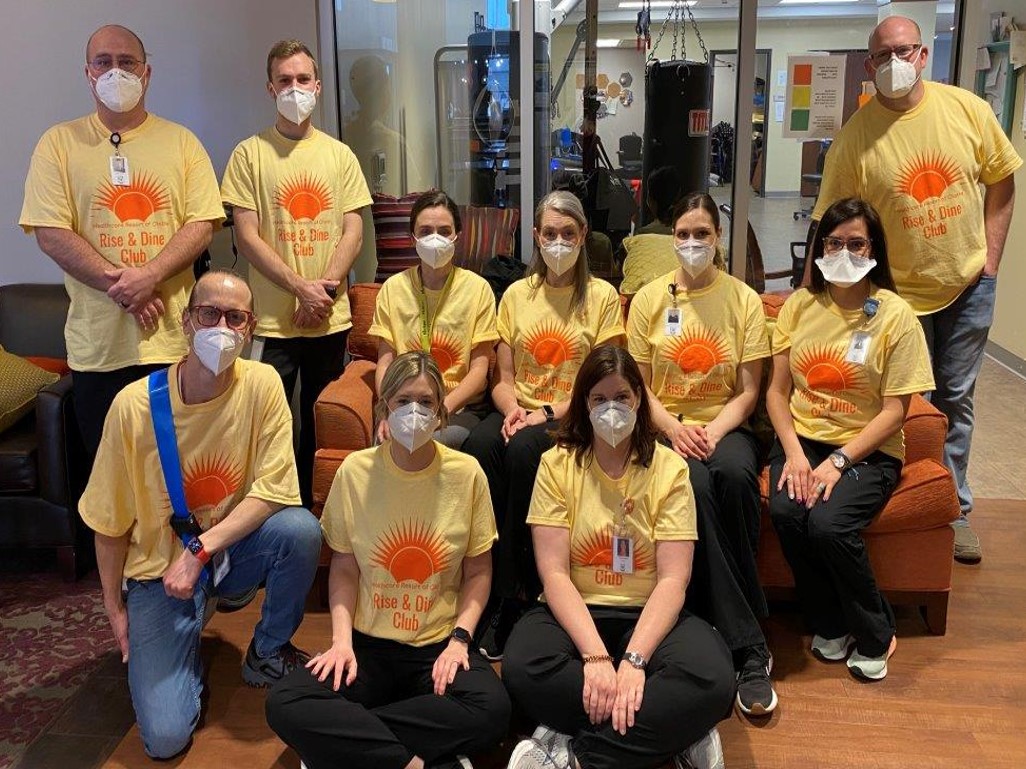
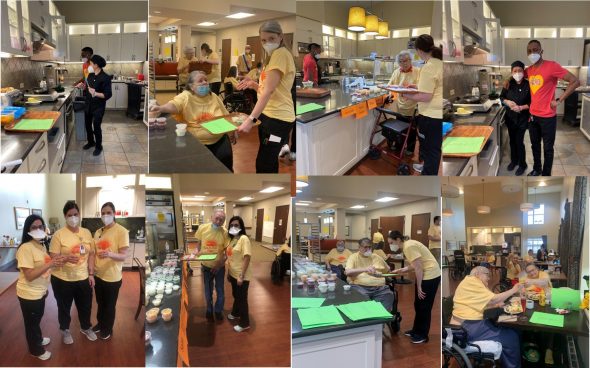
Our Speech Therapists, with multidisciplinary collaboration, hosted a new program this month called “Rise and Dine.” This program began as a nutrition and hydration-based club that requires participants to get out of bed and engage cognitive and communication skills in choosing meal preferences for the event. “We are all very passionate about our residents’ quality of lives and saw this as an opportunity to meet our residents’ nutritional and social needs. The excitement and feedback of our residents really fueled the idea and brought our entire dietary and therapy staff together to make this such a successful event!” — Breean Ludwig, HCRO Speech Therapist

As excitement grew, we realized this program could address almost all the abilities we have seen deteriorate. We ordered T-shirts to encourage dressing and hygiene before the event, and all our therapists came in to facilitate transfers, self-care routines, and mobility to and from the dining room. We also were able to treat goals related to self-feeding, dynamic standing, and sitting tolerance and positioning.

“We saw such a negative impact after so many in-room isolations during the COVID pandemic. Our Residents were discouraged, losing weight, not socializing, showed physical and cognitive changes, and did not want to come out of their rooms. We wanted to do something to bring excitement back into their lives while still being able to target our goals in therapy. This program offers an opportunity for all disciplines (PT/OT/ST) to participate.” — Ke’ren Grimaldo, HCRO Speech Therapist.

Although we are striving to return our residents back to “normal,” I am proud to say our Therapy team has established a new norm as well, and we are not looking back. Just as preventative interventions were important during the pandemic, how we move forward now is just as crucial. 85% of our long-term care residents got out of their rooms to participate in this program. We owe a big thank-you to our dietary manager and her team for being as excited for this program as we were. Our team has a seasonal themed event planned for the rest of the year, and we can hardly wait!
Remember, every county and state Department of Health has specific guidelines for re-opening, so always consult with your DNS with your “back to normal” plan.

Submitted by Elizabeth Munford, PTA/TPM, The Healthcare Resort of Olathe, KS

Wound Care: A Case Study in Pueblo Springs, Tucson, AZ

Resident K is a 52-year-old man who was referred to Physical Therapy for chronic, non-healing pressure ulcers of the coccyx and ischial tuberosity and severe pain.

  • PMH: Spina Bifida, B AKA, HTN, colostomy; wounds have been present approximately 10 years. Patient underwent flap surgery five years ago; wound vac has been unsuccessful in promoting healing
  • PLOF: Modified Independent in transfers and wheelchair mobility; has resided in nursing homes for 10 years; history of being non-compliant with pressure relief and positioning

Evaluation status (4/2020):

  • Mobility: Modified I transfers and wheelchair mobility; tilt in space motorized chair with ROHO cushion
  • Strength or ROM deficits: No
  • Wound 1: Coccyx: Stage 4 pressure ulcer: 1.5L x.7W x.6D; necrotic <25%
  • Wound 2: Ischial Tuberosity: Stage 4 pressure ulcer: 3.5L x 3.0W x 3.0D
  • Pain: 7/10 with any movement, related to wounds

Wound care: Dakins solution

Patient reluctantly agrees to PT POC to initiate in-wound electrical stimulation (HVPC) five times a week to facilitate increased wound bed granulation, decrease necrotic tissue, decrease pain and facilitate wound healing. Patient states, “These wounds won’t heal; they’ve been there forever and I’ve tried it all.”
D/C plan: reside in skilled nursing facility

Discharge status (10/2020):

  • Wound 1: Coccyx: Resolved
  • Wound 2: Ischial Tuberosity: .3L x .3W x .2D
  • Pain: 0/10
  • Patient is discharging to an Assisted Living Facility

As the wounds began to improve, patient K began to be compliant with positioning and pressure relief. During the course of treatment, estim protocol changed from negative to positive polarity in wound, and then finally peri-wound as wounds became too small for in-wound electrode placement. Dressing changes occurred through IDT wound team consultation. Treatment included patient/caregiver education throughout.

Kudos to the Pueblo team for being willing to tackle the “impossible” wounds and having the perseverance to hang in there! They understood that chronic healing takes time. Meeting requirements of documenting progress every 30 days, changing protocols when healing began to plateau, and using skilled assessment allowed them to continue the POC to closure/near closure of the wounds.

Submitted by Shelby Donahoo, M.S., OTR/L, Therapy Resource, Bandera

Motivating Employees—Meet the M.E. Committee at Copperfield

The strength of a team can truly be powerful when everyone sees and feels the vision. Employee culture and retention has been at the top of the initiative list. How can we improve this area and create an environment that truly embodies Customer Second? Well let me introduce you to the M.E. committee. I spent time with one of the M.E. committee members, Loretta Johnson, PTA, to get a better understanding of what this committee has to offer.

As explained by Loretta, the Copperfield Healthcare and Rehab facility created the M.E. Committee (Motivating Employees), with a purpose to engage, support and reward their fellow coworkers. They have designed and cultivated strategies to build interpersonal skills, through exciting team-building exercises. This level of cultural promotion encourages open communication, challenges employees with friendly competition, and assists with facilitating a healthy work-life balance.

The M.E. committee has put together a calendar of events that caters to employee engagement. As Loretta put it, “An employee who enjoys coming to work is a worthy investment, and a good day at work fuels the desire to be better the next day. This feeling of happiness at work will spill over into the love and care that we provide to our patients.”

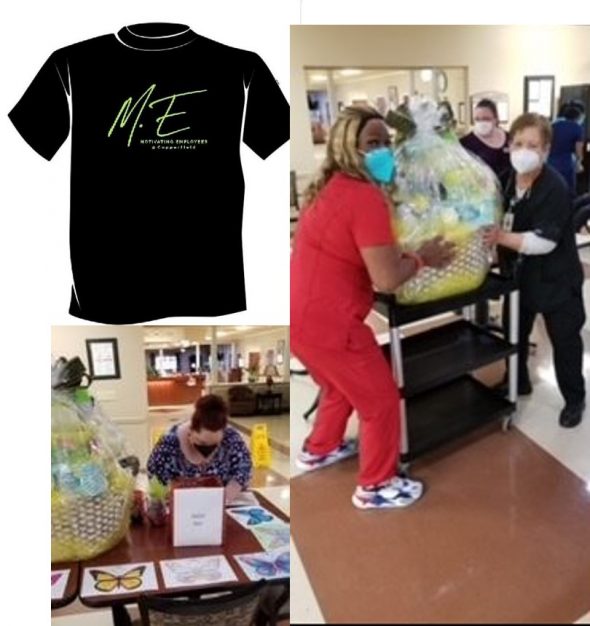
Most recently, the M.E. committee hosted a Coloring Contest. All employees were asked to color a picture of a butterfly. Each butterfly was judged by the panel of patients, employees and visitors. The grand prize winner received a beautiful, laundry-themed gift basket. Other events included: Chili Cook-Off, World Water Day, and National Laugh Day. The time spent together is intentional, and it has allowed new-hires to comfortably blend in with the team.

The Copperfield Healthcare and Rehabilitation facility leadership team includes:
Noni Gill, ED; Unnati Patel, DON; Shayla Goode, M.Ed CCC-SLP

Submitted by Kai Williams, Therapy Resource, Keystone-East

Outpatient/Inpatient Synergy at McCall Rehab and Care Center

The Rehab team at McCall Rehab and Care Center in McCall, Idaho, has had a vision of providing community-based outpatient therapy in people’s homes since the facility became part of the Pennant-ID/NV market in 2018.

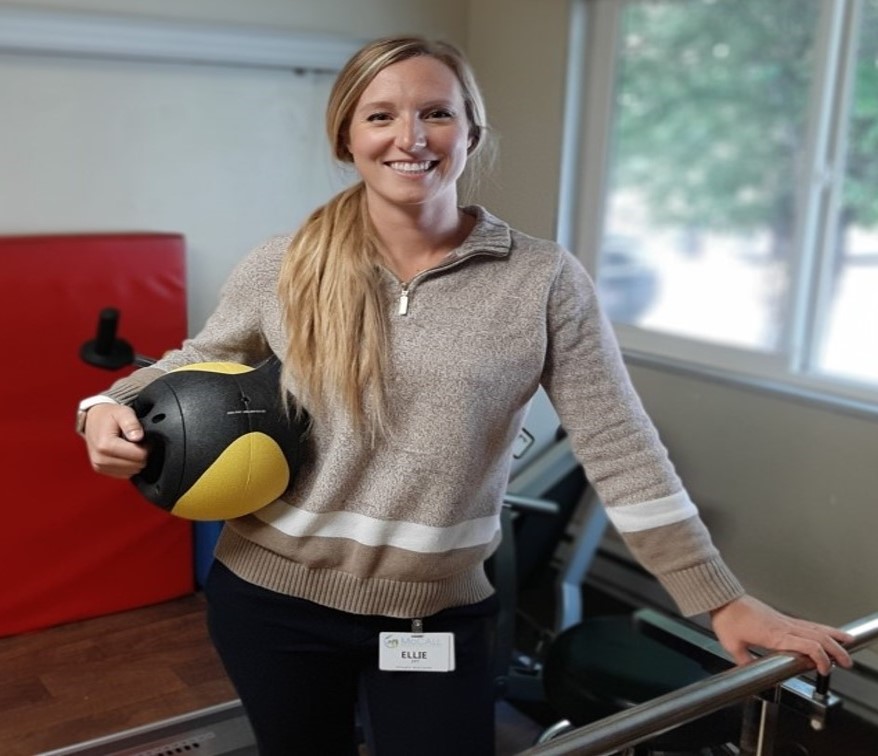
McCall’s DOR, Jenny Sowers, DPT, couldn’t ever seem to find the consistent time to grow an outpatient program, so she decided she should find a therapist willing to take on that challenge. In September of 2020, Jenny hired Ellie Toscan, DPT, with the goal of Ellie building their Community-Based Outpatient program.

Ellie has shown tremendous ownership of the program, from marketing to clinical to financial. She independently tracks the financials weekly and monthly to ensure the program is financially viable. Executive Director Kurt Holm’s main goal for the program is to build relationships and reputation in the community. A recent admission gives clear indication that Kurt’s goal is being realized. Ellie was working with a patient in her home. She had a change of condition, went to the hospital, and was referred to McCall Rehab. Because of the relationship that Ellie built with this patient, she readily agreed to the discharge plan. The patient is now receiving skilled therapy and nursing services in our facility. Thanks Ellie for this great example of the power of our core value of ownership!

If you are looking to grow your community based outpatient program, please consult your therapy resource or Deb Bielek for regulatory help specific to your state.

Submitted by Dominic DeLaquil, Therapy Resource, Idaho/Nevada

How to Build a Successful Outpatient Program

With our focus on meeting all the needs of our communities, we wanted to provide some information about our Colonial Manor of Randolph outpatient program. Randolph, Nebraska, is a town with a population of 894. Despite that, they have found a way to operate as one of the largest outpatient programs as an Ensign Affiliate. Here is what Eric Feilmeier, OT, CLT, DOR, has to say about why they have been able to have success!

When working to build a successful outpatient clinic, it is important to begin with Core Values. Here are few values that we have found to be important:

  1. Deliver WOW through service.
  2. Embrace and drive change.
  3. Create fun.
  4. Be adventurous, creative and open-minded.
  5. Pursue growth and learning.
  6. Build open and honest relationships with communication.
  7. Build a positive team and family spirit.
  8. Do more with less.
  9. Be passionate and determined.
  10. Be humble.

We have had success in our Nebraska market due to a number of reasons. First and foremost, be supportive of your therapists. Provide clinically centered CEU opportunities that focus on problems in your area. Here at Colonial Manor, we are LSVT certified and are going through power moves certification, urinary incontinence certification and Lymphedema Certification. Provide programming around the skills of your Therapists so they can get to the bottom of each patient’s problems. It’s important to educate on HEP for patients, but then leave that to them and focus on the true needs, utilize the specialty equipment in our gyms and provide proper intensity of treatment.

  • Make sure the patient feels that they got a lot out of each session.
  • Provide proper frequency. MAKE IT COUNT IN THE GYM! Remember, the patient won’t typically do as much at home. Modalities: We work closely with ACP rep to provide the best adjunct treatment options to assist with improving care. Patient’s Love modalities- modalities provide physical and psychosomatic results.

When working with your outpatient, always assess additional problems and needs that the patient may not realize themselves. Ask questions, because there might be a higher need for another discipline to step in. We are always looking out for one another’s skill sets and the potential benefit to collaborate our services to further meet the needs of our client.

Cancellation Management is the biggest obstacle of our Outpatient business. We do our best to stop cancellations, but that is not always easy. Some tips to reduce cancellations include:

Evaluations:

  • Provide a message. Ask the patient why they are in your clinic, what they expect and what they want to gain.
  • Hold their answers against them (In a positive way). Always have a conversation during the evaluation about the frequency and the importance of coming to therapy when they are scheduled, expressing to them that we can help them but they must come to scheduled appointments to make a difference (hold them accountable).Call ins: Problem-solve
  • When you get the patient on the phone and they want to cancel, ask, Why? What are you experiencing? Many times, the reason for the cancelation is exactly why they should be coming into their appointment. Be adamant and convince them to come in, if you believe you can help them.
  • When a patient leaves a message, call them and ask them the same questions. They may just need to be convinced that you can help them!
  • Move treatment times to another time of day or to a whole other day. Flexibility in your clinic is the key!

Last but not least, build and maintain relationships with your Physicians and Nursing. Frequent updates to communicate patient results to Physicians is always appreciated. Send notes or small updates with the patient to their next doctor appointments, even if the doctor doesn’t request it. These notes can be a quick word Doc, a progress note that is timed with an appointment, or even a nicely handwritten note.

All in all, have goals to grow your Outpatient clinics. Focus on the patient, and you will see excellent results. I even encourage devising a patient satisfaction survey to monitor your success and areas of opportunity. Good luck!

By Eric Feilmeier, OT, CLT, DOR, Colonial Manor, Randolph, NE, and Ryan Hough, Therapy Resource, Gateway, NE